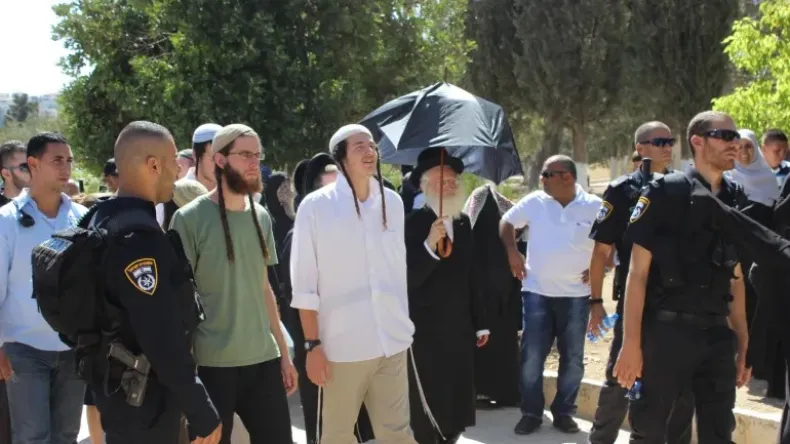
Settler groups renewed their storming of Al-Aqsa Mosque (المسجد الأقصى المبارك) on Tuesday morning, an act that coincided significantly with the Day of Arafat and the eve of Muslims celebrating Eid al-Adha. This timing, during one of the holiest periods in the Islamic calendar, heightened the tension surrounding the incursions. During their presence within the sacred compound, the groups performed Talmudic rituals, specifically in the eastern area of the mosque (المنطقة الشرقية للمسجد). These actions by settler groups have been widely condemned, particularly given the sanctity of the site and the concurrent religious observances by Muslims globally.
Escalated Incursions and Rituals Ignite Condemnation
The events on Tuesday followed a similar pattern observed on Monday, where more than 400 settlers and dozens of visitors participated in widespread stormings of Al-Aqsa Mosque. These incursions were conducted under the guise of tourism, a claim often disputed by Palestinian authorities and observers. During these visits, settlers performed loud congregational prayers within the mosque compound, a practice considered highly provocative and a violation of the established status quo governing the holy site. The settlers' activities on Monday, characterized by these public religious displays, set a precedent for the renewed incursions on Tuesday. The repeated entries and public religious practices by settlers inside the compound, including the performance of Talmudic rituals in the eastern area of the mosque, are viewed by many as a direct challenge to the existing arrangements and a deliberate provocation. These actions have drawn strong condemnation from Palestinian authorities, who emphasize the need to preserve the sanctity and historical status of Al-Aqsa Mosque as a purely Islamic worship site.
Occupation Forces Provide Protection for Settler Groups
Occupation forces were observed providing protection for the settlers who stormed Al-Aqsa Mosque during these contentious periods. Their presence and actions facilitated the settlers' entry and activities within the compound. During these storming periods, occupation forces deliberately isolate the eastern area of Al-Aqsa Mosque, effectively dedicating it to settlers for their public prayers and rituals. This isolation tactic prevents Muslim worshippers from approaching the area while settlers conduct their activities, thereby creating an exclusive zone for the settler groups. The provision of protection by occupation forces for the storming settlers is a critical element in understanding the dynamics of these incursions, as it enables the continuation of these provocative acts despite widespread objections.
Context and Timing Amplify Tensions
The stormers engaged in various activities within the mosque compound, including forming a circle of dancing and singing in the eastern area of Al-Aqsa Mosque, according to reports. These activities took place just meters away from the Bab al-Rahma prayer area, a significant location within the Al-Aqsa compound. The groups were observed celebrating the Jewish "Feast of Weeks" during their presence within the mosque compound, adding another layer of religious significance to their actions from their perspective. This incident occurred as settler groups renewed their incursions, with the timing coinciding precisely with the Day of Arafat and on the eve of Eid al-Adha. The convergence of these events — the settler incursions, the performance of specific rituals, and the timing during a major Islamic holiday — has significantly amplified tensions surrounding the holy site. The repeated and protected incursions into Al-Aqsa Mosque during such sensitive times continue to be a major point of contention and a source of deep concern for Palestinian communities and the broader Muslim world.