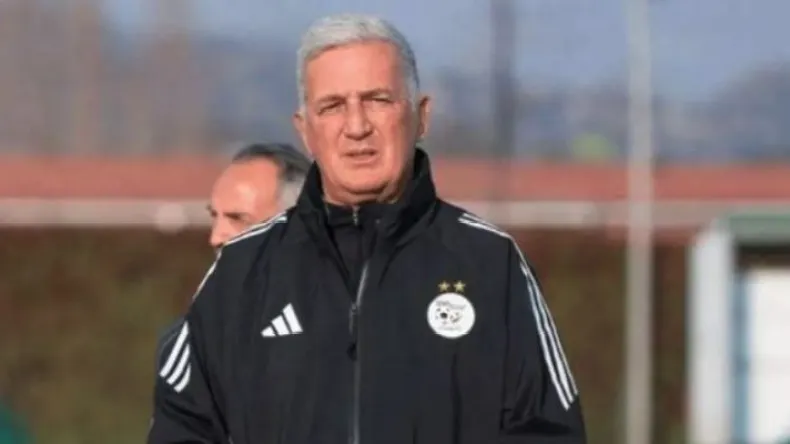
Technical director Vladimir Petković is scheduled to unveil the Algerian national team's World Cup squad next Sunday. This highly anticipated announcement will reveal the players selected to represent Algeria in the upcoming prestigious international tournament. The initial squad list will comprise 26 players, including three goalkeepers, as confirmed by sources close to the team, a standard size for major international competitions. The selection process is a critical phase, as Petković's choices will significantly impact the team's prospects on the global stage. The footballing nation of Algeria eagerly awaits the final roster, understanding that these decisions carry immense weight for national pride and sporting ambition.
Past Coaches' Tough Choices
The history of international football is replete with instances where coaches have faced similarly difficult squad selection decisions, often leading to significant public debate. For the 1998 World Cup held in France, Italian coach Cesare Maldini notably made a controversial choice by omitting striker Pierluigi Casiraghi from his squad. This decision was particularly striking given that Casiraghi had scored the decisive qualification goal that secured Italy's place in the tournament, noting the tough calls coaches often make.
In the lead-up to the 2002 World Cup, co-hosted by South Korea and Japan, coach Giovanni Trapattoni also made headlines with his squad choices for the Italian national team. Trapattoni opted not to include celebrated forwards Roberto Baggio and Dario Hübner in his final selection. At the time of his omission, Roberto Baggio, a player revered for his skill and experience, had contributed to an impressive 14 goals for his team Brescia, through both scoring and assisting. Similarly, Dario Hübner, another prolific player excluded by Trapattoni, was the top scorer in Serie A with 24 goals while playing for Piacenza, showing the high level of talent overlooked. Brazilian coach Luiz Felipe Scolari also made a significant and widely discussed decision for the 2002 World Cup, refusing to call up the legendary striker Romario, despite public clamour for his inclusion. These historical examples serve as a reminder of the immense pressure and scrutiny technical directors like Petković face when finalising their squads.
Petković's Authority and Pressure
Technical director Vladimir Petković frequently conducts his press conferences in Italian, a detail noted by observers and often noted in media reports. This linguistic choice has been interpreted by some as a clear indication of his deep familiarity with the Italian league and its players, potentially influencing his scouting and selection strategies. Petković's decisions are anticipated to carry significant weight as he shapes the squad for the upcoming tournament, with every player selection scrutinised for its tactical implications and potential impact. The coach's selections will ultimately determine the final composition of the team representing Algeria on the global stage, a role that places immense responsibility on his shoulders. His approach to player assessment and team dynamics is expected to be a key factor in the squad's performance, as he balances individual talent with collective cohesion. The final roster will not only reflect Petković's strategic vision for the Algerian national team but also his philosophy on team building and competitive readiness.
The Coach's Prerogative
Vladimir Petković, in his capacity as technical director, holds the ultimate authority in selecting the Algerian national team for the World Cup. His choices are expected to reflect his strategic vision for the squad, aiming to create a balanced and effective unit capable of competing at the highest level. The process of squad selection often involves balancing various critical factors, including current player form, established team chemistry, and specific tactical requirements for the tournament. This represents a complex and multifaceted task that coaches like Petković frequently undertake, requiring both astute judgment and foresight. Petković's decisions are integral to shaping the team's identity and performance trajectory in the tournament, as each player brings a unique set of skills and attributes to the collective. The final list of players will be a direct outcome of his full assessment of individual capabilities and how they align with his overall team strategy. This prerogative allows him to make difficult choices, prioritizing collective goals over individual aspirations, a common and often necessary aspect of national team management. The decisions made by Petković will ultimately define the Algerian representation on the global stage, carrying the hopes of a nation.