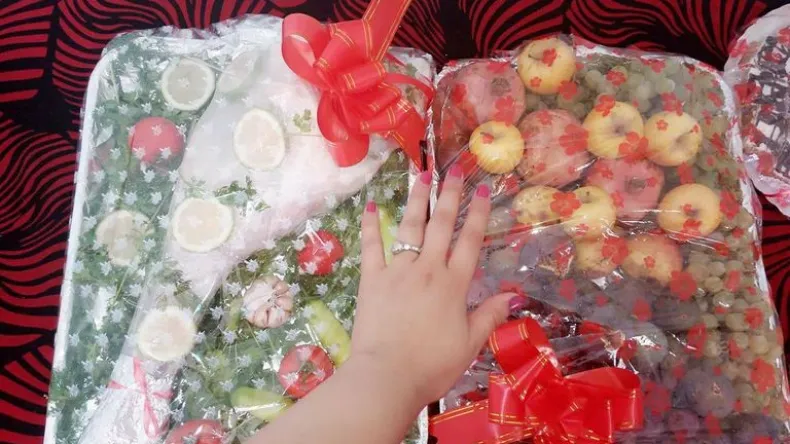
A deeply rooted Algerian social custom involving Eid al-Adha gifting, known as 'mehieba Eid al-Adha', has reportedly led to a surge in broken engagements and canceled marriages across the country. This tradition, deeply ingrained among most Algerians, requires the groom's family to present the fiancée with a thigh or shoulder of the sacrificial animal. In recent years, this custom has created many problems between the families of engaged couples, often leading to significant social friction. The problems are largely attributed to the exorbitant rise in the prices of sacrificial animals and meat, making it increasingly difficult for families to uphold the customary gift. Many families are struggling to meet the financial demands associated with the ritual amidst the escalating costs, and consequently, many have abandoned this social ritual due to the prohibitive expenses.
The 'Mehieba' Ritual Under Pressure
The 'mehieba' tradition involves a reciprocal exchange, forming a symbolic bond between the two families. Specifically, the groom's family presents a portion of the sacrificial animal to the bride's family. In turn, the bride's family is expected to reciprocate with a similar gift, typically a thigh or shoulder of a ram, on the wedding day. This exchange is seen as a gesture of respect and commitment between the families. However, the escalating costs associated with this ritual have led many families to abandon it, creating unexpected social consequences. The financial burden of upholding this long-standing tradition has become a significant point of contention for many.
Soufiane recounted how his engagement was dissolved over the custom, noting the profound impact of this tradition on personal relationships. He stated that the absence of the sacrificial thigh during Eid al-Adha was the cause, explaining that "it made her family feel insulted and undervalued, so they preferred to end the engagement early." His fiancée's family reportedly responded with the poignant phrase, "المكتوب ما كتبتش" (What is written was not written), referring to the preordained fate, signifying their belief that the marriage was not meant to be. This incident shows the deep emotional and social weight attached to the 'mehieba' gift. Mrs. Zeinab shared a personal experience that further illustrates the intensity of these expectations, recalling how she was verbally abused by her husband during their honeymoon because her family had brought a sheep's neck instead of a thigh on their wedding day. This incident, which she referred to as "واقعة الرقبة" (the neck incident), occurred despite her husband having gifted her a thigh during the previous Eid, demonstrating that even a slight deviation from the expected gift can lead to severe marital discord.
Financial Strain and Social Fallout
The Eid al-Adha gifting custom has reportedly generated numerous issues between the families of engaged couples in recent years, often escalating into disputes that jeopardize future unions. Soufiane, for example, saw his engagement dissolved after he failed to provide the traditional thigh of the sacrificial animal to his fiancée. His father had refused to give it to him, creating an impossible situation for Soufiane. Soufiane explicitly stated, "The thigh of the sacrificial animal, which he did not bring for the Eid gift, is the reason. It made her family feel insulted and undervalued, so they preferred to end the engagement early." This case exemplifies how the failure to uphold the custom, even if due to circumstances beyond the groom's immediate control, can be perceived as a grave affront.
Similarly, Abdullah's engagement was canceled by his fiancée's family due to a perceived inadequacy in the traditional offering. He had brought the shoulder of the sacrificial animal instead of the customary thigh. Abdullah reported that his fiancée's family perceived this as "a lack of appreciation and respect, and a hidden trick," leading to the termination of their engagement. Such instances show the increasing strain the traditional 'mehieba' ritual places on family relations amidst economic challenges, transforming what was once a symbol of unity into a source of division and heartbreak. The financial pressures, exacerbated by the exorbitant rise in the prices of sacrificial animals and meat, have made it increasingly difficult for families to meet these deeply ingrained societal expectations, leading to an unfortunate surge in broken engagements and canceled marriages.
Religious and Ethical Perspectives
A professor of Islamic Sharia, Belgassem. Z, has offered a critical perspective on the 'mehieba' tradition, particularly in light of its recent negative impacts. Professor Z stated unequivocally that the tradition of dedicating a specific portion of the sacrificial animal to a fiancée lacks any basis in Islamic legislation. This notes a significant disconnect between cultural practice and religious doctrine. Professor Z warned that if this custom becomes a burden or results in family disputes, financial pressures, broken engagements, or canceled marriages, it falls under the category of 'takalluf', which is an unnecessary burden explicitly prohibited by Sharia. This religious injunction advises against practices that cause undue hardship or create conflict within the community.
Professor Z emphasized that customs contradicting the fundamental objectives of Islamic Sharia, such as facilitation and the removal of hardship, should be abandoned. The professor's remarks highlight a critical perspective on the 'mehieba' tradition, particularly as its financial implications lead to significant social strain and conflict within families in Algeria. The guidance from Islamic scholars suggests that while cultural traditions can be cherished, they should not supersede the principles of ease and harmony central to Islamic teachings. This religious viewpoint provides a compelling argument for reassessing the 'mehieba' practice, especially when it results in such profound personal and familial distress.