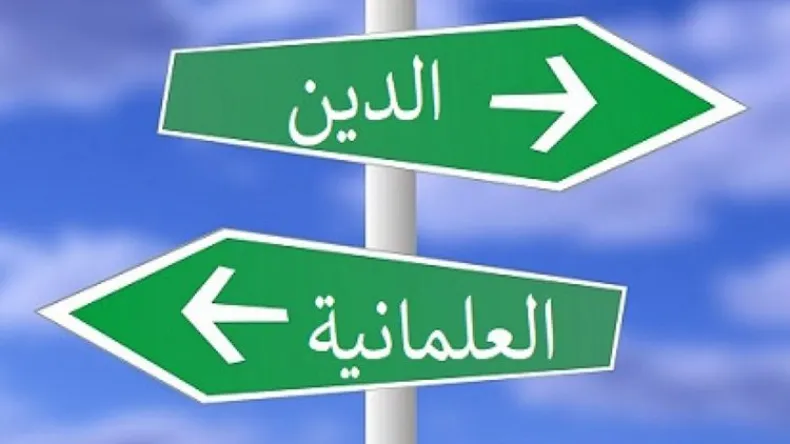
The article examines the concept of an "ideology complex" among individuals who are described as "defeated" by secularism. This complex is presented as a central issue within the broader crisis of meaning for Muslims, impacting their identity and direction. The discussion centers on how this perceived defeat, particularly in the face of dominant secular narratives, may shape ideological stances and influence the intellectual and emotional landscape of Muslim communities. The 'ideology complex' is thus positioned not merely as a theoretical construct, but as a lived experience for those navigating the pressures of secularization.
Critique of Western Ideological Narratives
The secular-Westernizing current, a significant force in contemporary discourse, employs the term "Islamic ideology" as a battle title. This strategy is used to attribute blame to it for a wide array of the world's problems, framing it as an inherently problematic and destabilizing force. This deliberate labeling serves to delegitimize Islamic thought and practice in the public sphere. The article also critiques the concept of the "end of ideology," identifying it as a Western construct. This idea, often presented as a universal truth, is rooted in the perceived centrality of Western civilization and aligned with the "end of history" theory, which posits a final stage of human ideological evolution culminating in Western liberal democracy. The author argues that this Western-centric view attempts to impose a singular narrative, dismissing the validity and necessity of alternative ideological frameworks, particularly those rooted in Islamic tradition. The dismissal of ideology, therefore, becomes a tool to assert Western intellectual and cultural hegemony.
Foundations of Islamic Thought
The author argues with conviction that a Muslim's faith or any reformist movements aimed at societal betterment have no meaning or coherent direction outside an ideological framework. For Muslims, the Quran, Sunnah, and established Islamic jurisprudence are identified as the foundational sources for determining stances, opinions, decisions, and choices in all aspects of life. These sacred texts and legal traditions provide a full worldview and a moral compass, offering a distinct ideological foundation that guides individual and collective action. This contrasts sharply with other ideological foundations seen in different movements and philosophies. Communists, for instance, base their literature, political programs, and revolutionary goals on theories of dialectical materialism and social class, viewing history as a struggle between economic forces. Similarly, modernists draw their approaches and intellectual underpinnings from existentialist liberalism and Freudian ideas, emphasizing individual freedom, psychological drives, and a rejection of traditional structures. The article shows that just as these movements rely on their specific ideological bases, so too must Islamic thought and action derive their coherence and purpose from their unique sources.
The Path Forward: Reimagining Islamic Discourse
Some Muslims and Islamists, perhaps seeking acceptance or validation in a globalized world, believe that renouncing ideology demonstrates their intellectual maturity to Westerners or Westernized elites. However, the author advocates for a more strong and self-assured approach, calling for the proactive development of Islamic discourse. This development is key to move beyond dogmatism, rigid slogans, and the absolute rejection of others, fostering a more nuanced and inclusive engagement with the world. The ultimate goal of this refined discourse is to achieve a civilizational witness to humanity, presenting Islam as a viable and beneficial framework for all people. This approach aims to effectively address the requirements for radical or reformist change within Muslim countries, acknowledging the complex challenges they face. Such an endeavor necessitates flexibility and pragmatism when engaging with local and international realities, allowing for adaptive strategies without compromising core principles. The objective is to navigate these complexities without succumbing to assimilation into dominant Western paradigms or falling into intellectual confusion regarding Islamic identity and purpose. This reimagined discourse seeks to offer clear guidance while remaining open to diverse contexts and challenges.
Consequences of Abandoning Ideology
Abandoning an ideological framework, particularly one as full as Islam, can lead to a significant loss of meaning, creating an existential void that potentially results in nihilism. This process is posited to create an identity complex, particularly for individuals described as emotionally and intellectually unstable. Without a clear ideological anchor, these individuals may struggle to define their purpose, values, and place in the world, leading to profound disorientation. The shift away from a defined ideology is seen as contributing to a crisis of purpose among these groups, as they lose the guiding principles and narratives that once provided coherence and direction. This abandonment leaves individuals vulnerable to external influences and internal turmoil, exacerbating feelings of alienation and rootlessness. The article argues that such a void can be deeply detrimental, undermining both individual well-being and collective cohesion.