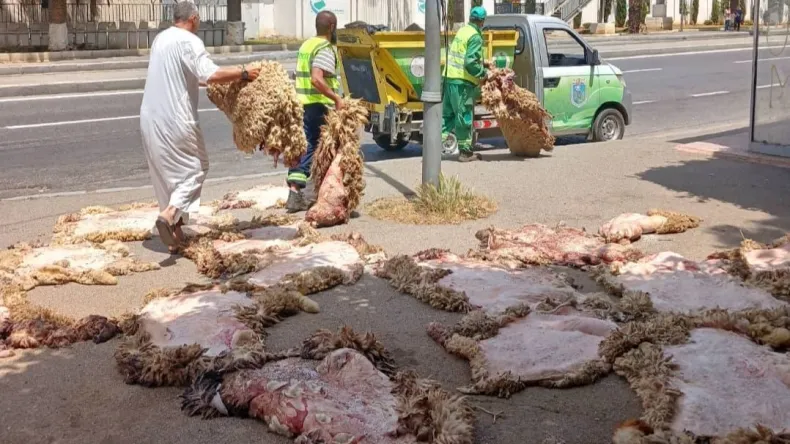
The national campaign for the valorization of sacrificial skins, launched during Eid al-Adha, has achieved its set goals, with recorded results aligning with the human and logistical capabilities mobilized for the operation. The recorded results were commensurate with the human and logistical capabilities mobilized to ensure the success of the operation, showing the effectiveness of the extensive planning. This national initiative involved several ministerial sectors, including the Ministry of Environment and Quality of Life, the Ministry of Industry, the Ministry of Interior, and the Ministry of Commerce. The campaign officially began its activities from the Djamaa el-Djazair, marking a coordinated effort across government bodies. Officials stated the successful outcome reflected the extensive resources deployed to ensure its effectiveness. The actual launch of the campaign from the Djamaa el-Djazair symbolized the national scope and importance attributed to this environmental and economic endeavor.
Mobilization and Planning for Eid
The three days of Eid al-Adha saw a broad mobilization of various sectors and bodies across the nation. This period witnessed significant coordination efforts to manage the logistics of sacrificial skin collection. Authorities adopted a national plan to determine the specific timing for placing and collecting sacrificial skins. This full approach ensured a coordinated effort throughout the holiday period, minimizing potential disruptions and maximizing efficiency. The national plan served as the overarching strategy, guiding regional and local implementation.
Each governorate subsequently developed its own specific plan for waste collection and transport, mobilizing specialized companies dedicated to skin collection. These localized plans were key for addressing the unique geographical and logistical considerations of each region. These efforts involved several key entities, including the Directorates of Environment and Industry, waste collection and transport companies, municipalities, and technical landfill centers. Civil society actors also participated in supporting the campaign's objectives, demonstrating a collective commitment to the initiative. The involvement of such a diverse array of stakeholders, from government bodies to private companies and community groups, was integral to the campaign's widespread reach and operational success.
The Ministry of Environment and Quality of Life prepared a proactive program specifically for skin collection during Eid al-Adha. This program included both an awareness campaign and educational initiatives designed to inform citizens about proper collection procedures. Their involvement aimed to streamline the process and ensure environmental standards were met, emphasizing the importance of proper handling for subsequent valorization.
Citizen Contributions and Company Roles
Citizens effectively contributed to the national campaign's success by properly treating and salting sacrificial skins, a key step for preserving their quality. This direct involvement from the public also included diligently adhering to instructions for placing the skins in designated collection areas. Public cooperation was identified as a key factor in streamlining the logistical aspects of the collection process, as the quality of the raw material directly impacts its valorization potential. Citizens contributed effectively to the campaign's success by treating and salting the skins to preserve their quality, in addition to adhering to placing them in designated areas, thereby facilitating the collection process for specialized teams.
The company Getaex (جيتاكس) played a significant role in the subsequent stages of the campaign. Getaex was responsible for recovering the collected skins, undertaking their utilization, and valorizing the material. This corporate involvement ensured that the raw materials gathered from the public were processed efficiently for further use within the industry, transforming what would otherwise be waste into a valuable resource. The company's expertise in material recovery was central to the economic success of the valorization effort.
Youth Empowerment in Recycling
Laws 25/02 and 61/24 provide a framework for empowering young people in the recycling sector. These legislative measures allow for the granting of licenses to youth to engage in waste collection and transport activities, facilitating their entry into the environmental services industry. Specifically, laws 25/02 and 61/24 allow for granting licenses to youth to practice waste collection and transport activities, thereby creating entrepreneurial opportunities in the green economy. This legal backing shows the government's commitment to fostering youth participation in environmental initiatives.
To further support this initiative, the 'Environmental Investor' platform was launched. This platform offers a full framework for youth interested in waste recycling businesses, addressing legal aspects, providing support mechanisms, offering accompaniment, and delivering essential training. The establishment of this platform aims to streamline the process for young entrepreneurs looking to contribute to the circular economy, equipping them with the necessary tools and knowledge. The 'Environmental Investor' platform was launched, providing a framework for legal aspects, support, accompaniment, and training for youth interested in waste recycling businesses, ensuring they have a solid foundation for their ventures.
Officials note that an increasing number of young people are now choosing to invest in businesses focused on recycling materials such as cardboard, paper, and plastic. This trend indicates a growing interest among the youth in environmental entrepreneurship and the economic potential within the recycling industry. An increasing number of young people are turning to investing in recycling cardboard, paper, and plastic, noting a shift towards sustainable business models and a recognition of the value in waste materials. This engagement from the younger generation is seen as vital for the long-term sustainability and growth of the national recycling sector.