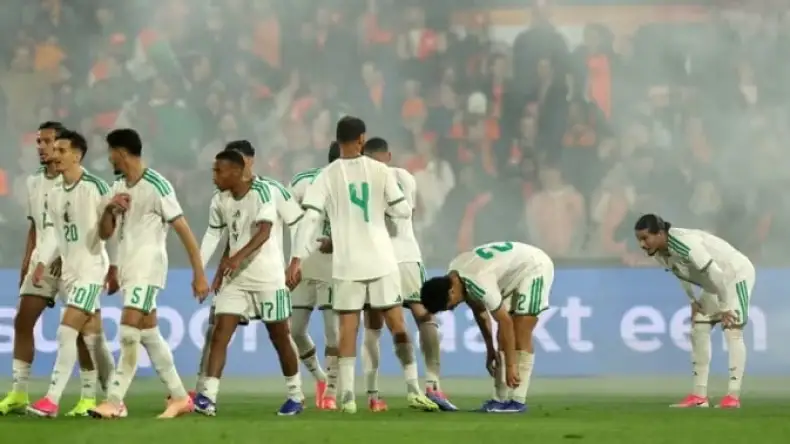
Algeria's national football team experienced a disappointing performance at the World Cup in America, sparking questions about the squad's composition and overall strategy. The team's showing on the global stage was widely considered below expectations, leading to significant scrutiny. The outcome has prompted discussions regarding the selection strategy and the potential impact of overlooking players from the domestic league. The team, known as "The Greens," struggled to meet expectations on the international stage, with their performance being a source of considerable disappointment for fans and analysts alike. This disappointing performance has ignited a debate about the fundamental approach to player selection and team building.
Disappointing World Cup Campaign
Players in the World Cup campaign faced criticism for their ineffectiveness and defensive errors, which were repeatedly noted as key weaknesses. The team's struggles were particularly evident during their key match against Switzerland in the Round of 16. During this knockout stage encounter, Switzerland scored its first goal after just 10 minutes, capitalizing on defensive mistakes made by The Greens. These early errors set a challenging tone for the Algerian side. Further errors by the team at the start of the second half allowed Switzerland to score a second goal, effectively sealing their fate and contributing directly to their elimination from the tournament. The repeated breakdowns in defense and the perceived lack of offensive impact from the players drew sharp criticism from various quarters.
Historical Successes with Local Players
The national team has a strong history of success when incorporating domestic talent. The national team secured the African Cup of Nations title in Egypt in 2019, a memorable victory achieved under coach Djamel Belmadi with significant contributions from players sourced directly from the national league. This triumph showed the value of nurturing and utilizing homegrown talent. A similar approach was evident in the 2014 World Cup in Brazil, where coach Halilhodžić placed considerable trust in numerous local players, integrating them effectively into the squad. Earlier, in 2010, coach Saadane had successfully qualified the national team for the World Cup by strategically investing in local talent within the squad, demonstrating that a strong domestic core could lead to international qualification.
The team's historical success with domestic players extends even further back, including a continental title win in 1990. This triumph was led by the late coach Kermali, with local players forming a key part of the team's winning formula. This period is often cited as a golden age for Algerian football, heavily reliant on the strength of its local league. During the 1980s, the national team also achieved qualification for the World Cup on two separate occasions, participating in both the 1982 and 1986 tournaments. These historical achievements consistently highlight the positive impact of integrating and trusting players developed within the national league system.
Questions Over Player Selection
The limited presence of local players in the World Cup squad has raised significant questions, according to the article, and has become a central point of contention in the post-tournament analysis. Several domestic talents were notably absent from the team's roster, prompting widespread discussions about the selection criteria employed by the coaching staff. The article suggests that players such as Belaid, Ashraf Abada, and Titraoui could have made a significant contribution to the national team's performance if they had been entrusted with more prominent roles or included in the squad. Their exclusion from the squad or their limited playing time during the tournament has become a point of contention among fans and pundits. Additionally, the absence of striker Bounedjah and the non-participation of Belaïli due to injury further impacted the team's composition, leaving gaps that local talent might have filled effectively, potentially offering different tactical options and energy to the team. The article explicitly questions the rationale behind the seemingly reduced reliance on players from the national league in favor of other options.
Coach's Future and Player Criticism
Criticism has been widely directed at coach Petković following the team's disappointing World Cup campaign, and he is now expected to depart from his position. The intense scrutiny reflects the dissatisfaction with the team's performance and the strategic choices made. Amidst the team's struggles and the overall defensive lapses, defender Ben Sebaini was cited as an important pillar for the squad, demonstrating individual resilience and skill despite the overall defensive errors observed during the tournament. However, the collective performance of the players, characterized by ineffectiveness and repeated defensive errors, has drawn significant criticism, contributing to the calls for a change in leadership.