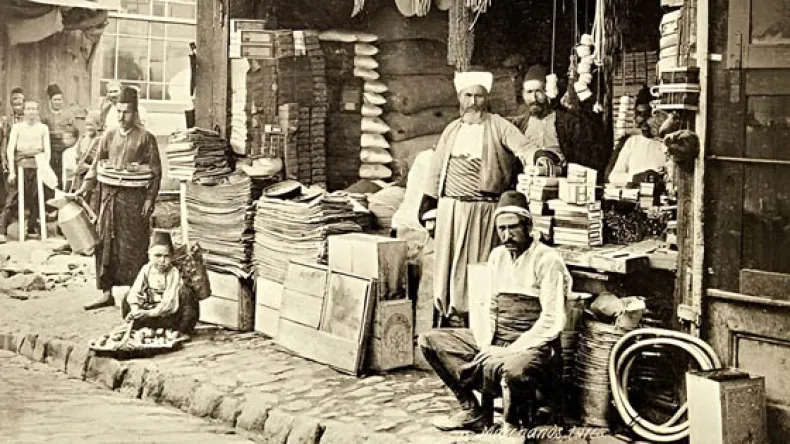
Algiers emerged as not just a dominant military power but also the largest economic center in the Western Mediterranean during the Ottoman era, according to historical accounts. Some visitors frequently nicknamed Algiers "Little Istanbul" due to its abundant flourishing industries and diverse crafts, reflecting its bustling commercial life and significant production capabilities. Historical sources confirm the city achieved a high level of industrial development throughout the 17th century. This period saw Algiers establishing itself as a prominent civilizational and commercial model across the Mediterranean world. Traditional industries, particularly textiles and silk, were key to Algiers' economic strength, forming a significant element of its prosperity during this era.
Thriving Crafts and Industries
The Ottoman city of Algiers exhibited significant commercial activity, evident in its extensive trade routes and specialized markets. This strong commercial environment showed its importance as a regional economic powerhouse. In 1623, the city’s industrial capacity included more than 3000 weavers, 1200 tailors, and 600 silkworm breeders, illustrating a highly specialized and productive workforce. The textile sector formed the foundation of Algiers' urban economy, particularly through its flourishing silk, wool, and luxury fabric industries, which were central to its economic success. This specialization in textiles, especially silk production, positioned Algiers as a key player in Mediterranean trade.
Algiers featured specialized markets for various crafts, such as "Zanqat Al-Hashiyat," a district renowned for producing golden and silver silk trim (Sfifa and Hawashi) integral to luxurious traditional clothing. The city also gained recognition for its manufacture of silk belts adorned with gold and silver threads, which found popularity in foreign markets. These belts, along with other high-quality textile products, contributed significantly to the city's export economy. Ottoman Algiers' markets included daily, weekly, and annual varieties, frequently situated in distinct areas and streets, with each street typically specializing in a particular type of goods. This well-organized market system facilitated efficient trade and distribution of the city's diverse products.
Historical figures from 1623 illustrate an integrated industrial urban center, supported by thousands of artisans and specialized workshops. These statistics reveal a sophisticated economic ecosystem where craftspeople played a key role in the city's manufacturing output. During the same year, the city also experienced an assassination attempt against justice, an event that, while significant, did not derail the underlying industrial and commercial momentum that characterized Algiers during this period. The sheer number of skilled laborers and specialized production units showed Algiers' status as a vibrant industrial hub.
Roots of Prosperity
Researchers attribute the prosperity of Algerian industries to the migration of Andalusians following the fall of Andalusia. These migrants brought extensive expertise, contributing significantly to the development of local crafts. Their skills encompassed a wide range of trades, including textiles, tailoring, tanning, jewelry making, and blacksmithing, which collectively bolstered Algiers' economic output and diversified its industrial base during the Ottoman era. This influx of skilled labor and specialized knowledge established a strong foundation for the city's manufacturing sectors, allowing Algiers to develop a reputation for quality craftsmanship and industrial capacity in the Mediterranean region. The integration of these diverse skills led to a significant advancement in local production techniques and product variety.
A key aspect of the economic organization in Ottoman Algiers was the presence of a "Craft Master" (Ameen Al-Hirfa) or "Industry Master" (Ameen Al-Sana'a). This designated individual played a key role in maintaining standards within various industries. The Craft Master's responsibilities included rigorously overseeing quality control processes before products were made available for sale in the markets. This system ensured that goods produced in Algiers consistently met specific benchmarks, thereby enhancing the city's reputation for reliable and high-quality manufactured items, both locally and for export. This oversight mechanism was central to sustaining the integrity and value of Algiers' diverse industrial output, fostering trust among buyers and reinforcing the city's commercial standing.
Global Reach and Reputation
Algerian Sfifa, a type of golden and silver silk trim, achieved recognition as one of its era's finest textile products. This high-quality Sfifa was exported to Europe, notably Italy, where it was incorporated into luxury garments and religious attire, demonstrating its high value and desirability. The superior quality of Algerian products facilitated the opening of extensive foreign markets. Silk fabrics, Sfifa, and belts from Algiers were regularly exported to several European countries and the Levant, establishing the city's reputation for fine craftsmanship beyond the Mediterranean. This wide export network solidified Algiers' position as a significant global trade partner, further enriching its economy and cementing its identity as an industrial powerhouse. The consistent demand for these finely crafted Algerian goods showed the city's advanced manufacturing capabilities and its integral role in international commerce during the Ottoman period.