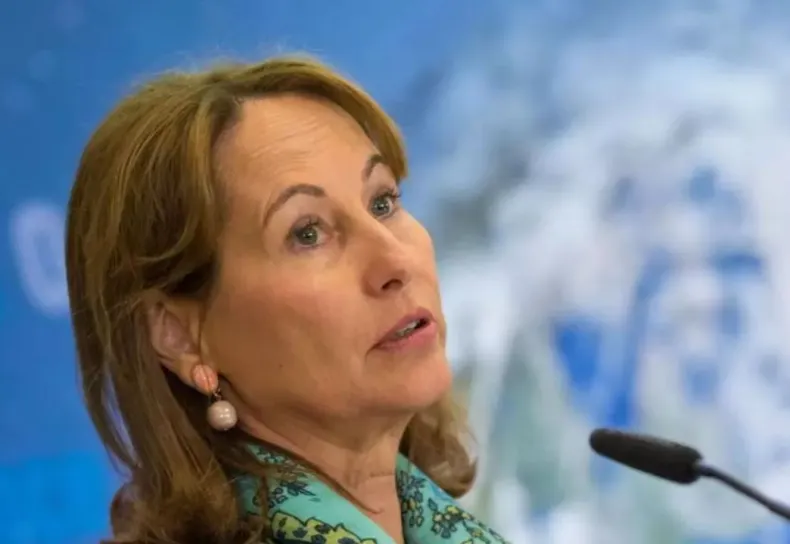
Ségolène Royal announced her participation in the French presidential elections via a tweet, subsequently facing a media barrage from far-right outlets linking her to Algeria. Media organizations, including those owned by Vincent Bolloré, have portrayed the former Socialist minister as the "voice of Algeria" in the French presidential election. This characterization emerged swiftly after Royal's declaration to run, setting the stage for a contentious campaign narrative. The outlets explicitly described Royal as the "voice of Algeria" in the French presidential election, a label intended to frame her candidacy within a specific geopolitical context.
The CNews channel also carried accusations against Royal in an editorial, amplifying the narrative that she represents Algerian interests in the French political landscape. This coverage from specific media outlets has generated significant discussion regarding the nature of political discourse surrounding candidates and their perceived international allegiances, particularly concerning France's complex relationship with Algeria. The intensity of the media scrutiny suggests a deliberate effort to shape public perception of Royal's candidacy early in the electoral cycle.
Media Campaign Details and Allegations
Media outlets owned by Vincent Bolloré, including CNews and Le Journal du Dimanche, launched a coordinated campaign targeting Ségolène Royal following her announcement to run for the French presidential election. This concerted effort quickly brought Royal's past and present connections to Algeria into sharp focus. Le Journal du Dimanche published an article on Saturday, July 11, under the headline: "Ségolène Royal, Candidate: The Voice of Algeria in the (French) Presidential Election." This publication marked a significant point in the media's focus on Royal's connections to Algeria, directly accusing her of being an advocate for Algerian interests within French politics.
The article in Le Journal du Dimanche described Royal as an "eternal" candidate for the presidential election, referencing her repeated bids for the office and implying a persistent, perhaps even opportunistic, pursuit of power. The publication also explicitly stated that Royal is among the strongest supporters of Algeria within the French political landscape. This characterization contributes to the narrative being advanced by certain media organizations regarding her perceived allegiances, suggesting a deeper, long-standing commitment to Algerian causes. Le Journal du Dimanche noted Royal was unable to secure the release of French journalist Christophe Geilez during her visits to Algeria, presenting this as evidence of her limited influence or perhaps a misdirected focus. This particular detail aimed to undermine her credibility as an effective mediator or political figure capable of delivering tangible results in complex international relations.
Royal's Defense and Contextual Clarifications
Ségolène Royal, in response to the intense media scrutiny and accusations, declared she would continue her mediation efforts with Algeria, asserting it serves France's interest, despite what she described as mockery. She maintained that her diplomatic engagements were beneficial for France, irrespective of the critical commentary. The inability to secure the release of French journalist Christophe Geilez was noted by Le Journal du Dimanche during her visits to Algeria. Geilez was sentenced in Algeria to seven years in prison on charges of supporting and praising terrorism, a serious accusation that complicates any diplomatic intervention. Royal clarified that she has held the presidency of the "France-Algeria" association for only six months, directly addressing the implication that her ties to Algeria are long-standing and deeply entrenched through this organization. This specific detail was intended to counter the narrative of her being a long-term "voice of Algeria."
She also noted that the "France-Algeria" association was established at the initiative of General de Gaulle and Germaine Tillion, emphasizing its historical and bipartisan roots rather than any partisan or foreign-influenced agenda. Jean-Pierre Chevènement, a prominent French politician, serves as the honorary president of the "France-Algeria" association, further lending weight to its established and respected status. Royal stated her invitations to Algeria came from the chambers of commerce and industry, not the Algerian government, thereby refuting claims of direct governmental lobbying or undue influence. This distinction is key, as it portrays her engagements as economically driven and mutually beneficial, rather than politically motivated by Algerian state interests. In 2007, Royal lost the presidential election in the second round to Nicolas Sarkozy, a historical fact that provides context to her long political career and her repeated attempts at the presidency. This background helps to frame her current candidacy within a broader trajectory of political ambition and public service.
Broader Implications and Future Outlook
The far-right has expressed concerns that Ségolène Royal could attract votes from the Algerian community in France, viewing her perceived ties to Algeria as a strategic advantage among this demographic. This concern shows the ethno-cultural dimensions often present in French political discourse, particularly regarding immigrant communities and their electoral impact. Royal, for her part, has articulated that France requires Algeria's cooperation in combating terrorism, emphasizing a shared security interest that transcends political differences. She also noted the necessity of securing energy supplies from Algeria at a more economical price, pointing to a pragmatic economic rationale for maintaining strong bilateral relations. These arguments position her engagement with Algeria as a matter of national interest for France, rather than a concession to foreign influence.
She has also observed a shift where disagreement and conflict have supplanted constructive economic and political cooperation between France and Algeria. This observation suggests a concern for the deteriorating state of bilateral relations and implies that her mediation efforts are aimed at restoring a more productive partnership. Royal's emphasis on the need for cooperation in key areas such as counter-terrorism and energy supply directly challenges the narrative put forth by the far-right media. By framing her engagement with Algeria as essential for France's security and economic well-being, she seeks to redefine the terms of the debate. The ongoing media scrutiny and Royal's steadfast defense of her actions highlight the intense political climate surrounding the French presidential election and the complex interplay between domestic politics, media influence, and international relations. The outcome of this media barrage and its impact on Royal's candidacy remain to be seen as the election cycle progresses.