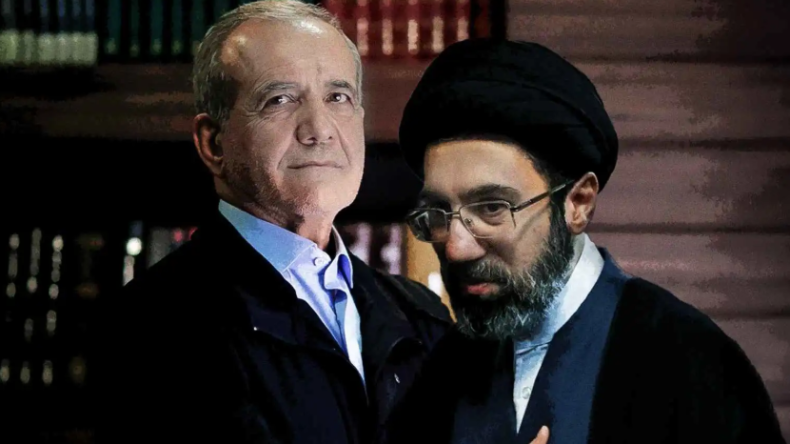
Iranian President Masoud Pezeshkian spoke on Thursday about his recent two-and-a-half-hour meeting with Iran's Supreme Leader Mojtaba Khamenei. Pezeshkian stated that the Supreme Leader's approach fostered an environment of trust. "The Supreme Leader's approach in our last meeting turned the atmosphere of dialogue into an environment based on trust and direct dialogue without barriers," Pezeshkian said. He also claimed that the enemy's goal with its pressures is to create public discontent, push people to the streets, and weaken the ruling structure. This assertion by President Pezeshkian shows the ongoing struggle against what Iranian officials describe as foreign-backed attempts to undermine the nation's stability and public confidence. The President's remarks provided insight into the nature of high-level discussions within the Iranian leadership regarding national security and external challenges.
Addressing External Threats
Tehran is currently subjected to external pressures, which are designed to increase economic pressure, destabilize internal affairs, and weaken national cohesion, according to Iranian statements. These pressures are reportedly aimed at generating public discontent within the country. Iranian officials have stated that American officials are openly discussing plans to intensify economic pressure on the Iranian populace. Specifically, American officials are openly talking about intensifying economic pressure on our people to create discontent, as claimed by Iranian sources. Such actions, they claim, are intended to create further discontent among the people, leading to internal unrest and weakening the government's authority. The Iranian government views these external pressures as a direct assault on its sovereignty and the well-being of its citizens, necessitating a strong and unified national response.
Dialogue Characterized by Trust
American officials have long questioned the health of Mojtaba Khamenei since his appointment as Supreme Leader. This questioning often surfaces in international reports and analyses concerning Iran's political future. The dialogue between President Pezeshkian and Supreme Leader Mojtaba Khamenei, as described by Pezeshkian, was marked by an unusual degree of openness and mutual respect. Pezeshkian emphasized that this atmosphere of trust allowed for direct and unhindered communication, which is key for addressing the complex challenges facing the nation. Such a characterization of their meeting suggests a strong working relationship at the highest levels of Iranian leadership, aiming to present a united front against perceived external threats and internal divisions.
Public Resilience and National Unity
Masoud Pezeshkian asserted that the Iranian people have successfully thwarted the adversaries' schemes. He stated that this resilience has been demonstrated despite ongoing wartime conditions and the economic pressures citizens face. The people have foiled the enemies' plans despite the conditions of war and the economic pressures they endure, a sentiment frequently echoed by Iranian leadership. Pezeshkian's remarks show a narrative of national unity and steadfastness in the face of external challenges. The President's comments align with previous statements from Iranian officials regarding efforts to counter perceived attempts at destabilization, noting the collective determination of the Iranian populace to overcome adversity. This narrative serves to reinforce domestic support for the government and its policies.
Broader Geopolitical Context
Reports suggest that Mojtaba Khamenei sustained severe injuries during a US-Zionist raid. The same raid reportedly resulted in the death of his father. This information contributes to the broader geopolitical context surrounding leadership in Iran and external relations. The alleged incident is part of a narrative frequently referenced in official Iranian discourse regarding foreign interventions and their consequences for the country's leadership and stability. Such claims are often put forth by Iranian sources when discussing the nation's security posture and the perceived threats from the United States and Israel. These reports, while often unconfirmed by independent sources, play a significant role in shaping public perception within Iran and influencing its foreign policy decisions, particularly concerning regional adversaries.