Algeria's industrial exports are making significant inroads into new international markets, signaling a strong expansion of the nation's manufacturing capabilities. Recent dispatches of steel products to multiple international destinations show this growing global presence. A landmark development in this expansion is the Algerian-Qatari Steel Company (AQSC) conducting its first-ever sea export operation to Sudan. This inaugural shipment consists of a substantial trial consignment of construction iron, estimated to be between 14,000 and 15,000 tons. This particular operation marks a new chapter in Algeria's trade relations, as it is the first time such a large-scale sea export has been undertaken to the Sudanese market. The strategic importance of this trial shipment cannot be overstated, as its success is anticipated to pave the way for a sustained and significant trade relationship.
Historically, AQSC has established a broad global footprint, having previously exported to an impressive 47 countries worldwide. This extensive list of destinations includes key markets within the European Union, Eastern Europe, and various nations across Africa, the Americas, and Asia. Specific countries that have received Algerian steel products from AQSC include Libya, Senegal, Mauritania, the United States of America, the Dominican Republic, Puerto Rico, China, Qatar, Syria, and Iraq. This diverse portfolio of export markets notes Algeria's growing reputation as a reliable supplier of industrial materials. In addition to AQSC's efforts, other Algerian industrial players are also actively engaged in international trade. For instance, Tosyali, another prominent Algerian steel producer, recently dispatched 7,000 tons of rebar from the port of Mostaganem to Belgium, further diversifying Algeria's export destinations within Europe. Tosyali also successfully exported 5,000 tons of hot-rolled sheets from the port of Oran to Spain, reinforcing its presence in the Western European market. Demonstrating its reach into the United Kingdom, Tosyali also shipped 4,500 tons of rebar to England.
Steel Sector Expansion and Global Reach
The Algerian steel sector has proven its capacity to meet international demand, with Algerian iron products reaching major global capitals. These include Washington, the capital of the United States; London, the capital of the United Kingdom; and Beijing, the capital of China, among other significant international cities. This wide geographical spread shows the competitiveness and quality of Algerian steel on the world stage.
The Algerian-Qatari Steel Company (AQSC) has reported an impressive total export volume of 2.6 million tons since 2021, a figure that attests to its substantial production and export capabilities. The company's consistent performance has positioned it as a key player in Algeria's drive to boost non-hydrocarbon exports. The current trial shipment to Sudan is viewed as a critical step in further expanding this volume. If this initial operation proves successful, the annual exports of construction iron to Sudan are projected to reach a significant volume, estimated to be between 700,000 and 800,000 tons. This potential increase represents a substantial opportunity for both AQSC and the Algerian economy, providing a stable and high-volume market for its products. The sea journey for these shipments to Sudan is a considerable undertaking, typically taking approximately 40 days, noting the logistical planning and execution required for such international trade routes.
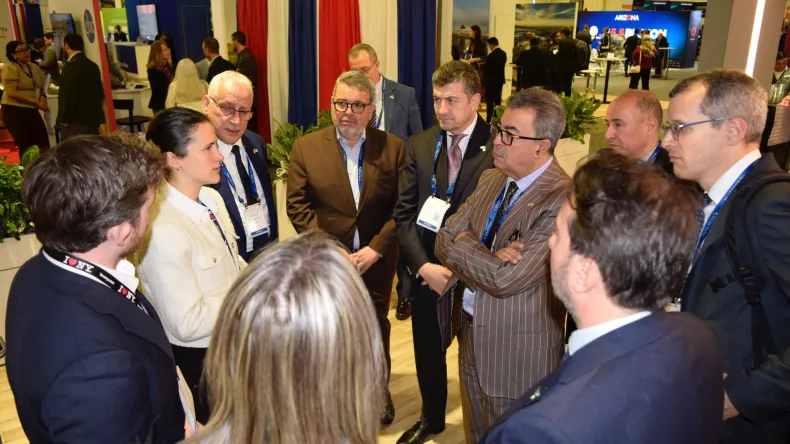
Tosyali has also made notable contributions to Algeria's steel exports, expanding its reach into additional European markets. The company shipped 10,000 tons of steel sheets, known as 'bram', from the port of Arzew to Italy, showcasing its ability to supply various forms of steel products to meet diverse industrial needs. The commitment of Algerian steel producers to showcasing their innovations and products is also evident through their participation in key industry events. The Algerian-Qatari Steel Company (AQSC), for example, actively participated in the 28th edition of the "Batimatik" salon. This event is a significant platform for noting the latest developments and advancements within the construction sector, allowing AQSC to engage with potential clients and partners, and demonstrate its advanced products and production capabilities. Such participation is key for maintaining visibility and fostering new business opportunities in a competitive global market.
Looking ahead, Tosyali has ambitious plans to further enhance its product offerings and market value. The company intends to initiate the production of high-value-added steel products, a strategic move aimed at capturing more sophisticated market segments and increasing profitability. This launch is targeted for July-August 2026, indicating a clear long-term vision for growth and innovation within the Algerian steel industry. This focus on higher-value products is expected to further solidify Algeria's position as a capable and advanced steel producer on the international stage.
Cement and Specialized Products: Diversifying Industrial Exports
Beyond the steel sector, Algeria's industrial export portfolio is further diversified by the significant contributions of its cement industry. The GICA Cement Group stands as a powerhouse in this sector, boasting an impressive annual production capacity exceeding 20 million tons. This substantial capacity not only meets domestic demand but also positions GICA as a major exporter. The group actively exports its cement products to a wide array of international markets, including various countries in West Africa, Latin America, and several European nations. This extensive export network shows the quality and competitive pricing of Algerian cement products, enabling them to compete effectively in diverse geographical regions. The consistent demand from these international markets notes the reliability and high standards of Algerian cement.
Domestically, the construction sector continues to be a major consumer of cement and other building materials, driven by large-scale government initiatives. The "Adl 3" housing program is one such significant initiative, which is slated to deliver its initial units by the close of the current year. This ambitious housing program aims to address the growing demand for residential properties across the country. The "Adl 3" program will be supported by the development of 47 new housing poles spread across various regions, ensuring a nationwide impact. These housing poles represent full urban developments that will require substantial quantities of cement, steel, and other construction materials, thereby stimulating growth within Algeria's industrial sectors. The successful implementation of such programs is vital for sustained economic development and improving the living standards of the Algerian population.
In the realm of specialized industrial products, SARL Good Algérie is making a name for itself through its focus on niche manufacturing. The company specializes in the manufacturing of high-quality fire-resistant iron doors, catering to specific safety and security requirements in various types of buildings. SARL Good Algérie reports an impressive production capacity of up to 1,500 doors per day, indicating a highly efficient and scaled manufacturing operation. These specialized doors are engineered to offer critical protection, designed to resist fire for durations ranging from 30 minutes to an extended period of two or three hours. This range of fire resistance allows the company to meet different safety standards and client specifications, from residential to commercial and industrial applications. The company’s commitment to safety and quality has drew significant attention, particularly from international markets.
Global Reach and Future Ambitions: A Full Export Strategy
The global demand for industrial materials, particularly for reconstruction efforts, presents substantial opportunities for Algerian exporters. A prime example is the demand for iron in Sudan, where reconstruction needs are estimated to exceed 4 million tons annually. This strong demand indicates a substantial and ongoing market for Algerian steel products, providing a strategic avenue for sustained export growth. The Algerian industrial sector is well-positioned to capitalize on such opportunities, given its expanding production capacities and established export networks.
Algeria's concerted efforts to diversify its economy away from hydrocarbon dependence are clearly yielding positive results. Since 2021, the nation's industrial exports have generated an impressive value exceeding 1.5 billion dollars. This significant financial achievement shows the growing strength and competitiveness of Algeria's non-hydrocarbon sectors on the global market. This figure represents a key step towards achieving economic diversification and building a more resilient and sustainable national economy.
The Algerian-Qatari Steel Company (AQSC) is not resting on its laurels but is actively pursuing ambitious expansion plans to further boost its export potential. The company is planning to double its current production capacity, expanding from its present 2 million tons to approximately 4 million tons annually. This substantial increase in production capacity is a strategic move that could significantly enhance AQSC's ability to meet escalating international demand and secure larger market shares. The expansion will involve considerable investment in infrastructure and technology, reflecting a long-term commitment to growth and industrial leadership.
In the specialized manufacturing sector, SARL Good Algérie has successfully attracted interest from various African clients, including a partner from Cameroon, for its innovative fire-resistant iron doors. This international interest notes the quality and specialized nature of their products, which are increasingly sought after in regions undergoing significant construction and infrastructure development. The engagement with African partners not only opens new markets for SARL Good Algérie but also strengthens intra-African trade relations, aligning with broader continental economic integration goals.
Looking ahead, the Algerian industrial sector is poised for continued growth and diversification. The strategic investments in expanding production capacities, developing high-value-added products, and exploring new export markets collectively form a full strategy to enhance Algeria's global economic footprint. The ongoing success of companies like AQSC, Tosyali, GICA Cement Group, and SARL Good Algérie demonstrates the dynamism and potential of Algeria's industrial base to become a significant player in international trade. These efforts are key for building a diversified, resilient, and prosperous Algerian economy in the coming years.