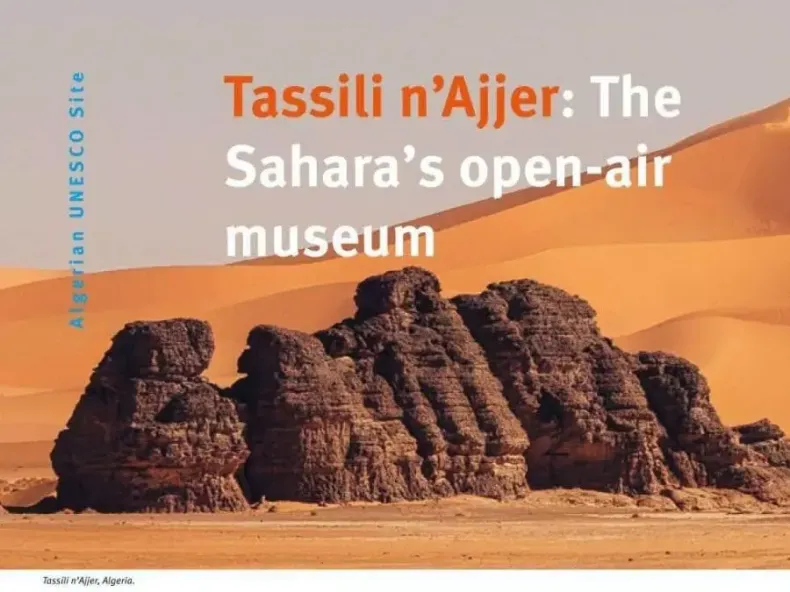
The OPEC bulletin has dedicated a special report to Algeria's Tassili n'Ajjer, noting the site in southern Algeria as a significant cultural and natural landmark. The report, titled "Tassili n’Ajjer : le musée à ciel ouvert du Sahara," describes the area as "archives à ciel ouvert des plus fascinantes de la planète." This designation shows the unparalleled historical and artistic value contained within its vast expanse. Tassili n'Ajjer holds distinction as the largest national park in Africa and has been recognized as a UNESCO World Heritage site since 1982. Its status as a World Heritage site emphasizes its outstanding universal value, encompassing both its natural beauty and its profound archaeological significance. Visitors typically begin their circuit for Tassili n'Ajjer from the city of Djanet, embarking on a journey that explores its unique geological formations and ancient archaeological treasures. The report by the OPEC bulletin serves to bring this extraordinary site to a wider international audience, emphasizing its role as a global heritage asset.
A Vast Natural and Artistic Treasure
The Tassili n'Ajjer site encompasses three primary zones: the Tassili plateau, the Red Tadrart mountain range, and the Iherir valley. Each of these zones contributes to the site's rich biodiversity and geological diversity, offering varied landscapes for exploration. Within these diverse environments, researchers estimate that the region contains an even greater number of drawings and engravings within its difficult-to-access areas, suggesting a vast, undiscovered artistic record that continues to reveal new insights into prehistoric life. The sheer scale of this artistic archive is immense, making Tassili n'Ajjer a global focal point for prehistoric art and archaeology. Tassili n'Ajjer serves as a historical record of the ongoing interaction between humans and their environment, according to the OPEC Bulletin report. This interaction is deeply etched into the very fabric of the landscape and its artistic expressions. The site's diverse geological formations and extensive rock art provide insights into ancient climates, ecosystems, and human activities in the Sahara. This interaction is evident in the depictions of wildlife, daily life, and ceremonial practices etched into the rock faces across its expansive landscape, providing a visual narrative of millennia of human adaptation and cultural development. The natural elements of the plateau, mountain range, and valley have preserved these records, offering a unique perspective on the region's past and the ingenuity of its ancient inhabitants.
Echoes of Ancient Climates and Cultures
The rock engraving known as "La vache qui pleure" (The Weeping Cow) in Tassili n'Ajjer relates a local legend about cattle expressing concern over drying conditions. This iconic piece of art is not only a testament to ancient artistic skill but also a poignant symbol of the region's environmental history. The OPEP publication notes the engraving as "La vache qui pleure," noting its cultural significance and its connection to the profound climatic shifts that have shaped the Sahara. Beyond local folklore, the rock art throughout Tassili n'Ajjer serves as a visual record of major climatic transformations in the desert. These artistic depictions provide key insights into the environmental history of the Sahara region, allowing scientists and historians to reconstruct past ecological conditions.
Detailed imagery within the rock art, including the presence of animals such as hippos, crocodiles, and giraffes, indicates a significantly wetter period in the desert's past. These animals, now absent from the arid Sahara, are powerful indicators of a dramatically different ancient environment. This suggests that the Sahara was once a lush, savanna-like environment capable of supporting such diverse fauna, a stark contrast to its current desert landscape. The period between approximately 12,000 and 7,000 BCE, known as the African Humid Period (AHP), is specifically identified by these artistic records. During the AHP, increased rainfall transformed the desert into a more hospitable landscape, a change vividly captured in the ancient engravings and paintings found across the Tassili n'Ajjer plateau. This artistic archive offers a unique scientific resource for understanding ancient climate patterns and environmental shifts, providing invaluable data for climate researchers and archaeologists alike. The rock art in Tassili n'Ajjer constitutes a visual record of major climatic transformations in the desert, offering an unparalleled window into the natural history of North Africa.
Geological Wonders and Human History
The Tassili n'Ajjer site preserves one of the world's most significant and extensive collections of rock art, making it a key area for understanding global prehistory. This ancient archive offers a detailed chronicle of human interaction with the Sahara's changing environment over millennia, documenting the resilience and adaptability of early human societies. The artistic works found within Tassili n'Ajjer document a rich cultural history, reflecting the lives of early inhabitants, their daily activities, and the diverse fauna that once thrived in the region. This makes the site a testament to a long history of interaction between humans and their environment, showcasing how communities adapted to and depicted their surroundings across various epochs. The site shelters one of the richest and most important rock art ensembles in the world, a distinction that places it among the most valuable archaeological sites globally.
To date, researchers have documented more than 15,000 drawings and engravings across the expansive Tassili n'Ajjer area. This vast collection represents a continuous artistic tradition spanning thousands of years. These artistic expressions span various historical periods, illustrating shifts in climate, biodiversity, and human societal structures, from the earliest hunter-gatherer societies to later pastoralist cultures. The sheer volume and artistic quality of these works contribute to the site's global importance as a record of prehistoric human presence and environmental evolution in North Africa, providing an invaluable resource for studying human development and environmental change. The detailed depictions offer insights into hunting practices, social rituals, and the evolution of artistic styles, making Tassili n'Ajjer an unparalleled open-air museum of human history.