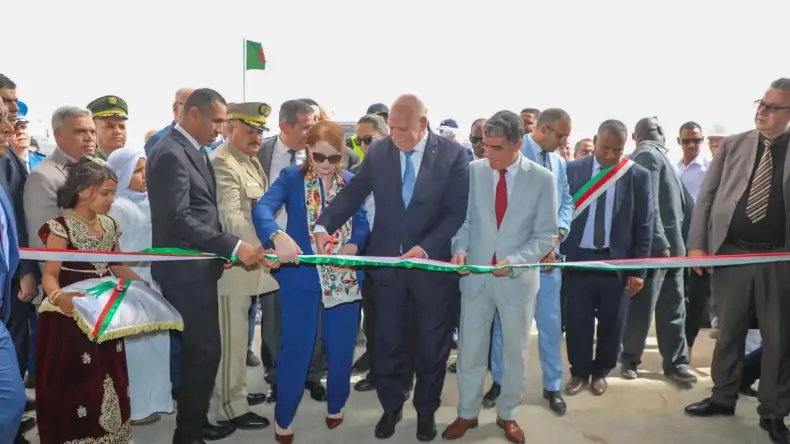
A new brick factory was inaugurated in the municipality of Fenughil, Adrar province, on Monday, June 8, 2026. The facility's opening marks a significant step in the region's industrial development, aligning with a broader national strategy to valorize confiscated assets. This strategic initiative aims to transform previously seized properties into productive economic units, thereby contributing to local development and national production capabilities. The inauguration shows the government's commitment to fostering economic growth and creating employment opportunities within the region.
Factory Details and Capacity
The newly commissioned factory is owned by Simka, a subsidiary of the Gica group, a prominent entity in the national industrial landscape. It occupies a total area of six hectares within the Fenughil municipality, providing ample space for its extensive operations and future expansion. The facility boasts a theoretical production capacity of 300,000 tons of bricks annually, positioning it as a significant contributor to the construction materials sector. This substantial output is expected to meet regional demand and potentially supply markets beyond Adrar province.
The rehabilitation and subsequent commissioning of this industrial unit were entirely completed by Algerian expertise. This notes the nation's growing self-reliance and technical proficiency in industrial projects. This key work was conducted in close cooperation with the Eastern Maintenance Company (SME), ensuring the factory's operational readiness and adherence to modern industrial standards. The successful execution of this project, relying on local capabilities, further demonstrates the potential for domestic talent to bring complex industrial facilities online, thereby contributing robustly to the region's industrial output and economic diversification. The technical teams involved ensured that all machinery and processes were optimized for efficiency and productivity from the outset.
State Policy and Economic Impact
The project aligns directly with the state's policy aimed at valorizing confiscated assets and reintegrating them into the national economic and production cycle. This initiative seeks to transform previously seized properties, which might otherwise remain dormant, into operational entities that actively contribute to the nation's industrial output and wealth creation. The new factory is anticipated to create more than 100 direct jobs, providing significant and stable employment opportunities within the Adrar province, thereby boosting the local economy and improving livelihoods.
This valorization strategy shows concerted efforts to repurpose assets for tangible economic benefit, fostering local development and stimulating industrial activity across various sectors. By reactivating these properties, the government intends to bolster production capabilities, reduce reliance on imports, and stimulate regional economies. This approach not only recovers value from seized assets but also transforms them into engines of growth and employment, reinforcing the country's economic sovereignty and industrial base. The creation of jobs is a key component of this strategy, aiming to provide sustainable employment for the local population.
Ministerial Directives and Vision
The operation of the new industrial unit in Fenughil embodies efforts to transform confiscated assets into productive projects, aligning with directives from the President. Minister of Industry, Yahya Beshir, emphasized the broader implications of such initiatives during the inauguration. Mr. Beshir stated, "The operation of this industrial unit embodies the efforts made to transform confiscated assets into productive projects that contribute to wealth creation, job opportunities, and local development, in implementation of the President's directives aimed at reintegrating these assets into the economic cycle and enhancing their contribution to national development."
During his visit, Mr. Beshir also issued specific directives centering on optimal resource utilization and production efficiency at the factory. These instructions additionally emphasized the critical importance of maintaining high product quality, adhering strictly to safety protocols, and ensuring compliance with established national and international standards. The Minister's guidance is intended to ensure the factory operates at its full potential, contributing effectively to the national economy while upholding best practices in industrial production and worker welfare.