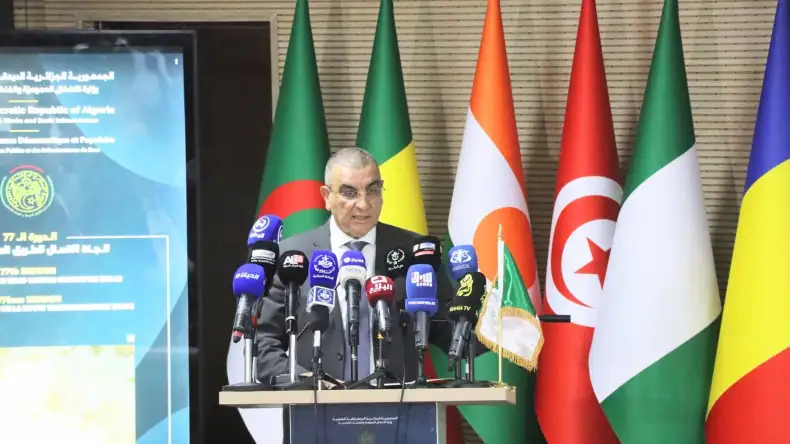
The 77th session of the Contact Committee for the Trans-Saharan Road project commenced in Algeria, signaling continued progress on the continent-spanning infrastructure initiative. This significant gathering shows Algeria's unwavering commitment to the ambitious project, which aims to fundamentally enhance connectivity and foster economic integration across Africa. Officials have consistently stated that these actions are in strict implementation of the directives issued by President of the Republic, Abdelmadjid Tebboune, noting the project's national strategic importance. The session reportedly focused on concrete steps for advancing the road's development, meticulously addressing both its technical and operational aspects to ensure its long-term viability and impact.
Strategic Continental Axis
Looking ahead, the next phase of the Trans-Saharan Road project will involve an intensification of efforts to complete remaining works on certain sections. This concerted push aims to finalize critical segments of the infrastructure, ensuring the road's full operational capacity. Beyond construction, officials also plan to develop strong mechanisms for the full management of the Trans-Saharan Road. These mechanisms will encompass detailed maintenance protocols and strategies for the optimal utilization of the road, ensuring its long-term functionality and maximizing its economic impact across the continent. Minister of Public Works, Abdelkader Jellal, specifically stated Algeria's firm commitment to supporting this strategic continental axis, recognizing its key role in regional development.
Complementary Infrastructure Development
Algeria is actively developing an integrated system of supporting infrastructure to complement the Trans-Saharan Road. This full system includes not only improved road networks but also modern railways, advanced logistics hubs, and significant enhancements to the telecommunications and energy sectors. Officials indicate that these extensive developments aim to create a multifaceted transport and economic corridor, extending the benefits of the Trans-Saharan Road far beyond its immediate physical path.
Crucially, the country is working to integrate the railway line connecting the north and south as a strategic complement to the Trans-Saharan Road. This railway initiative seeks to further enhance connectivity and facilitate trade across the entire region, creating a smooth multimodal transport system. The Algiers-Tamanrasset railway line is mentioned as a giant project specifically designed to strengthen structural links between the northern and southern parts of the continent, reinforcing the overarching goal of regional integration and economic synergy. This railway is envisioned as a vital artery for goods and people, complementing the road network.
Ministerial Statements and Vision
Minister of Public Works, Abdelkader Jellal, affirmed Algeria's strong commitment to supporting the Trans-Saharan Road as a strategic continental axis. Jellal stated, "We renew the aspirations of the higher authorities towards more development, stability, and common prosperity for all peoples of the continent," showing the broader geopolitical and economic vision behind the project. Algeria aims to transition the project from mere infrastructure construction to actual economic utilization. This ambitious goal involves establishing integrated logistics platforms and free zones strategically located along the road, alongside stimulating productive investments directly connected to the road's network. To bolster this initiative and facilitate increased trade volumes, national ports are currently undergoing major expansion and development works. These extensive efforts are designed to significantly increase their capacity and improve overall logistical performance, thereby facilitating greater trade and economic activity not only within Algeria but also across the wider region served by the Trans-Saharan Road.