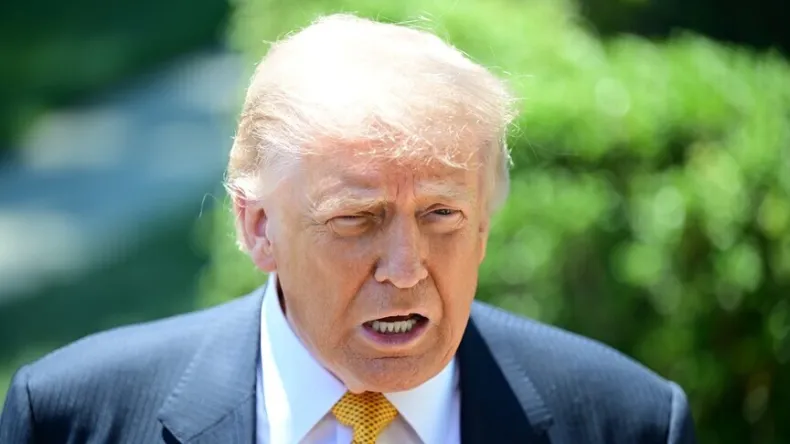
U.S. President Donald Trump appealed to Israel and Iran to "immediately" cease hostilities, following a new series of airstrikes conducted by both nations. Trump's call for de-escalation comes as tensions continue to mount between the two regional adversaries, raising significant concerns about the stability of the broader Middle East. The United States has closely monitored the situation, with officials expressing concern over the potential for broader conflict in the region, which could have broad geopolitical implications. The demand from the former president shows the international community's apprehension regarding the ongoing military exchanges.
Escalating Regional Conflict
Earlier in the day, the volatile situation saw a significant escalation when an Israeli strike targeted a petrochemical company in southwestern Iran, causing partial damage to the industrial complex, according to Iranian officials. This attack marked a direct hit on Iranian infrastructure. Following this, siren alerts sounded in several Israeli cities after missile launches from Tehran, indicating an immediate and forceful retaliation. The region has remained under high tension since airstrikes carried out in late February by the United States and Israel against Iran. These earlier strikes had already intensified the cycle of violence, leading to Iranian retaliation targeting Israel and other countries in the region hosting U.S. Installations, such as Kuwait and Bahrain. The recent exchange demonstrates a worrying pattern of reciprocal military actions that threaten to spiral out of control, making Trump's intervention particularly timely.
Previous Ceasefire Efforts
A temporary ceasefire had been concluded on April 8 between the parties involved in the escalating conflict, offering a brief glimmer of hope for a diplomatic resolution. This agreement aimed to halt the immediate hostilities and pave the way for more substantive discussions. However, negotiations for a more lasting resolution were subsequently suspended. This suspension occurred due to disagreements over the implementation of the ceasefire agreement and the evolving regional situation, casting a shadow over prospects for peace. The brief pause in hostilities failed to lead to a broader de-escalation, with both sides resuming strikes shortly thereafter. The April 8 agreement represented a previous attempt to mitigate the ongoing tensions, but its collapse shows the profound challenges in achieving a sustained cessation of violence in the region. The inability to maintain this temporary truce notes the deep-seated animosities and strategic imperatives driving the actions of both Israel and Iran, making any future peace efforts increasingly difficult.
Trump's Call for De-escalation
U.S. President Donald Trump, speaking from his Mar-a-Lago residence, urged both Israel and Iran to halt their military actions and prevent further escalation of hostilities. He emphasized the necessity of de-escalation in the volatile Middle East region, where any miscalculation could have catastrophic consequences. Trump's statement followed reports of renewed strikes between the two nations, noting ongoing concerns about regional stability and the potential for a wider conflagration. The former president's intervention comes amidst a period of heightened tensions that has seen repeated exchanges of fire, demonstrating a dangerous tit-for-tat dynamic. His call for an immediate cessation aims to cool down the situation, which has been closely monitored by international observers and global powers. The appeal shows the persistent efforts needed to mitigate conflict dynamics between the longstanding adversaries, whose actions continue to pose a significant threat to regional and global security. The immediate cessation of fighting, as called for by Trump, is seen as a critical first step towards preventing an even more destructive conflict.