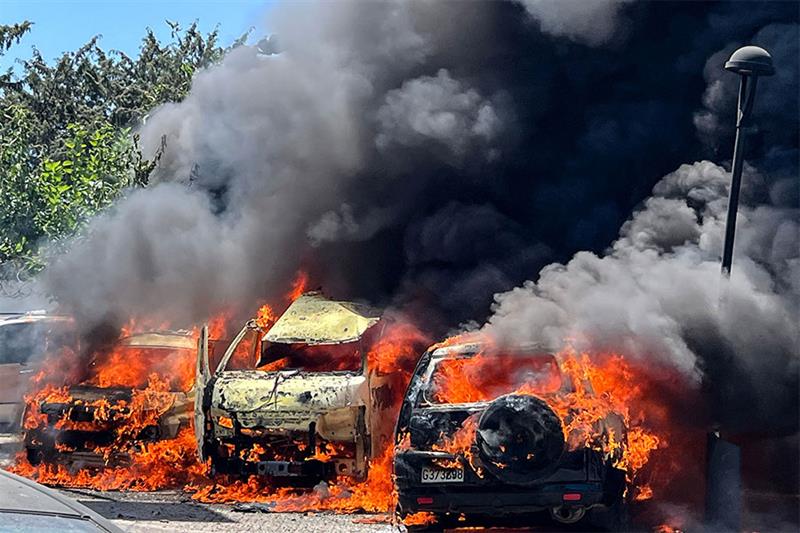
Israeli airstrikes in southern Lebanon on Wednesday resulted in the deaths of at least twelve people, marking a significant escalation in the ongoing regional conflict. The aerial bombardments targeted multiple locations, leading to a substantial loss of life and further exacerbating an already volatile security situation. The fatalities included four individuals killed in Deir Qanoun al-Nahr, a community that bore the brunt of several strikes. These tragic events show the severe human cost of the sustained military operations in the area. Separately, an Israeli drone targeted a vehicle traveling on a main thoroughfare in the coastal city of Sidon (Saïda) as part of the ongoing operations, bringing the conflict's reach further into civilian areas. The precision strike on the vehicle in Sidon notes the varied tactics being employed by Israeli forces in their campaign across southern Lebanon.
Deadly Strikes and Warnings Amplify Regional Instability
The death toll from Israeli airstrikes in Tayr Debba has reached eight, according to reports from local authorities and media outlets. This figure, combined with the four fatalities in Deir Qanoun al-Nahr, accounts for the total of twelve people killed on Wednesday. Lebanon’s National News Agency (NNA) meticulously documented at least four separate strikes on Tayr Debba, illustrating the intensity of the bombardments in that specific area. Alongside these, the NNA also reported two additional strikes targeting Deir Qanoun al-Nahr, contributing to the significant casualties recorded there. These actions occurred as the Israeli army issued new warnings to residents in three southern Lebanese localities, urging them to take precautionary measures amidst the heightened military activity.
The warnings from the Israeli army were specifically directed at Houmin al-Fawqa, Ghassaniyya, and Ansariyeh, advising inhabitants to exercise extreme caution and potentially seek shelter or evacuate. Such advisories often precede or accompany intensified military operations, signaling a period of increased danger for civilian populations in these border regions. Meanwhile, rescue workers responded swiftly to the drone strike in Sidon (Saïda), demonstrating the immediate and critical need for emergency services in conflict zones. In a testament to their dedication, two individuals were successfully pulled from the rubble following the targeted attack, noting the perilous conditions faced by civilians and first responders alike. The operations show continued regional volatility, with daily events contributing to a complex and dangerous security landscape that affects countless lives.
Ceasefire Efforts Amidst Broad Regional Conflict
A ceasefire agreement was concluded last week in Washington between emissaries of both governments, aiming to de-escalate recent hostilities and provide a much-needed pause in the violence. This diplomatic effort unfolded amidst a period of exceptionally heightened regional tensions, which had seen significant military actions and retaliatory strikes that affected multiple nations across the Middle East. The negotiations in Washington represented a critical attempt to find a political solution and prevent further deterioration of the security situation, acknowledging the widespread impact of the ongoing conflict.
Against this backdrop of intense regional instability, US-Israeli strikes against Iran occurred on February 28, marking a notable and severe escalation in the broader regional conflict. These unprecedented strikes resulted in the death of Supreme Leader Ali Khamenei, a key and foundational figure in Iran's leadership structure. Khamenei's death in the February 28 strikes against Iran represents a critical development with profound potential implications for regional stability, altering the political landscape and potentially sparking further retaliatory actions. The targeted killing of such a high-profile leader sent shockwaves throughout the region and beyond, raising fears of a wider conflagration.
In direct response to the US-Israeli actions and the assassination of their Supreme Leader, Tehran launched a series of retaliatory attacks against US military bases located in Jordan, Bahrain, and Kuwait. These retaliatory strikes further amplified the regional volatility, drawing additional countries and military assets into the cycle of military engagement. The coordinated attacks on US bases showed the interconnected nature of security challenges in the Middle East, demonstrating how actions in one area quickly trigger responses elsewhere, creating a cascading effect across national borders. The conclusion of the ceasefire agreement in Washington is intended to provide a pathway for reducing further confrontations and preventing a full-scale regional war, though the recent military exchanges indicate the extreme fragility of the regional security environment and the substantial challenges to maintaining peace.
Escalation and Human Cost: A Deepening Humanitarian Crisis
The human toll of the ongoing conflict continues to mount, with the Lebanese Ministry of Health reporting at least 3,696 deaths since the conflict's onset. This grim statistic reflects the devastating impact of the hostilities on civilian populations and shows the urgent need for a lasting cessation of violence. The continuous loss of life notes the severe humanitarian crisis unfolding in the region. In a direct response to the assassination of Ali Khamenei, Hezbollah reportedly fired rockets into Israel, demonstrating their commitment to retaliating against perceived aggressions and further fueling the cycle of violence. This action by Hezbollah was seen as a clear signal of their intent to remain a key player in the regional dynamics, especially in the wake of such a significant event.
Separately, Lebanon’s National News Agency (NNA) documented the arrest of a municipal councilor and a municipal employee by Israeli forces in a border village, adding another dimension to the conflict's impact on local governance and civilian life. The NNA reported that these arrests occurred during an incursion by Israeli forces into Lebanese territory. The Israeli army subsequently confirmed it had detained two individuals and transferred them to its territory for questioning, indicating that such operations are part of their broader security strategy in the border areas. These events unfold as the United Nations estimates the number of internally displaced persons now exceeds one million people across Lebanese territory, representing a staggering humanitarian crisis. These individuals have been forced to flee their homes due to the ongoing violence, seeking safety in other parts of the country, often with limited resources and support. The continued hostilities, including the recent airstrikes, arrests, and retaliatory actions, contribute to a worsening humanitarian situation, placing immense strain on Lebanon's infrastructure and aid organizations. The displacement of over a million people shows the profound and widespread destabilization caused by the conflict, necessitating urgent international attention and assistance.