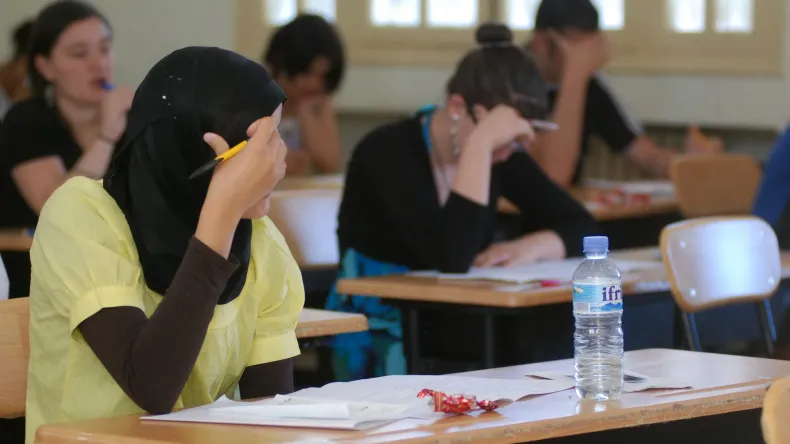
Algerian courts have recently imposed prison sentences on individuals involved in leaking baccalaureate exam topics and answers, showing the authorities' stringent measures to protect the integrity of national examinations. The Court of Chéraga in Algiers sentenced a private candidate and his sister to 4 years of effective imprisonment and a fine of 200,000 Algerian Dinars for their role in exam leaks. This particular case noted the direct involvement of family members in attempts to subvert the examination process. Separately, in Tlemcen, two defendants received 4-year effective prison terms for attempting to undermine the integrity of the Baccalaureate exams, reflecting the judicial system's consistent approach to such offenses across different regions.
Exam Integrity Under Threat
The National Gendarmerie played a key role in bringing these cases to light, notably informing the court after apprehending a candidate who was photographing exam questions with his mobile phone at an exam center in Ain El Benian. This swift action by law enforcement prevented further dissemination of exam content. In a separate incident in Biskra, two defendants were ordered to be detained pending trial following the leakage of the Arabic Language and Literature exam topic. The case in Biskra originated from a complaint filed by the Directorate of Education, which suspected a candidate of leaking questions via Bluetooth. An investigation confirmed these suspicions, and a hidden Bluetooth earpiece was subsequently discovered, revealing the sophisticated methods employed by those attempting to cheat. Meanwhile, the Laghouat case involved the monitoring of text messages that contained answers for the Arabic language exam during its initial hour, indicating real-time efforts to provide illicit assistance. These incidents collectively show the ongoing challenges to the integrity of the baccalaureate examinations, prompting strong responses from Algerian authorities.
Legal Ramifications and Charges
Defendants in all cases faced prosecution under immediate appearance procedures, according to judicial statements, ensuring a rapid response to these breaches of exam security. These legal actions specifically targeted offenses related to exam integrity and the illicit use of remote communication technologies during examinations. The charges against the defendants centered on publishing and leaking final secondary education exam topics and answers. Prosecutors alleged that remote communication means, including mobile phones and messaging applications, were utilized to disseminate this sensitive information, directly compromising the integrity of the baccalaureate examinations. This legal framework reflects the Algerian authorities' unwavering commitment to safeguarding the examination process from digital interference and unauthorized disclosure of content, ensuring fairness for all candidates. The implementation of immediate appearance procedures allowed for swift judicial handling of the alleged infractions, emphasizing the urgency with which these matters are treated.
Judicial Responses Across Provinces
In Laghouat, courts issued sentences ranging from 4 to 5 years of effective imprisonment and fines between 400,000 and 500,000 Algerian Dinars against five defendants for undermining the integrity of the Baccalaureate exams. One particularly notable case involved a candidate whose sister was reportedly answering exam questions using the AI application 'ChatGPT' and sending the responses back via WhatsApp, illustrating the evolving tactics used by perpetrators. Separately, security services in Tlemcen received a tip regarding a candidate using a mobile phone during an exam. This led to an investigation that confirmed an audio recording detailing an attempt to leak exam answers, providing concrete evidence for prosecution. In Biskra, the defendants allegedly used a phone call via Bluetooth technology to obtain exam answers with the assistance of the sister of one of the accused, further noting the complicity of individuals outside the examination halls. These varied cases across multiple provinces demonstrate the widespread nature of the problem and the consistent judicial resolve to combat such illicit activities.