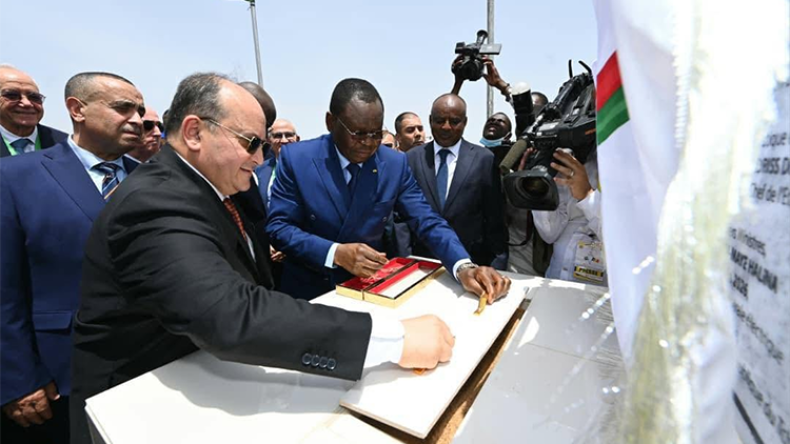
Algeria is actively pursuing development and social projects in impoverished Sahel region countries, utilizing aid as a component of its broader geopolitical strategy. This initiative follows directives from President Abdelmadjid Tebboune, according to reports. The ongoing efforts come as Algeria aims to uphold its position as a prominent and neutral regional player, particularly amid France's withdrawal and increasing international competition from Russia, the United States, and China across the Sahel. As part of these regional engagements, Chadian President Mahamat Idriss Déby Itno visited Algeria on April 21st, signaling continued diplomatic interactions within the region. Algeria's engagement in the Sahel is full, encompassing both tangible infrastructure development and key human capacity building, all while reinforcing its diplomatic standing.
Infrastructure Projects Bolster Regional Ties
Algeria is constructing its second power generation station in the Sahel region, a 40-megawatt facility in Chad. This significant project shows Algeria's commitment to regional development through concrete actions. This follows the inauguration of the first power station in Niger less than a week prior. The power station in Niger was built by Sonelgaz International, a testament to Algeria's state-owned enterprises' role in its foreign policy objectives. The installation in Chad is described as a gift from the Algerian state to the Chadian people, emphasizing the humanitarian and cooperative spirit behind these initiatives. This 40-megawatt capacity power station in Chad is expected to significantly contribute to the energy needs of the local population, boosting economic activity and improving living standards.
Beyond power generation, Algeria has completed other projects in Niger, including the development of the 'Kafra' oil field, further noting its multi-faceted approach to supporting its neighbors. These energy projects are vital for the economic stability and growth of the recipient nations, providing essential resources for industrial and domestic use. The strategic nature of these projects also positions Algeria as a reliable partner in key sectors.
Algerian aid is also directed towards joint infrastructure projects, such as the 'African Unity Road'. This ambitious road is designed to connect Algeria with Niger, Chad, and Mali, enhancing regional connectivity and facilitating trade and movement of people. Such infrastructure is key for fostering greater economic integration and stability across the Sahel. Other strategic initiatives include the central fiber optic project, aiming to improve digital infrastructure and bridge the digital divide in the region. This digital connectivity is increasingly important for modern economies and for strengthening communication links between countries. Algeria is involved in the Nigeria-Niger-Algeria trans-Saharan gas pipeline, a major energy undertaking that spans multiple countries in the region. This pipeline project, which officially commenced work on the fourth of the current month, is a significant step towards bolstering regional energy security and fostering economic interdependence. These infrastructure developments show Algeria's engagement in fostering regional development through tangible projects, demonstrating a long-term vision for the Sahel.
The Algerian state-owned energy company, Sonelgaz International, is at the forefront of these efforts. Sonelgaz International built the power station in Niger, showcasing its technical expertise and capacity for large-scale projects. The company is also expected to expand its activities in Africa by building power stations in other African countries like Ivory Coast and Mozambique, signaling Algeria's broader ambition to become a continental leader in energy infrastructure development.
Beyond Aid: Security and Influence
Algeria contends that a purely security-focused approach is inadequate to effectively address terrorism and organized crime within the Sahel region. This perspective informs its strategy of combining security measures with strong development efforts, believing that sustainable peace requires addressing the root causes of instability. To bolster its regional engagement and ensure effective implementation of its aid programs, President Abdelmadjid Tebboune activated the Algerian Agency for International Cooperation, designating it as a key executive instrument for collaboration with African nations. This agency serves as the operational arm for Algeria's extensive cooperation initiatives across the continent.
Through the Algerian Agency for International Cooperation, Algeria facilitates various forms of assistance, including air and land convoys that deliver essential items such as food, medical supplies, and tents. These humanitarian aid efforts are critical in addressing immediate needs and building goodwill within recipient communities. Algeria also provides full training programs and scholarships as part of its cooperation initiatives, investing in human capital development. These programs cover a wide array of fields, from technical skills to public administration, aimed at strengthening the institutional capacities of partner states. The country hosts thousands of students and military and civilian cadres from various African nations, contributing significantly to capacity building in partner states by offering specialized education and professional development opportunities. This commitment to education and training reflects a long-term vision for empowering the people of the Sahel.
Algeria's advocacy for a development approach instead of relying solely on military intervention in the Sahel is a cornerstone of its foreign policy. The nation firmly believes that sustainable solutions to the complex challenges facing the region, such as terrorism and organized crime, must address socio-economic factors. This approach is designed to create more resilient communities and diminish the appeal of extremist ideologies.
Historical Roots and Geopolitical Imperatives
Algeria has extended aid to Niger, Burkina Faso, and Chad as part of its regional engagement, demonstrating a consistent commitment to its neighbors. In Chad, Algerian Prime Minister Sifi Ghriab, along with his Chadian counterpart Lamana Haltouma, jointly laid the foundation stone for a power generation station. This high-level engagement shows the strategic importance Algeria places on these partnerships and projects. This initiative aligns with Algeria's position advocating for a development-focused approach in the Sahel rather than relying solely on military intervention, a stance it has consistently maintained.
Algeria also seeks to secure its borders with Mali and Chad, aiming to prevent massive flows of displaced persons and illegal immigrants into its territory. This security imperative is closely linked to its development strategy, as instability in neighboring countries can directly impact Algeria's own security and socio-economic fabric. By fostering stability and development in the Sahel, Algeria aims to create conditions that reduce forced migration and cross-border threats. The country's state-owned energy company, Sonelgaz International, plans to expand its activities in Africa, with expectations to build power stations in other African nations, including Ivory Coast and Mozambique, further solidifying Algeria's role as a key energy infrastructure provider on the continent. Further solidifying regional energy cooperation, the Algerian-Nigerian gas pipeline project, which traverses Niger, officially commenced work on the fourth of the current month, marking a significant milestone in regional energy infrastructure development.
Algeria's strategy in the Sahel is multifaceted, combining direct aid, infrastructure development, capacity building, and a diplomatic push for a development-centric approach to regional stability. This full engagement is designed to reinforce Algeria's status as a neutral and influential regional actor, while also addressing its own security and economic interests in a volatile but strategically important part of Africa.