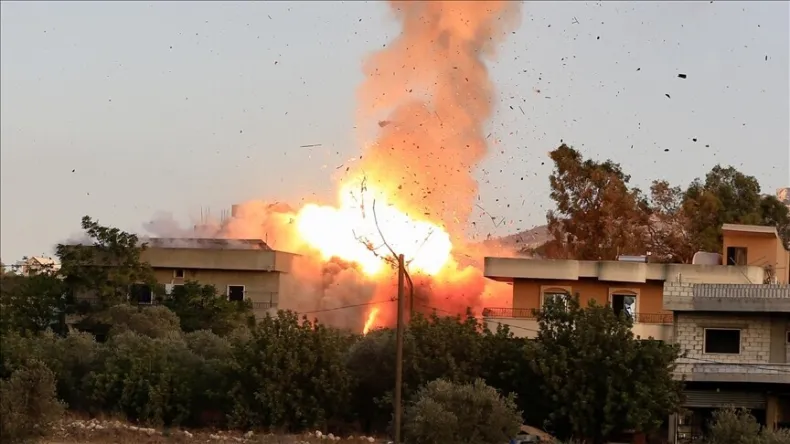
Overnight airstrikes by the Israeli army in several sectors of Gaza City killed at least 10 Palestinians, including a mother, father, and their three children, and injured 20 others. The death toll rose to 10 after an additional person died following the attacks. Reports indicated that Israel claimed responsibility for the strikes, stating it had killed Izz al-Din al-Haddad, identified as the leader of Hamas’ military wing. Israeli Prime Minister Benjamin Netanyahu and Defense Minister Israel Katz said al-Haddad was "one of the architects" of the October 7, 2023, attacks that triggered the war in Gaza.
Overnight Strikes Devastate Gaza City
Israeli combat aircraft and helicopters simultaneously targeted several homes in the west and north of Gaza City. The strikes notably hit a house belonging to the Muhenna family in the Al-Shati refugee camp, an apartment in the Sheikh Radwan neighborhood, a home in the Tel al-Hawa neighborhood, and the Lebid building in the Al-Mukhabarat area, northwest of the city. These targeted locations experienced significant destruction as a result of the aerial bombardment. The attacks in these residential areas show the widespread impact of the ongoing conflict on civilian infrastructure and lives.
The heaviest toll was recorded after a strike targeting the fourth floor of the Lebid building in the Al-Mukhabarat area. Hasan Rebah Lebid, his wife Menar, their eldest son Mohammed, their daughter Rehef, and their youngest son Temim lost their lives in this specific attack. This family of five was residing in the building when it was hit. The only survivor of the family is reportedly Hala Hasan Rebah Lebid, aged 9, who sustained slight injuries. Her survival provides a poignant detail amidst the tragedy.
Two Palestinians were killed in an Israeli strike that targeted a residential apartment in the Tel al-Hawa neighborhood. This incident added to the rising casualty count from the overnight operations. At least two other Palestinians also died during strikes on the Muhenna family home in the Al-Shati refugee camp and on an apartment near Abu Amin intersection in the Sheikh Radwan neighborhood. These multiple strikes across different neighborhoods illustrate the intensity and broad scope of the Israeli military's actions during the night.
Health officials from the Palestine Red Crescent Society’s Saraya Field Hospital and Shifa hospital reported that seven people were killed and dozens of others wounded in the strikes. The Israeli army also carried out airstrikes in the Al-Mawasi region, where several people were injured. Ambulance and civil defense teams continued search and rescue operations throughout the night at the targeted sites, transferring the injured and the bodies of the victims to Al-Shifa Hospital in Gaza. The rapid response of these emergency services was key in attending to the immediate aftermath of the attacks. Health and civil defense services estimate that people may still be under the rubble, indicating the potential for the death toll to rise further as recovery efforts continue. The transfer of casualties to Al-Shifa Hospital notes its critical role as a central medical facility in the Gaza Strip during times of conflict.
Israel Claims Hamas Leader Killed
Israel's army announced that Izz al-Din al-Haddad was killed in a strike in Gaza City on Friday. At least two Israeli strikes occurred that evening in Gaza City; one targeted a residential building, and another struck a vehicle, with Israel stating one of these was aimed at al-Haddad. This claim by Israel shows the strategic nature of some of its operations, focusing on high-value targets. Israeli officials said al-Haddad was the leader of Hamas’ military wing, and one of the architects of the Oct. 7, 2023, attacks that triggered the war in Gaza. Officials added that al-Haddad had assumed his leadership role after his predecessor, Mohammed Sinwar, was killed. This succession detail provides context to the leadership structure within Hamas’ military wing. Al-Haddad's family confirmed his death to The Associated Press on Saturday, lending independent corroboration to the Israeli claim.
Broader Conflict Context
More than 850 people have been killed since the October ceasefire agreement, according to the Gaza Health Ministry. The ministry also states that over 72,700 people have been killed in Gaza since Israel launched its offensive. This offensive began in response to Hamas’ October 2023 attack. During that attack, militants killed some 1,200 people and took 251 hostages. The scale of the October 7 attack was a significant factor in the subsequent Israeli military response. The ongoing conflict has resulted in a significant loss of life on both sides, with the Gaza Health Ministry providing figures for the period following the ceasefire and the overall offensive. The high number of casualties, particularly among civilians, continues to be a major concern for humanitarian organizations and international bodies. The continuous cycle of violence demonstrates the deep-seated nature of the conflict and its devastating human cost.