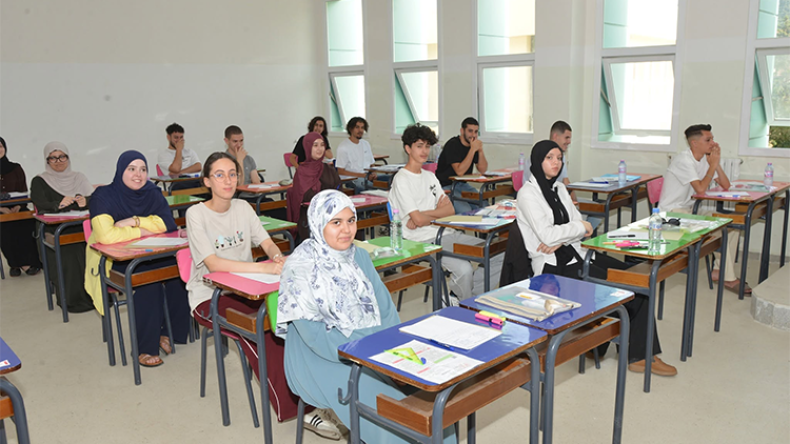
Students across Algeria completed the second day of the Baccalaureate exam series, with the subject of Mathematics presenting significant challenges. This full examination, a critical national assessment, took place on Monday, June 10, 2024, in various centers across the country, including in the city of Annaba. The article specifically discusses the events and outcomes of this second day of the Baccalaureate exam series. Many students found the mathematics component particularly demanding, reflecting broader concerns about the exam's difficulty this year. The day proceeded without major reported incidents at the examination centers, but the academic rigor of the mathematics paper was a common theme among participants. This follows the initial day of exams, setting a tone of high academic pressure for students aiming for university placements. The subject under scrutiny for the day was Mathematics, a core component for many academic tracks.
Mixed Reactions to Mathematics Difficulty
Many candidates described the Mathematics topics as a "real test of abilities," stating in Arabic, "امتحان حقيقي للقدرات." They indicated that while challenging, the exam was not impossible. Some candidates found the Mathematics exam to be slightly easier than the June 2025 session, offering a point of comparison to previous iterations of the national test. This sentiment, however, was not universal.
Conversely, other candidates expressed complaints regarding the length of the exercises and the number of inferential questions presented. These elements reportedly consumed a significant amount of their time and effort, leading to concerns about time management during the high-stakes assessment. Students from the Experimental Sciences branch generally found the topics easier compared to the previous session. They noted that the questions covered common exercises, though some presented complexities that required additional time for completion, necessitating careful thought and extended problem-solving. While these students acknowledged the familiar nature of many problems, the intricate details demanded a thorough approach.
For candidates specializing in the Literature and Philosophy and Foreign Languages branches, opinions on the exam's difficulty varied considerably. Some students reported that they found the questions accessible and manageable, allowing them to proceed with relative confidence. However, others complained about what they perceived as "traps" embedded within the multiple-choice questions, which complicated their responses and introduced an element of uncertainty. This divergence in perception noted the subjective nature of exam difficulty across different academic profiles.
Specific Challenges for Technical Branches
Candidates in scientific and technical branches reported significant difficulties with the mathematics exam. These difficulties were particularly pronounced for students in the Experimental Sciences, Mathematics, and Technical Mathematics branches, who encountered lengthy and complex topics within the exam paper. Some female candidates in these scientific fields were reportedly overwhelmed by the insufficient time allotted for the paper, leading to instances of crying and distress within the examination centers. This emotional response showed the intense pressure and the perceived unfairness of the time constraints.
Candidates from the Technical Mathematics branch specifically stated that indirect questions demanded considerable analysis, effectively doubling the time required for careful deliberation and problem-solving, and rendering the overall duration insufficient for completion. The intricate nature of these problems required not just computational skill but also a deep conceptual understanding and strategic thinking to unravel. The sheer volume and complexity of the material meant that even well-prepared students struggled to complete all sections within the stipulated timeframe.
Meanwhile, students in the Management and Economics branch faced their own set of challenges on the second day. Their Accounting and Financial Management and French Language exams were described by participants as requiring exceptional concentration. These subjects, while not mathematics, demanded sustained mental effort and precision, adding to the overall academic rigor of the day for these specific candidates. The need for such intense focus further illustrated the demanding nature of the Baccalaureate exams across all specializations.
Educator and Parent Perspectives
Parents gathered near examination centers, engaging in discussions with teachers to review the questions and obtain initial assessments of the mathematics paper. This informal exchange allowed for immediate feedback and a preliminary understanding of the challenges students faced. Following the legal time limit for the exam, social media platforms and dedicated Baccalaureate groups became forums for sharing proposed solutions. This spontaneous collaboration among students and educators aimed to provide a sense of clarity and to alleviate some of the post-exam anxiety by offering immediate answers.
Educators characterized the Mathematics subject as "very dense," noting that it would require a student "above average" to complete it within the allotted time. This professional assessment validated many students' feelings of being overwhelmed by the paper's scope and complexity. Teachers urged students to "forget Mathematics" (نسيان الرياضيات) and instead concentrate on the remaining key subjects, emphasizing the importance of moving forward and not dwelling on past performance. This advice comes as specialized exams are scheduled to begin on Tuesday, requiring students to shift their focus immediately.
The upcoming examination schedule notes the diverse academic pathways within the Baccalaureate system. For students in Literature and Philosophy, Foreign Languages, and Arts branches, the next challenge includes Philosophy and French. Candidates in the Experimental Sciences and Mathematics branches will face Natural Sciences and French exams, which are equally critical for their academic progression. For those in Technical Mathematics, the schedule includes Technology and French, demanding a different set of specialized skills. Finally, students in the Management and Economics branch are slated to take Accounting and Financial Management, in addition to French, rounding out a demanding examination period for all participants. These subsequent exams show the continuous pressure students face throughout this key national assessment.