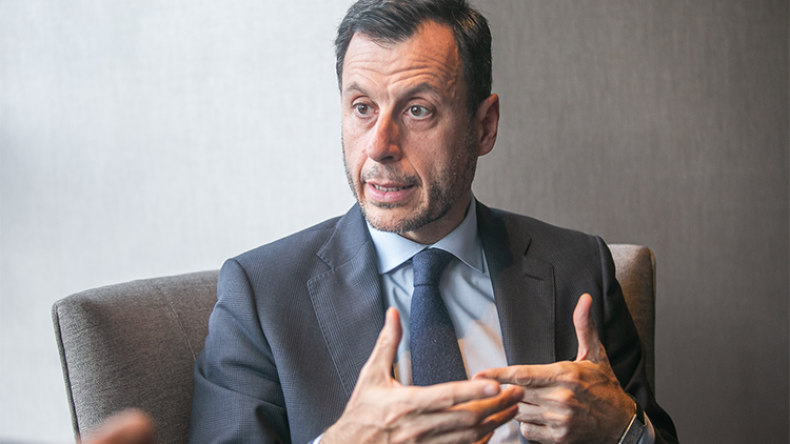
The Ambassador of the European Union Mission in Algeria, Diego Mellado Pascua, recently characterized the relationship between Algeria and the European Union as "very good, solid, and open." Pascua emphasized the ongoing dialogue, stating, "We are always open to dialogue with it in a calm atmosphere within the framework of the Partnership Agreement." He noted the significant development in trade relations, noting that trade relations between Algeria and the EU have seen a remarkable development recently. Pascua also noted Algeria's strong bilateral ties with certain EU member states. Pascua observed that "Algeria has very good relations with some EU member states, including Italy, with which both countries have exchanged high-level visits, as well as Germany, which President Abdelmadjid Tebboune will visit." Germany is another country with which Algeria maintains strong ties, and President Abdelmadjid Tebboune is scheduled to visit Germany, further showing the depth of these bilateral relationships. He concluded, "I see Algeria truly at the heart of significant interaction with Europe and the EU member states, and this is very positive." Pascua added that the EU encourages its member states to develop relations with countries like Algeria, as this "helps strengthen and improve relations with the European Union."
High-Level Exchanges Drive Diplomacy
High-level diplomatic exchanges have recently showed strengthening ties between Algeria and the European Union and its member states. These positive developments are evident through official visits exchanged between Algeria and some EU member states, as well as an increase in trade volume between the two parties. Approximately one month prior to the article's publication, European Commissioner for Mediterranean Affairs Dubravka Šuica visited Algeria, engaging in discussions aimed at bolstering cooperation. This followed an earlier visit by European Commissioner for Energy Dan Jørgensen, indicating sustained engagement from Brussels across critical sectors. These visits by high-ranking European officials demonstrate the EU's commitment to fostering a strong and multifaceted relationship with Algeria.
Beyond institutional interactions, Algeria maintains strong bilateral relations with several individual European Union member states. Diego Mellado Pascua, Ambassador of the European Union Mission in Algeria, noted, "Algeria has very good relations with some EU member states, including Italy, with which both countries have exchanged high-level visits, as well as Germany, which President Abdelmadjid Tebboune will visit." This notes the strategic importance of these direct country-to-country dialogues, which often pave the way for broader EU-Algeria collaboration. The exchange of high-level delegations facilitates direct communication, addressing specific bilateral interests while contributing to the overall positive trajectory of relations with the European bloc.
Further demonstrating these evolving relationships, ties between Algeria and France have shown improvement, which was preceded by a warming of relations with Spain. In recent months, French ministers have undertaken visits to Algeria, signalling a renewed diplomatic push and a desire to deepen cooperation across various domains. Similarly, Spain dispatched its Minister of Foreign Affairs, José Manuel Albares, to Algeria, showing efforts to enhance their bilateral cooperation and resolve any outstanding issues. These high-level visits are seen as instrumental in fostering closer political and economic links between Algeria and the European bloc, creating a more cohesive and cooperative regional environment. The sequential improvement in relations with key individual member states like Spain and France indicates a broader trend of diplomatic re-engagement from Algeria with European partners.
Cooperation Frameworks and Key Sectors
The "Charter for the Mediterranean" serves as a broad framework guiding cooperation between Algeria and the European Union. This charter addresses a range of issues fundamental to the relationship, including the movement of people and trade relations, providing a full blueprint for collaborative efforts. Within this broader framework, urgent files in the relationship between Algeria and the EU encompass key sectors such as energy, communications, and infrastructure. These areas represent immediate priorities for collaborative efforts, where mutual benefits and strategic interests align. The Charter also outlines principles for addressing shared challenges and opportunities, reinforcing the structured nature of the partnership. The focus on energy, in particular, reflects Algeria's significant role as a regional energy supplier and Europe's strategic interest in diversifying its energy sources. Enhanced cooperation in communications and infrastructure is also vital for regional integration and economic development.
EU Ambassador's Positive Outlook
Official visits exchanged between Algeria and some European Union member states, alongside an increase in trade volume between the two parties, demonstrate a positive development in their relationship. This sustained interaction, both diplomatically and commercially, reinforces the growing interdependence and mutual interest between Algeria and the EU. The framework for much of this engagement is the Partnership Agreement between Algeria and the European Union, which commenced in 2005. This agreement has guided the evolving economic and political ties, facilitating ongoing dialogue and cooperation across a multitude of sectors for nearly two decades. The increase in trade volume between Algeria and EU member states reflects a strengthening commercial relationship, complementing the diplomatic exchanges and fostering economic stability. This sustained interaction between Algeria and individual EU nations contributes to the broader positive outlook for their collective relations, signaling a period of renewed collaboration and strategic partnership.