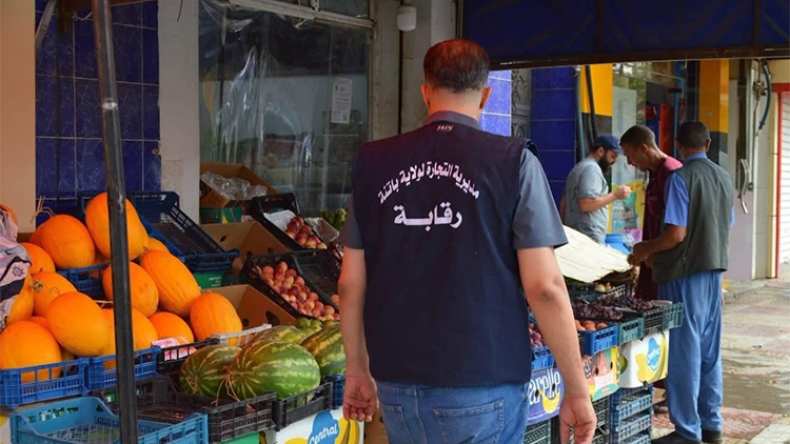
The Ministry of Internal Trade and Market Regulation deployed 9,000 inspection agents across Algerian provinces on 20 October. These personnel began monitoring operations to stabilize market prices and ensure regulatory compliance. Inspection efforts focus on the first link of the marketing chain to address supply chain transparency. Agents are currently assessing activities at factories, production units, and agricultural farms. Officials designed this deployment to track goods from their point of origin to prevent market disruption. The inspections cover facilities in areas including تبسة (Tebessa), وهران (Oran), سطيف (Setif), البويرة (Bouira), حامة بوزيان (Hamma Bouziane), and قسنطينة (Constantine). Authorities intend for these measures to maintain consistent distribution standards throughout the country.
The Ministry of Internal Trade and Market Regulation has deployed 9,000 inspection agents across Algerian provinces to ensure that the national supply chain remains stable and that consumers have access to goods at regulated prices. This significant mobilization of personnel is part of a broader government strategy to oversee the movement of essential commodities from the point of production to the final point of sale. By focusing on the initial stages of the marketing chain, the Ministry aims to identify and rectify inefficiencies that could lead to price volatility or artificial shortages in local markets.
Nationwide Monitoring of Production
Authorities inspected production conditions, stock levels, and distribution rates during the 96 hours preceding the 20 October report. These assessments aimed to verify operational compliance across the supply chain before the broader deployment of inspection agents. Over the 96 hours preceding the report, authorities inspected production conditions, stock levels, and distribution rates to establish a clear baseline for market activity.
Personnel stationed in Tebessa focused specifically on potato production and marketing activities. Inspections in Tebessa focused on potato production and marketing, where teams examined agricultural yields and the subsequent movement of goods toward retail markets to identify potential bottlenecks in the supply chain. Meanwhile, Oran saw inspectors target oil production units to evaluate output volumes and verify that storage facilities maintained sufficient stock levels for local distribution. Oran inspections targeted oil production units to ensure that the volume of oil entering the market aligns with established distribution quotas.
Enforcement actions in Hamma Bouziane, located in the province of Constantine, resulted in the seizure and destruction of 24.01 tons of spices, pickled vegetables, and olives. In Hamma Bouziane, Constantine, authorities seized and destroyed 24.01 tons of spices, pickled vegetables, and olives due to health and hygiene violations. Agents identified health and hygiene violations during their review of the inventory, prompting the immediate removal of these goods from the market to ensure consumer safety. Officials confirmed that these products did not meet the required regulatory standards for food handling and storage. These enforcement actions serve as a warning to other operators that regulatory adherence is mandatory for all participants in the food supply chain. The Ministry continues to coordinate with provincial authorities to ensure that all inspection activities remain consistent with national guidelines, aiming to foster a secure and transparent marketplace for all Algerian citizens.