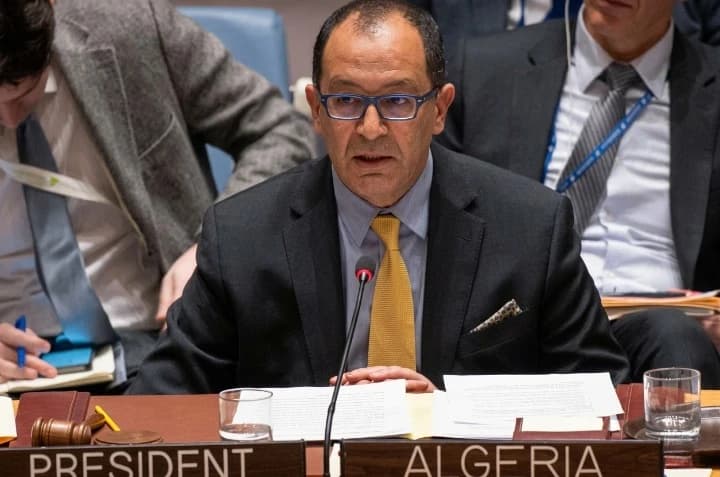
Algeria's delegation recently participated in a UN regional seminar on decolonization, known as the Comité des 24, held in Managua, Nicaragua, from May 25 to May 27. The Algerian representatives aimed to counter Moroccan arguments concerning the status of Western Sahara during the proceedings. Algeria maintains that Western Sahara remains Africa's last colonial territory on the United Nations' decolonization list, a position consistently articulated by its diplomatic corps. Ambassador Toufik Koudri led the Algerian delegation, which sought to present its perspective on the region's unresolved sovereignty. Their objective was to dismantle Moroccan assertions regarding the territory's status and advocate for the self-determination of the Sahrawi people, emphasizing the international community's responsibility to uphold decolonization principles.
Algeria's Arguments Detailed
During the UN regional seminar in Managua, Nicaragua, Algeria characterized Moroccan arguments regarding Western Sahara as "fallacious allegations" and "biased readings." These strong terms reflect Algeria's firm stance against Morocco's claims over the disputed territory. The Algerian delegation asserted that any international recognition of Moroccan sovereignty over the disputed territory is "ephemeral and inoperative," suggesting that such recognition lacks legal or lasting validity in the eyes of international law, particularly given the UN's ongoing involvement. Algeria reiterated its historical support for the efforts of United Nations Secretaries-General and their personal envoys in seeking a resolution for Western Sahara, showing its consistent adherence to UN-led processes. The North African nation stated that a final solution to the conflict necessitates the consent of the Sahrawis, to be expressed "through the ballot box," directly linking the resolution to the democratic will of the indigenous population. This emphasis on a referendum for self-determination has been a cornerstone of Algeria's policy regarding Western Sahara.
Algeria further contended that Morocco's diplomatic strategy is weakened by its agreement to engage in direct talks with the Polisario Front. This engagement, according to Algeria, undermines Moroccan claims of full sovereignty over the territory, as entering negotiations with the Polisario Front implicitly acknowledges its standing as a legitimate party to the dispute, rather than an internal matter for Morocco. Algeria's representatives showed their commitment to the principle of self-determination for the people of Western Sahara, viewing it as an inalienable right enshrined in international law. They stressed that any lasting peace must respect this fundamental principle and reflect the aspirations of the Sahrawi people.
Context of Western Sahara Talks
Direct talks between the Kingdom of Morocco and the Polisario Front resumed earlier in the year, marking a renewed effort to address the long-standing dispute over Western Sahara. This resumption of negotiations signifies a continuation of diplomatic engagement between the primary parties involved in the territory's future, indicating a commitment to finding a peaceful resolution. The discussions aim to find a lasting solution to the conflict, which has persisted for decades, causing significant humanitarian and political challenges in the region. The international community has long sought a pathway to de-escalation and a definitive settlement.
The United Nations and the United States are jointly sponsoring these talks, providing a key framework for the negotiations. Their involvement shows the international community's interest in facilitating a peaceful resolution and ensuring that the discussions proceed constructively. The sponsorship by these international bodies lends significant weight to the diplomatic process, emphasizing the global nature of the efforts to achieve stability in the region and uphold international legal principles. Their presence is intended to ensure impartiality and encourage productive dialogue between the parties.
Algeria and Mauritania are participating in the talks as observer neighbors. Their presence at the negotiating table reflects their geographical proximity and historical ties to the Western Sahara issue, as both nations share borders with the disputed territory and have significant stakes in its future stability. As observer states, Algeria and Mauritania contribute to the discussions by offering their perspectives and insights while the primary parties, Morocco and the Polisario Front, engage directly on the core issues. This arrangement allows for broader regional input without altering the bilateral nature of the principal negotiations, ensuring that regional concerns are heard without shifting the focus from the direct parties to the conflict.
Underlying Stance on Self-Determination
The seminar on decolonization, which saw Algeria's participation, took place from May 25 to May 27. During the seminar, Algeria stated that numerous resolutions from the United Nations General Assembly and Security Council consistently affirm the inalienable right of the Sahrawi people to self-determination. These resolutions, according to Algeria, form the bedrock of international law concerning the disputed territory, providing a clear legal basis for their advocacy. The Algerian delegation stressed that a just, durable, and mutually acceptable political solution for Western Sahara must be achieved through these principles, emphasizing that any resolution must align with international legal frameworks. This position shows Algeria's long-standing advocacy for the Sahrawis' right to determine their own future, a stance rooted in the foundational principles of decolonization. Algeria maintains that any lasting resolution must reflect the will of the Sahrawi people, as outlined in UN mandates, ensuring that the outcome is legitimate and sustainable.