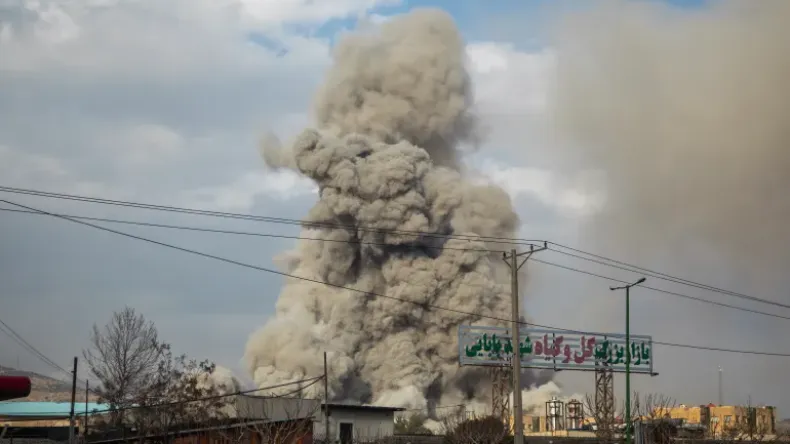
United Nations Secretary-General António Guterres on Wednesday expressed grave concern over reports of civilian casualties amid renewed exchanges of fire between the United States and Iran. Guterres "is deeply concerned about a (US) strike that reports indicate hit a wedding in Iran." The Secretary-General's statement noted the escalating tensions and the tragic human cost of the ongoing confrontation. This expression of grave concern came immediately after new American strikes on Iran began, signaling a dangerous turn in the already volatile relationship between the two nations. The US Central Command stated earlier on Tuesday that it had begun strikes on Revolutionary Guard targets inside Iran. These military actions have drawn sharp criticism and calls for de-escalation from the international community. Iran's Tasnim news agency reported hearing the sound of 8 explosions on the southern coast of Qeshm Island in Hormozgan province, southern Iran, providing a localized account of the impact of these strikes. The reports from both sides show the direct and immediate consequences of the renewed hostilities.
Escalation and International Law
United Nations Secretary-General António Guterres reminded all parties of their obligations under international humanitarian law. He emphasized the critical importance of protecting civilians and civilian infrastructure during armed conflict, a principle enshrined in international statutes. These comments followed a series of events, including US strikes against Iranian targets. The US Central Command stated that its actions came after offensive attempts by the Revolutionary Guard. These attempts reportedly targeted navigation in the Strait of Hormuz and American military personnel in the region, according to the US Central Command. The US military command detailed that these offensive actions by the Revolutionary Guard necessitated a response to safeguard strategic interests and personnel. The situation has intensified concerns about adherence to international norms and the potential for further breaches of humanitarian law as the conflict unfolds.
Regional Ramifications
He warned that "few countries in the region are immune to this escalation, as airspace and vital shipping lanes continue to be severely affected." This assessment from the Secretary-General shows the widespread potential for disruption and instability across the Middle East. The interconnected nature of the region means that military actions in one area can have ripple effects far beyond the immediate conflict zones. Oil prices jumped by more than 4 percent on Tuesday following new American strikes on Iran. Brent crude exceeded $94 per barrel immediately after the strikes began, reflecting the market's immediate reaction to the increased geopolitical risk. The volatility in oil markets shows broader concerns about the potential for wider regional instability, impacting global energy supplies and economic stability. Disruptions to vital shipping lanes, particularly in the Strait of Hormuz, are a major concern for international trade and global supply chains.
UN's Call for Restraint
The Secretary-General renewed his call for an immediate cessation of military operations. He urged all parties involved to exercise restraint and refrain from any actions or rhetoric that could escalate already high tensions. Guterres stressed the need for de-escalation through diplomatic channels and dialogue, rather than through military confrontation. He reiterated that a continued cycle of violence serves only to exacerbate suffering and undermine prospects for peace in the region. The United Nations continues to monitor the situation closely, advocating for a return to calm and a renewed commitment to peaceful resolution.
Broader Regional Impact
The broader regional impact of the US-Iran clashes continues to raise international concern. The United Nations Secretary-General António Guterres previously warned that "few countries in the region are immune to this escalation, as airspace and vital shipping lanes continue to be severely affected." This assessment shows the potential for widespread disruption beyond the immediate conflict zones, affecting neighboring states and international commerce. The ongoing hostilities pose significant risks to regional stability, potentially drawing in other actors and further complicating an already complex geopolitical landscape. Oil prices experienced significant volatility following new American strikes on Iran, with Brent crude exceeding $94 per barrel. Such fluctuations in global energy markets reflect anxieties about regional instability and its economic consequences for countries both within and outside the immediate vicinity of the clashes. The international community watches with apprehension, recognizing the profound implications of sustained conflict in this strategically vital region.