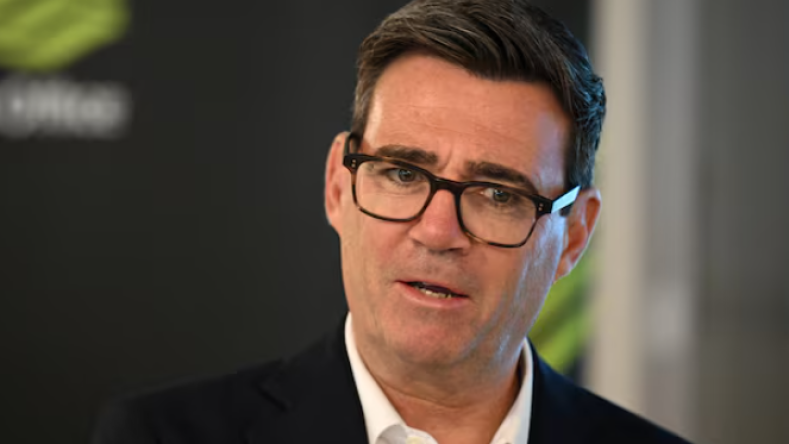
British Prime Minister Andy Burnham revealed the motives behind the United Kingdom's move against the policies of the Israeli occupation government, stating the decision was made in defense of values and principles amidst the horrific suffering of the Palestinian people in the Gaza Strip. Writing in an article published by The Guardian, Burnham said Britain acted to defend its values and principles. He further elaborated that he would not "stand idly by while humanitarian suffering worsens and the possibility of a two-state solution...is jeopardized." Burnham added that "Britain had previously hesitated to take action for fear of being accused of anti-Semitism." He also reflected on his country's initial response to the crisis, having considered it "too slow and insufficient" at an earlier stage. Burnham noted that "Palestinians, including children, continue to be killed in Gaza, while the humanitarian crisis persists with very limited aid."
Reasons for Action
Prime Minister Andy Burnham's government announced that its new measures specifically target the policies of the current Israeli occupation government, clarifying that these steps are not directed at the Jewish people. This distinction shows the government's focus on specific policies rather than a broader community. Burnham has expressed his commitment to fundamentally changing the British government's approach to the situation. This commitment signals a significant shift in the United Kingdom's foreign policy regarding the Israeli-Palestinian conflict. He acknowledged the widespread concern felt by individuals across the United Kingdom regarding the ongoing events, recognizing the public sentiment driving the government's re-evaluation. The Prime Minister emphasized that the decision to act was rooted in the defense of core values and principles, particularly in light of the severe suffering endured by the Palestinian people in the Gaza Strip.
Gaza Crisis and Settlements
Prime Minister Andy Burnham noted the ongoing human cost in Gaza, stating, "Palestinians, including children, continue to be killed in Gaza, while the humanitarian crisis persists with very limited aid." Burnham detailed the scale of the crisis, noting, "More than 70,000 people have been killed, including at least 20,000 children, while families and communities have been torn apart and millions displaced, and the residents of Gaza are living in an area not exceeding one-third of the Strip's area." He specifically pointed out that millions have been displaced from their homes, exacerbating the humanitarian catastrophe. The severe conditions, with limited access to essential aid, continue to raise international alarm regarding the well-being of the civilian population.
Beyond the immediate crisis in Gaza, Burnham also criticized the expansion of settlements in occupied territories. He stated that the current Israeli occupation government has approved more settlements in the past four years than in the preceding two decades, marking a significant acceleration of settlement activity. This expansion is seen as a major impediment to future peace efforts. The United Nations has recorded over 1,500 incidents of settler violence this year, which Burnham indicated were aimed at expelling Palestinians from their homes, further destabilizing the region and infringing upon the rights of the Palestinian population.
Shifting Policy and Two-State Solution
Prime Minister Andy Burnham affirmed that he would not "stand idly by while humanitarian suffering worsens and the possibility of a two-state solution...is jeopardized." Burnham characterized repeated discussions of a two-state solution as meaningless unless they are translated into concrete actions on the ground. He considered that the repeated talk of a two-state solution is meaningless unless translated into actions on the ground, emphasizing the need for tangible progress. He also acknowledged previous reluctance from the United Kingdom to intervene, stating, "Britain had previously hesitated to take action for fear of being accused of anti-Semitism." Burnham also reflected on his country's initial response to the crisis, having considered it "too slow and insufficient" at an earlier stage, indicating a desire for a more proactive and decisive stance moving forward.