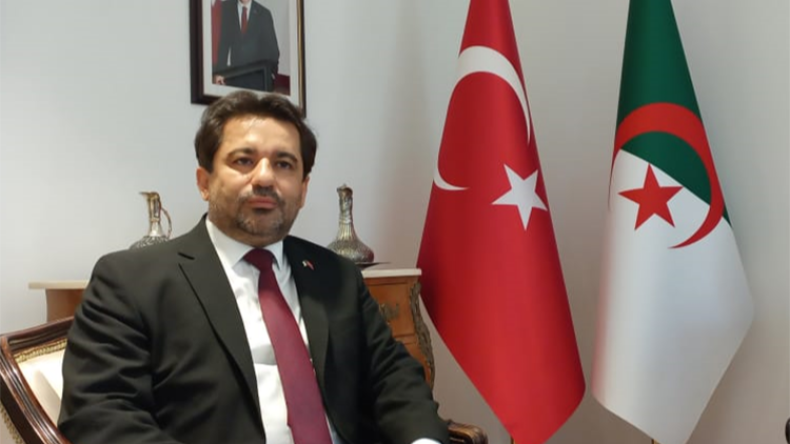
Turkish Ambassador to Algeria, Mehmet Muştu Koçak, recently spoke in an interview about the strengthening strategic partnership between Algeria and Turkey, offering insights into the strong and expanding relationship between the two nations. Ambassador Koçak's remarks showed the full nature of this partnership, which spans economic, political, and security dimensions. He specifically noted the extensive economic ties that bind Algeria and Turkey, noting the significant presence of Turkish capital invested across various sectors within the North African country. These Turkish investments in Algeria are currently estimated at an impressive figure of around $8 billion, demonstrating a substantial commitment to Algeria's economic development and future. This level of investment positions Turkey as one of the leading foreign investors in Algeria, reflecting a deep and growing economic interdependence.
Deepening Economic Ties and Investment Climate
The current trade volume between Algeria and Turkey stands at approximately $6 billion, a figure that both nations are keen to significantly increase in the coming years. Turkish Ambassador Mehmet Muştu Koçak stated that Algeria's ongoing economic reforms, implemented under the ambitious 'New Algeria' project, are viewed very favorably by Turkish investors. He elaborated that these reforms have been instrumental in creating a far more attractive and conducive environment for foreign capital, encouraging greater participation from Turkish businesses. The Ambassador noted that Turkish companies deeply appreciate the concerted efforts made by the Algerian government to streamline business processes, reduce bureaucratic hurdles, and generally improve the overall investment climate. He indicated that these reforms are perceived as a key and positive step towards further strengthening bilateral economic cooperation and fostering a more dynamic trade relationship.
In a related and significant development aimed at facilitating both business and travel between the two countries, the maximum age for benefiting from visa facilitation has been reduced. This important change in policy saw the age limit for eased visa procedures lowered from 65 to 50 years. This measure is expected to encourage greater mobility for business professionals, tourists, and other individuals, thereby fostering closer ties and increased interaction between the Algerian and Turkish populations. The Ambassador emphasized that such practical measures contribute significantly to the overall strengthening of the strategic partnership.
Shared Vision and Key Sectors for Collaboration
Turkish companies are actively exploring new investment opportunities across Algeria, with a particular focus on expanding their presence in the food industry. This sector has been identified as a high-potential area for growth and collaboration, aligning with Algeria's goals for food security and industrial development. Beyond this, a range of other key sectors have been identified for enhanced cooperation between the two nations, representing strategic pillars in their growing partnership. These include the vital iron and steel industry, the agricultural sector, which holds immense potential for joint ventures and technology transfer, and infrastructure development, where Turkish expertise can play a significant role. Cooperation extends to the defense industries, reflecting a shared commitment to regional security, and technology transfer, which is key for Algeria's modernization efforts.
Turkish Ambassador Mehmet Muştu Koçak affirmed Turkey's profound appreciation for Algeria's key and constructive role in regional security and stability, particularly concerning the challenging and strategically important Sahel region. This shared understanding of regional dynamics and the importance of collaborative security efforts further strengthens the bilateral relationship, extending beyond economic interests to encompass geopolitical alignment.
A significant diplomatic event showing the depth and breadth of this strategic partnership was President Abdelmadjid Tebboune's official visit to Ankara. President Tebboune traveled to the Turkish capital from May 6 to 8, 2026, for high-level discussions aimed at deepening ties between Algeria and Turkey across various domains. The visit provided an invaluable opportunity to review progress in diverse sectors, assess ongoing projects, and identify new avenues for collaboration and mutual benefit. This high-level engagement reflects a shared vision for strong economic and strategic alignment between the two countries. The ongoing and frequent engagement between the two nations indicates a sustained effort to expand their collaboration across multiple fronts, ensuring the partnership continues to evolve and strengthen.
Future Outlook and Regional Influence
Both Algeria and Turkey harbor ambitious plans to significantly increase their trade and investment volumes. The shared goal is to reach an impressive $10 billion in trade and investments by 2030, reflecting their collective ambition for deeper economic integration and mutual prosperity. This ambitious target shows the long-term vision and strategic commitment underpinning the partnership. Further cementing these ties and demonstrating the high-level political will behind this collaboration, President Recep Tayyip Erdoğan visited Algeria on November 21, 2023. During his visit, President Erdoğan engaged in high-level discussions with Algerian officials, focusing on advancing bilateral cooperation and exploring new areas for joint ventures and strategic initiatives.
Beyond economic and investment goals, Algeria and Turkey maintain remarkably similar positions on a wide range of international issues. This alignment extends to significant geopolitical matters, noting a convergence of diplomatic perspectives. Notably, their shared stance on the Palestinian cause is a testament to the full nature of their strategic partnership, which encompasses not only economic and security dimensions but also key political and humanitarian considerations on the global stage. This full alignment reinforces the strategic importance of the relationship for both nations in shaping regional and international discourse.