Lebanese President Joseph Aoun outlined three core conditions for discussing the disarmament of "Hezbollah." The President stated on July 22, 2026, that disarming the group is possible if there is sincere political will. Aoun's conditions relate to security, sovereignty, and reconstruction, setting a full framework for potential future negotiations regarding the powerful armed group. These conditions are central to a broader vision aimed at enhancing state authority and extending its full sovereignty across all Lebanese territories. The announcement marks a significant step in the ongoing national dialogue surrounding the role of non-state actors in Lebanon's security landscape.
Three Core Conditions Detailed
President Joseph Aoun's three core conditions for discussions regarding Hezbollah's disarmament include an end to the Israeli occupation of Lebanese territories. This demand directly addresses a long-standing issue affecting Lebanon's sovereignty and border security, which has been a persistent point of contention and a stated justification for the existence of non-state armed groups. Addressing this occupation is presented as a fundamental prerequisite for moving forward with national security reforms. Aoun further stipulated that the Lebanese Army must extend its full control over all regions within the country. This condition emphasizes the state's exclusive authority over its territory and national security apparatus, asserting the principle that only the national army should hold legitimate arms and maintain order across the nation.
The third condition outlined by President Aoun involves launching a full reconstruction program. He specified that this program must be exclusively managed by the Lebanese state, ensuring it operates free from any external interference. This aims to prevent foreign influence in national recovery efforts and consolidate state control over critical development initiatives, reinforcing national sovereignty over economic and social rebuilding. The President's emphasis on state management notes a desire to ensure that all national development efforts align with state priorities and strengthen governmental institutions.
Vision for State Authority
The conditions articulated by Lebanese President Joseph Aoun are central to a broader vision aimed at enhancing state authority and extending its full sovereignty across all Lebanese territories. This full approach shows the interconnectedness of security, sovereignty, and reconstruction in achieving national stability. President Aoun emphasized that Lebanon can only achieve security and unity under a single, unified state. He stated that this state must be supported by one national army, tasked with protecting all Lebanese citizens without discrimination. This framework shows the President's commitment to consolidating state control and ensuring the exclusive role of national institutions in governance and defense. By establishing these conditions, President Aoun is signaling a clear path towards a future where the Lebanese state is the sole authority, responsible for all aspects of national life, from defense to development. The President's remarks on July 22, 2026, showed his belief that genuine political will is the key to overcoming current challenges and achieving the disarmament of "Hezbollah" within this state-centric vision.
Diplomatic Engagement
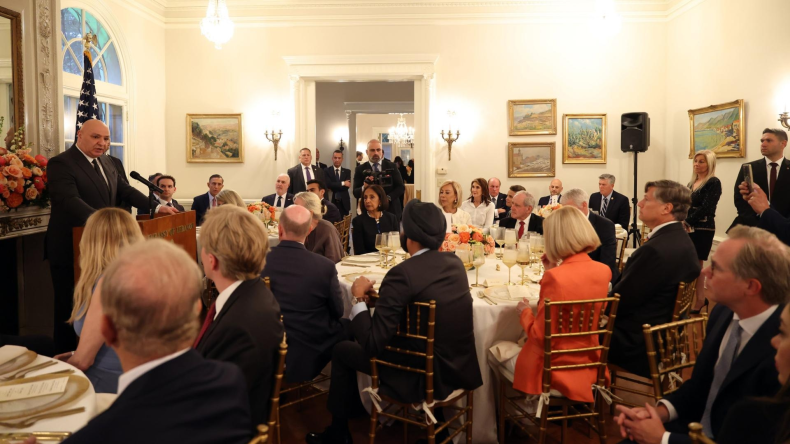
The Lebanese Ambassador in Washington, Lisa Johnson Hamadeh, hosted a dinner event in honor of President Aoun and the accompanying Lebanese delegation. This diplomatic engagement showed the ongoing efforts to foster international relations and support for Lebanon's leadership. The gathering provided a key platform for discussions on the President's vision for the country, including his recently outlined conditions for addressing Hezbollah's disarmament. Such events are part of broader diplomatic initiatives aimed at garnering international understanding and cooperation for Lebanon's security and sovereignty challenges. The presence of the Lebanese delegation in Washington for such engagements reflects the importance placed on bilateral relations and the administration's proactive stance in seeking international backing for its domestic policies. These diplomatic efforts are vital for building consensus and securing the necessary international support to implement the President's ambitious agenda for national unity and state control.