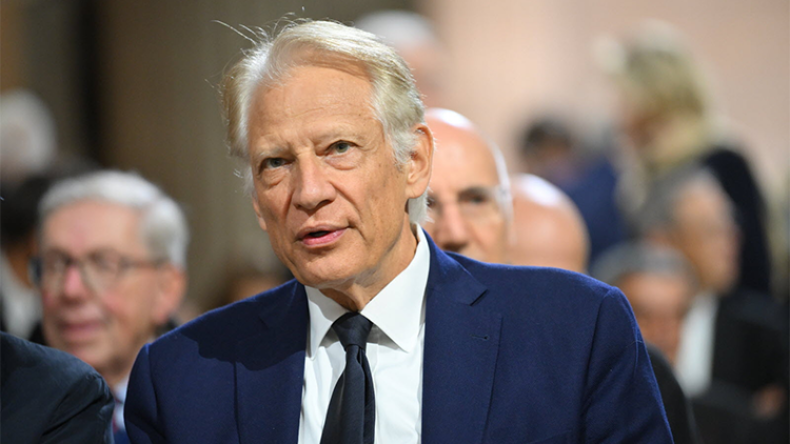
In 2017, Professor Alain Deneault, a philosophy professor based in Quebec, Canada, published his seminal book 'System of Triviality'. The publication introduced a concept that suggests humanity, despite significant material and technological advancements, appears to experience a widespread lack of inner peace, tranquility, and happiness. This phenomenon, as described in the article, stems from a condition of constant worries, anxieties, and unfulfilled desires that persist even amidst societal progress. Professor Deneault's work posits that this erosion of well-being is not accidental but rather a systemic outcome of how modern society is structured and operates.
The Author and His Work
Professor Alain Deneault's book argues that the world operates under the governance of trivial institutions, encompassing political, economic, and cultural systems, as well as artistic, literary, and social programs, all supervised by trivial individuals. His critical analysis extends to the very foundations of contemporary societal structures. Deneault, a figure known for his steadfast opposition to savage capitalist ideas, has encountered legal proceedings due to his firm stances against corruption, noting the personal cost of challenging entrenched systems. His intellectual contributions are characterized by a deep engagement with the philosophical underpinnings of modern life and its discontents. The book, 'System of Triviality', saw its translation into Arabic in 2020, a significant step in broadening its global reach and impact. Dr. Masha'el Abdulaziz Al-Majri, a distinguished law professor at Kuwait University, undertook the careful translation of the work, making its profound insights accessible to a wider audience in the Arab world.
Mechanisms of Triviality
The article asserts that global companies program individuals to consume their products, shaping their thoughts, minds, and desires through the 'system of triviality'. This programming mechanizes human behavior, directing attention and aspirations towards commercially driven ends, often at the expense of deeper existential fulfillment. The widespread influence of advertising and consumer culture, according to this perspective, is not merely about selling goods but about fundamentally altering human perception and priorities. The discussion also references a previous examination of the 'virtual human', a concept exploring the profound impact of digital and commercial influences on individual identity and perception, further illustrating how these systems redefine human experience. This 'virtual human' is depicted as increasingly detached from authentic selfhood, molded instead by external commercial and digital pressures.
Such mechanisms, according to the article, often align with broader national interests as articulated by political leaders, blurring the lines between corporate objectives and state policy. Former U.S. President George W. Bush stated, "إن الأمن القومي الأمريكي يمتد إلى حيث المصلحة الأمريكية" (American national security extends to where American interest lies), a declaration that shows how national priorities, potentially including economic and commercial objectives, can influence and even justify the spread of systems that shape public consumption and thought. This perspective suggests a framework where national security is intertwined with economic dominance and the promotion of specific commercial interests. The interplay between corporate programming, the rise of the 'virtual human', and national interests forms a complex web of influence described as contributing to the erosion of human values, leading to a society where superficiality often trumps substance.
Spiritual and Humanistic Counterpoint
The article asserts that individuals frequently cite a lack of time or numerous engagements as justifications for neglecting their societal, national, or religious responsibilities. This widespread excuse, it suggests, is another symptom of the 'system of triviality', where immediate, often superficial, demands overshadow deeper obligations. This perspective contrasts sharply with spiritual teachings that emphasize life's ultimate purpose, offering a profound alternative to the relentless pursuit of trivialities. The Quran, in Surah Adh-Dhariyat, verse 56, powerfully states, 'And I did not create the jinn and mankind except to worship Me.' This verse suggests a primary human purpose beyond daily trivialities and commercial programming, calling for a reorientation towards spiritual fulfillment and divine connection.
The article references a divine admonition from the Quran regarding human accountability for personal actions, reinforcing the idea that individuals bear responsibility for their choices and the consequences that follow. God's statement in Surah Al-Imran, verse 165, warns, "أَوَلَمَّا أَصَابَتْكُم مُّصِيبَةٌ قَدْ أَصَبْتُم مِّثْلَيْهَا قُلْتُمْ أَنَّىٰ هَٰذَا ۖ قُلْ هُوَ مِنْ عِندِ أَنفُسِكُمْ ۗ إِنَّ اللَّهَ عَلَىٰ كُلِّ شَيْءٍ قَدِيرٌ" (And when you were struck by a calamity, you said, "How did this happen?" Say, "It is from [the result of] yourselves." Indeed, Allah is over all things competent). This passage implies that personal choices and societal actions contribute significantly to the challenges faced by individuals, thereby reinforcing the idea of human responsibility and the need for introspection rather than external blame. These spiritual insights present a compelling counter-narrative to the trivializing forces described by Professor Deneault, urging humanity towards a more meaningful existence rooted in purpose and accountability.