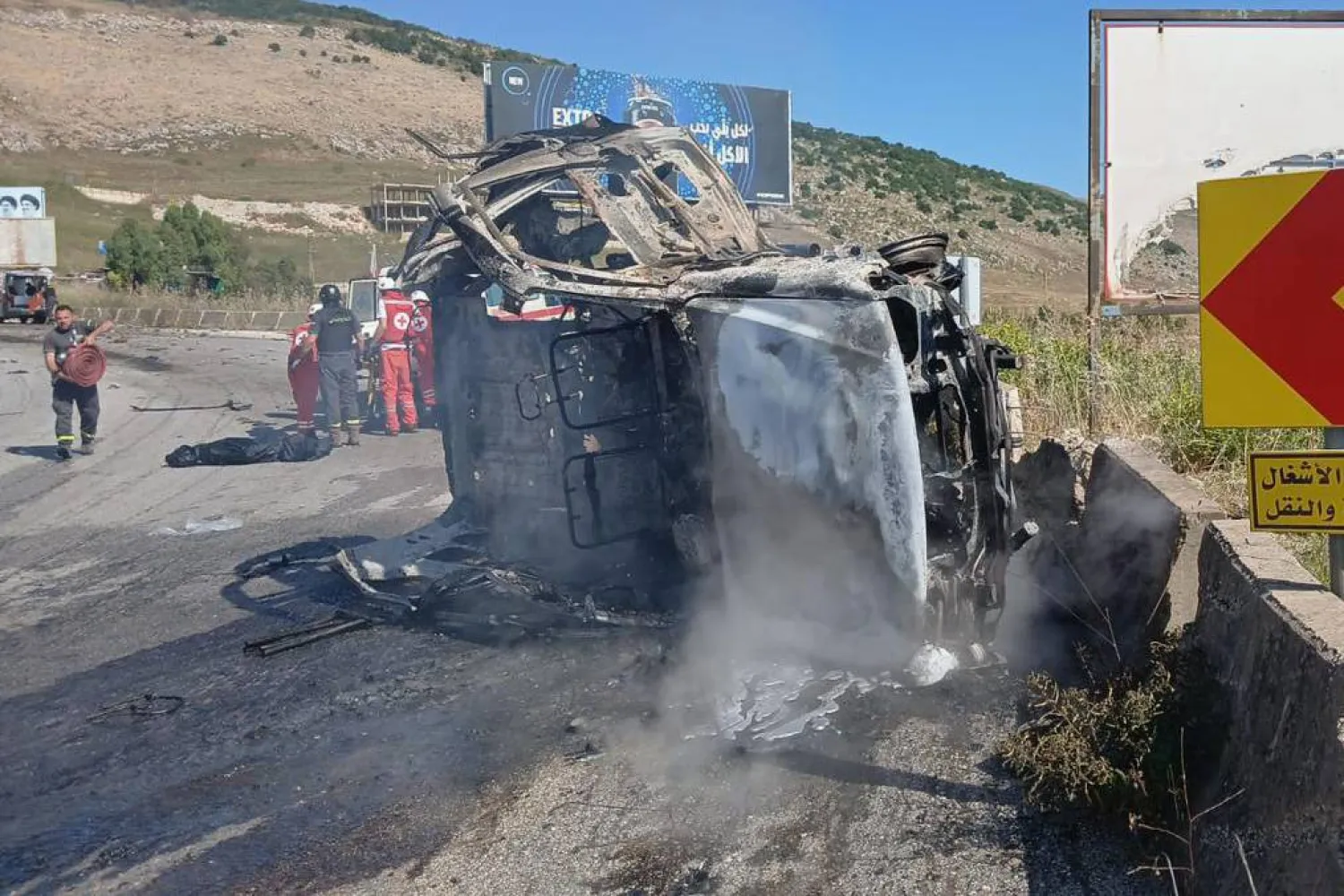
An Israeli airstrike in southern Lebanon on Saturday killed nine people, including three members of the Lebanese military, escalating regional tensions. The strike occurred despite an agreement reached the previous day for a gradual Israeli withdrawal and the deployment of the Lebanese army in the South. The Israeli military confirmed hitting a vehicle it described as "moving suspiciously" toward soldiers near Kfar Tibnit village, resulting in the deaths of a brigadier general, a captain, and a soldier. This incident immediately cast a shadow over recent diplomatic efforts aimed at de-escalation and stability in the volatile border region. The precision of the strike, targeting a vehicle with military personnel, raised serious questions about the rules of engagement and the commitment to the nascent ceasefire understanding.
In a separate incident, another strike on Saksakiyah village claimed the lives of six additional individuals. This second strike further compounded the day's tragic events and showed the widespread nature of the conflict. Israel acknowledged responsibility for the strike and announced an investigation into the incident. The Israeli military stated that it would examine the circumstances of the event, adding that there were "concrete indications" that the vehicle was linked to hostile activities. The dual strikes on Saturday, resulting in a total of nine fatalities, noted the intense and often unpredictable nature of the ongoing hostilities along the Israeli-Lebanese border. The immediate aftermath saw a surge in rhetoric from both sides, signaling a dangerous escalation rather than a move towards peace.
Deadly Strike and Immediate Fallout
Lebanon's President Joseph Aoun called the strike against its military a "flagrant violation" of the country's sovereignty and international law. President Aoun's strong condemnation emphasized the perceived breach of national integrity and the established norms governing international conduct. He articulated that such an act directly undermines any trust-building measures and jeopardizes the fragile peace process. The Lebanese army, echoing the President's sentiments, stated that the "continued, deliberate, and repeated Israeli aggression" aims to thwart efforts toward a solution "that would restore stability, establish a full ceasefire and lead to the Israeli withdrawal from the occupied Lebanese territories." This perspective from the Lebanese military suggests a deliberate pattern of actions by Israel designed to obstruct any progress towards a lasting resolution. The statement further implied that these aggressive acts are directly counterproductive to the goals of regional stability and the establishment of a full ceasefire, which is critical for the withdrawal of Israeli forces from Lebanese territory. The Israeli military, for its part, announced the deaths of two of its soldiers in southern Lebanon, showing the reciprocal nature of the violence and the constant dangers faced by personnel on both sides of the contested border. This announcement served as a stark reminder of the human cost of the conflict, even as international efforts sought to mitigate further casualties.
Reports indicated that Israeli troops have seized approximately a fifth of Lebanon. This seizure follows ongoing military operations in the region, raising significant concerns about territorial integrity and the long-term implications for Lebanon's sovereignty. The sheer scale of the reported land seizure notes the profound impact of the conflict on Lebanon's geography and its population. The Israeli military has asserted that its operations are primarily directed against Hezbollah and not against the Lebanese army itself. This distinction is key for Israel's narrative, aiming to justify its actions as targeted counter-terrorism measures rather than an assault on a sovereign state's armed forces. The military previously stated that it hit a vehicle it described as "moving suspiciously" toward soldiers near Kfar Tibnit village, and later added there were "concrete indications" the vehicle was linked to hostile activities. This explanation attempts to frame the strike as a defensive action, taken in response to perceived threats against its personnel. However, the killing of Lebanese military members directly challenges this narrative, leading to heightened tensions and accusations of deliberate targeting. The incident has intensified the debate over the precise nature of Israel's military objectives and the collateral damage inflicted on Lebanon's state institutions.
Regional Reactions and Accusations
Repeated violations by both sides continue to weaken the implementation of the ceasefire agreement, according to reports. The fragile nature of the truce means that every incident, regardless of its scale, has the potential to unravel months of diplomatic efforts. The Lebanese army is considered the central actor for any hope of lasting stabilization in the South, given its role as the legitimate state authority and its potential to assert control over the border regions. Its ability to deploy and maintain order is seen as key for preventing further escalation and ensuring compliance with any future agreements. On Friday, Lebanese President Joseph Aoun and Lebanon's prime minister criticized Iran for opposing the latest ceasefire deal. This public criticism from Lebanon's leadership pointed to perceived external interference in their national security affairs and noted divisions within the broader regional political landscape. Iranian Foreign Minister Abbas Araghchi responded to these comments on Saturday via X. Araghchi stated, "one would think it’s Iran that has occupied a fifth of Lebanon, displaced a quarter of Lebanese and is bombing his country on daily basis." The Foreign Minister's sharp retort aimed to deflect criticism and redirect attention to what he characterized as the true aggressor in the region. This statement invoked the significant humanitarian crisis within Lebanon, including the displacement of its population, to show the perceived hypocrisy of the Lebanese leadership's accusations. The Foreign Minister further added, "Had Lebanon been a bargaining chip for Iran, we’d have a deal long ago. Save Lebanon from your real foe, Mr. President." This pointed remark suggested that Iran's interests were not the primary impediment to peace and implied that Lebanon's leadership should identify and confront its actual adversaries. These public exchanges between senior officials from Lebanon and Iran illustrated the complex web of alliances and antagonisms that characterize the Middle East, with each party attempting to shape the narrative and assign blame. At the time of the strike, Lebanese Army Commander General Joseph Aoun was on an official visit to Pakistan, further complicating immediate on-the-ground responses and high-level coordination within Lebanon.
Broader Context and Ceasefire Fragility
A ceasefire between Israel and Hezbollah, brokered by the United States and France, was concluded in November 2024. The agreement was announced in Washington following U.S.-brokered discussions involving Israel and Lebanon’s government. This diplomatic achievement was initially hailed as a significant step towards de-escalation, representing a concerted international effort to bring an end to the prolonged hostilities. However, reports indicated that Hezbollah has refused the truce, complicating efforts toward de-escalation. Hezbollah's rejection of the ceasefire agreement introduces a major obstacle to its implementation and sustainability, as the group remains a powerful non-state actor with significant influence in southern Lebanon. Its continued refusal to adhere to the terms of the truce undermines the very foundation of the internationally brokered deal and creates an environment where violations are more likely to occur.
Since the conflict began on March 2, more than 3,500 people have been killed in Lebanon, according to reports. This staggering death toll notes the immense human cost of the conflict and the devastating impact it has had on civilian populations. The continuous violence has led to widespread suffering, displacement, and destruction across the country. The ongoing fighting has also resulted in significant casualties on the Israeli side. Reports indicated that at least 31 Israeli soldiers and three civilians have died in the hostilities, demonstrating that the conflict is far from one-sided and that both nations are enduring substantial losses. These figures show the tragic reality of the prolonged confrontation and the urgent need for a cessation of hostilities. The continuous exchanges and the reported refusal of Hezbollah to adhere to the truce have consistently undermined attempts to establish a stable and lasting peace in the region. Each new incident, such as the Israeli airstrikes on Saturday, exacerbates the existing mistrust and makes the path to a durable resolution even more arduous. The broader context of the conflict and the differing positions of key actors contribute to the persistent fragility of any ceasefire arrangements, making the prospect of a lasting peace elusive amidst the ongoing violence and political maneuvering. The international community continues to watch with concern as the region grapples with these severe challenges, recognizing that sustained diplomatic engagement and adherence to agreements are critical for preventing further bloodshed and promoting stability.