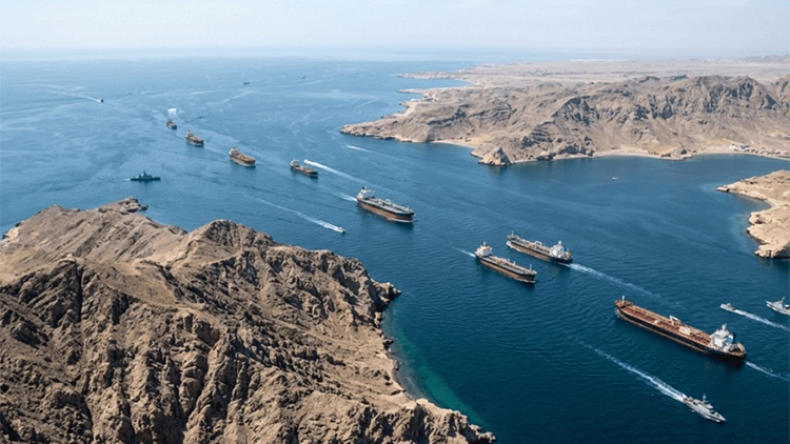
The current conflict around the Strait of Hormuz represents a historical struggle re-emerging in a contemporary context. This modern iteration of conflict in the strategic waterway is fundamentally a commercial struggle. Indeed, the current conflict around the Strait of Hormuz is a historical conflict returning in a new form, reflecting enduring patterns of geopolitical and economic competition. It pits the economic interests of the East, primarily China, against those of the West, represented by the United States and its allies. This commercial struggle between the East, embodied by China, and the West, led by the United States and its allies, shows the foundational economic drivers behind control of critical maritime passages.
Ancient Arteries of Trade
Since before the Victorian era in Europe, maritime trade between continents flourished. Seas and oceans served as lifelines for lands east and west of أوروبا even before the spice, coffee, and tea trade of the 13th and 14th centuries, and alongside the slave trade. Maritime straits, such as the Strait of Gibraltar (جبل طارق), were commercial supply arteries for أوروبا and vital for the British, Spanish, and Portuguese empires, enabling the flow of goods and the projection of power. These choke points were indispensable for the maintenance and expansion of vast colonial networks and burgeoning economies. The Punic Wars, the Greco-Persian Wars, and the wars of Chinese and Japanese families exemplify major historical conflicts centered on such strategic waterways, demonstrating their perennial importance throughout history. The control of these passages often determined the fortunes of empires and the direction of global commerce.
Mercantilism and Naval Dominance
Maritime piracy remained a persistent commercial feature for a period of no less than three centuries, profoundly impacting trade routes and necessitating strong naval protection. This enduring threat notes the constant struggle for secure passage and economic advantage. Continental trade, which expanded significantly after the Age of Discovery, prompted naval wars as old and new empires sought to increase their revenues and extend their influence. The prosperity that followed the Age of Discovery fueled intense competition, leading to naval conflicts waged by emerging and established powers alike, all vying to expand their economic reach and political sway. What is observed today is a continuation of past mercantilist wars between continents and powers aiming to dominate straits, where economic objectives are inextricably linked to military and naval capabilities. The current situation, marked by conflicts over strategic waterways, is a direct continuation of these historical mercantilist wars between continents and powers aiming to dominate straits, showing the enduring nature of these rivalries.
Modern Geopolitics and Strait Control
The conflict surrounding the Strait of Hormuz has evolved into an international issue, driven by globalization and led by the United States. This shift reflects a broader trend where strategic waterways become focal points for global power dynamics, as the interconnectedness of the world economy elevates the stakes of controlling such critical passages. With globalization, the conflict around the Strait of Hormuz has transformed into an international conflict led by the United States, drawing in a multitude of global actors. Indications suggest a challenge to established norms within international law, particularly those shaped by historical power agendas. There is a beginning to breaking the old rules established by power agendas within what is called 'international law,' signaling a potential redefinition of maritime governance and sovereignty. This evolving situation represents a departure from traditional frameworks governing maritime passage and sovereignty, as new powers assert their interests and question long-standing conventions. The implications of this shift extend beyond immediate commercial concerns, touching upon the very fabric of international legal order and global security.