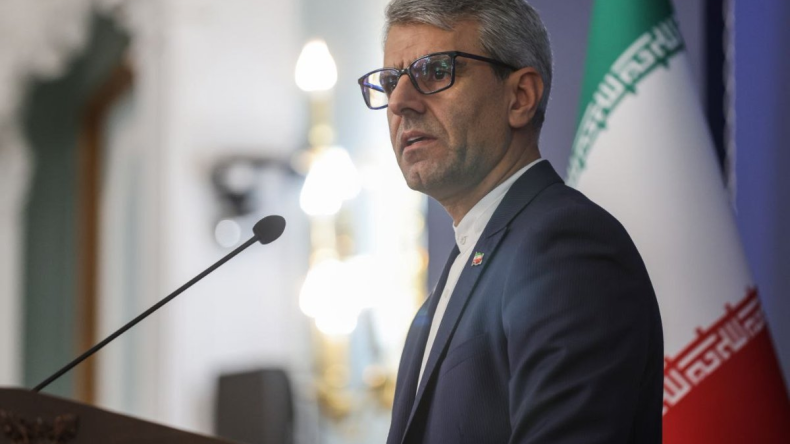
Iran's Foreign Ministry disclosed its stance on a memorandum of understanding signed with the United States on Monday, July 13, 2026, amidst escalating military tensions. The Iranian Foreign Ministry revealed its position on the memorandum of understanding signed with the United States amid ongoing military escalation. This revelation followed Iran's announcement of missile strikes targeting US forces' sites in Kuwait, Bahrain, Qatar, and Jordan. Iran stated it would take necessary measures to protect its national security and territorial integrity. The Foreign Ministry's statement on the memorandum of understanding comes at a critical juncture, showing the deep divisions and ongoing military engagements between the two nations.
Diplomatic Efforts Stall
Washington and Tehran signed a memorandum of understanding in June, which included provisions for a ceasefire, following mediation efforts by Qatar and Pakistan. This agreement represented a significant diplomatic effort to de-escalate tensions. Concurrently, a meeting was held in Muscat with an Omani delegation to discuss arrangements for passage through the Strait of Hormuz and to establish a mechanism for maritime security. The discussions in Muscat aimed to create a stable framework for navigation in the critical waterway. However, no result was reached during the Muscat discussions. This lack of progress was attributed to American pressure exerted on the Sultanate of Oman, according to sources familiar with the negotiations. The understanding signed in June had aimed to de-escalate tensions between the two nations, but subsequent developments suggest ongoing diplomatic challenges and a failure to solidify the initial agreements. The inability to establish a clear mechanism for maritime security in the Strait of Hormuz further complicates regional stability.
Iran's Accusations and Stance
Iran has accused the United States of continuous violations within the framework of a recently signed memorandum of understanding. Tehran maintains that Washington's actions demonstrate an intent to endanger regional security. Iranian officials specifically cited the United States' statements regarding the escorting of ships in the Strait of Hormuz as evidence of this intention, asserting that such talk shows Washington's intention to continue endangering the region's security. The Islamic Republic has consistently stated its position that it has never been the party to initiate a breach of its commitments. This stance shows a key point of contention in the ongoing diplomatic and military exchanges between the two nations. The accusations highlight differing interpretations of the understanding and the responsibilities of each party. Iran's claims suggest a perception that the United States is undermining efforts toward de-escalation, particularly through its maritime activities in critical waterways. Iran reiterated its resolve to take all necessary measures to safeguard its national security and territorial integrity in the face of perceived threats.
Escalation Timeline and US Actions
The United States announced a new wave of attacks on Iran on Sunday. This action came in response to Iran targeting commercial ships in the Strait of Hormuz. US President Donald Trump separately declared the end of the ceasefire on July 8, citing renewed escalation in the region. The decision by President Trump to terminate the ceasefire indicates a significant deterioration in relations, just weeks after the memorandum of understanding was signed. The US response to the targeting of commercial ships notes the fragility of any diplomatic agreements and the immediate military reactions to perceived provocations. The sequence of events, from the signing of the memorandum to the renewed attacks and the end of the ceasefire, illustrates the rapid and volatile nature of the conflict.