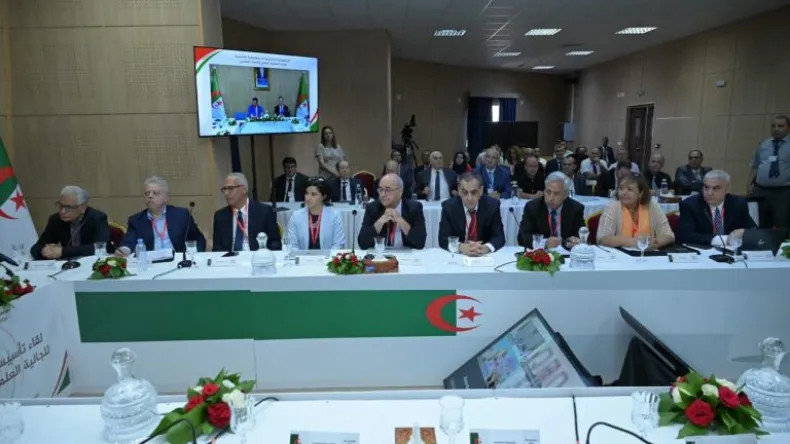
Algerian mathematicians gathered for a national meeting in 2000, coinciding with the UNESCO-declared International Year of Mathematics. This event marked the initial efforts to establish a dedicated mathematics institute in Algeria, a project that would continue to be pursued for nearly two decades. The endeavor to create such an institution began in 2000 and the efforts to bring it to fruition extended through 2017. The long-term nature of this ambition showed the perceived importance of such an institution for the nation's scientific future.
Seeds of Ambition Planted
The 2000 national meeting, attended by approximately 300 university professors and researchers from Algeria and abroad, showed the need for a dedicated mathematics institute. Participants at this seminal meeting concluded that Algeria lacked a national institution specifically designed to gather and direct its mathematical elite towards strategic national projects. The Algerian crisis of the 1990s had prompted the emigration of many researchers and significantly weakened national research teams, according to meeting participants, making a national institution for scientific excellence a necessity. This period of instability had created a void that a new, strong institution could potentially fill, fostering a renewed sense of scientific purpose and collaboration within the country.
Organizers envisioned the proposed institute to operate similarly to renowned international institutions such as the Institute for Advanced Study (IAS) in Princeton, the Institut des Hautes Études Scientifiques (IHES) in France, the Max Planck Institutes in Germany, and the Instituto Nacional de Matemática Pura e Aplicada (IMPA) in Brazil. The aspiration was to create a center of excellence that could stand alongside these global leaders, adapting their successful models to the specific needs and context of Algeria. These institutions are known for fostering new research and attracting top-tier talent, qualities the Algerian initiative aimed to replicate.
The initiative included plans for strong human resource development, recognizing that the strength of any scientific institution lies in its people. This involved establishing a high-level doctoral school to nurture new talent, providing advanced training and research opportunities for the next generation of Algerian mathematicians. Additionally, the institute aimed to host postdoctoral students to further their research, offering them a fertile environment for scientific inquiry and collaboration. A significant component of this strategy was actively inviting Algerian researchers living abroad to return, leveraging their international experience and expertise to enrich the national scientific landscape. The institute aimed to attract distinguished foreign scientists, fostering international collaboration and knowledge exchange within Algeria's scientific community, thereby integrating Algerian research into global academic networks.
Years of Persistent Effort
A second phase in the institute's development involved attempts to establish a 'Euro-Maghreb Laboratory for Mathematics' through a collaboration with France's Centre National de la Recherche Scientifique (CNRS). This initiative sought to build international partnerships to bolster the project, recognizing the value of cross-border scientific cooperation. This proposed laboratory would have served as a bridge between European and Maghrebian scientific communities, facilitating joint research and academic exchange.
In 2014, French mathematician Cédric Villani, a recipient of the Fields Medal, sent a letter of support to Algerian ministers. His communication emphasized the critical role of mathematical sciences in the global economy, advocating for the institute's creation. Villani's endorsement, coming from a figure of such international scientific stature, lent significant credibility and momentum to the project, noting its potential impact beyond national borders. He stressed how mathematics underpins technological innovation and economic growth, making an institute dedicated to its advancement a strategic national asset.
Efforts continued with the preparation of a draft executive decree for the institute's establishment. This full document outlined the institution's objectives, its proposed structure, financing models, and mechanisms for recruiting staff, laying the legal and operational groundwork for its creation. Concurrently, a letter dated October 5, 2014, was sent to Mohamed Ali Boughazi, then an advisor to the President and former Minister of Scientific Research, requesting his support for establishing a national mathematics research center. This outreach to a high-ranking official demonstrated the persistent advocacy by the project's proponents. These foundational steps culminated in the official establishment of the Steering Committee on October 29, 2014, marking a concrete organizational milestone for the long-planned institute and signaling a period of intensified planning and coordination.
The Unseen Obstacles
Despite the careful planning and international support, the project encountered significant hurdles. A planned international meeting, intended to bring together directors of leading global mathematics research institutes, was canceled two days before its scheduled date. Algerian organizers were not provided with clear reasons for the cancellation of the event, leaving many questions unanswered. The meeting had been conceived as a key step to advance the institute's development by drawing on international expertise and establishing partnerships with globally recognized institutions. This unexpected halt to discussions with prominent figures from institutions such as the Institute for Advanced Study (IAS), the Institut des Hautes Études Scientifiques (IHES), and the Max Planck Institutes marked a significant setback for the project. The abrupt nature of the cancellation left the future of the proposed institute uncertain, despite years of persistent efforts by Algerian mathematicians and their international supporters. This unexplained disruption cast a shadow over the project's viability and momentum.
A Lost Opportunity
Participants at the 2000 national meeting concluded that Algeria lacked a national institution to gather and direct its mathematical elite towards strategic projects. This gap was precisely what the proposed institute aimed to fill. The project ultimately reached an advanced stage of administrative and legal preparation, awaiting a political decision for its implementation. This meant that all the necessary frameworks were in place, but the final, key approval remained elusive.
The proposed institute aimed to employ mathematics in vital national development sectors such as energy, fuel, medicine, climate, and economics, demonstrating its practical and strategic importance for the country's future. It also sought to apply mathematical expertise in critical areas like cryptography, communications, and information security, addressing modern challenges and contributing to national defense and technological advancement. These applications noted the institute's potential to drive innovation and provide solutions to complex national problems. On December 10, 2017, the 'Steering Committee for the Preparation of the Higher Institute of Mathematics Project' sent a letter to the Minister of Higher Education and Scientific Research inquiring about the project's status. This inquiry showed the committee's continued dedication and concern for the project's fate, reflecting the hopes of many Algerian mathematicians for a dedicated national center of mathematical excellence. The lack of a clear resolution left the ambitious vision of a world-class mathematics institute in Algeria unfulfilled, despite nearly two decades of dedicated effort and detailed planning.