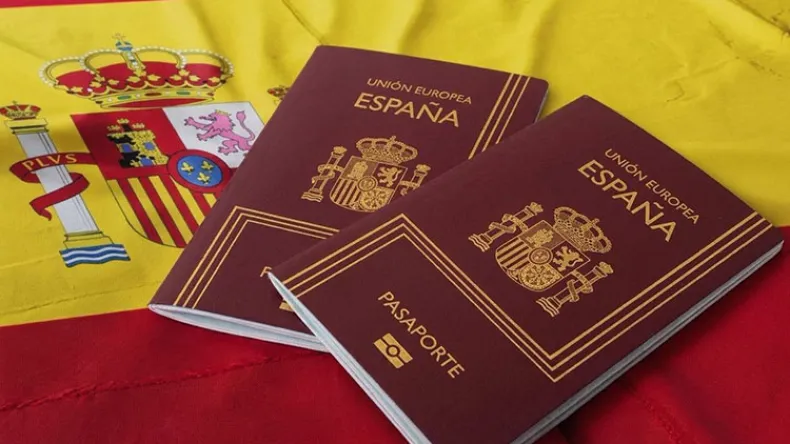
The Spanish Parliament recently ratified a law granting citizenship to Sahrawis born during the Spanish occupation of Western Sahara, a move that opened new avenues for their struggle to end the Moroccan occupation. This legislative action, reported on September 12, 2026, directly addresses the historical ties between Spain and the Sahrawi people, potentially impacting the long-standing dispute over the territory.
Citizenship Law Details
The new Spanish law extends citizenship eligibility to an estimated 110,000 Sahrawis, along with their children and grandchildren. The Spanish government's precise count of 110,000 Sahrawis eligible for citizenship, specifically those born up to Spain's withdrawal in 1975, directly challenges Morocco's efforts to manipulate population figures in support of its occupation agenda. The legislation regarding Spanish citizenship for Sahrawis born before the Moroccan occupation aims to establish an accurate demographic count of the Sahrawi population prior to the Moroccan invasion, thereby disputing what it views as Morocco's inflated figures.
Reframing the Conflict
The Spanish Parliament's adoption of the Sahrawi naturalization law reasserts Spain's role as the administering power in Western Sahara, according to UN legal opinion, which did not recognize the transfer of sovereignty to Morocco. This legislative action marks a "return to the colonial past in political discourse in Spain," especially as Morocco has sought to overcome this by presenting the Sahrawi issue as a mere internal dispute. Granting Spanish citizenship to hundreds of thousands of Sahrawis, specifically the 110,000 eligible individuals along with their children and grandchildren, poses a significant challenge to Moroccan influence over Spanish authorities. These newly recognized citizens are expected to form lobbying groups within Spanish and European Union institutions, potentially shifting the dynamics of the long-standing conflict.
Morocco's Displeasure
Morocco has expressed displeasure with Spain's decision to grant citizenship to Sahrawis, though the kingdom has not yet issued an official stance. This lack of official reaction is attributed to accumulated pressures, including Morocco's alleged involvement in the Septa incursion by 80,000 illegal Moroccan migrants. Media and political circles closely associated with the Moroccan regime have criticized the Spanish move, interpreting it as a breach of the agreement established between King Mohammed VI and the Spanish Prime Minister in spring 2022. That agreement saw Spain recognize autonomy as the most viable solution for Western Sahara. Morocco previously insisted on the inclusion of hundreds of thousands of Moroccan settlers, brought into the territory by the late King Hassan II during the 'Green March', in the 1991 referendum on Western Sahara. That demand was ultimately rejected by the Polisario Front.
Spanish Responsibility
Spain's historical role in Western Sahara remains a central element in the ongoing dispute, particularly given its status as the former colonial power. The territory, located in Africa, was administered by Spain until 1975 when it withdrew, leading to its occupation by Morocco. This historical legacy has placed Spain in a unique position regarding the Sahrawi people and their claims for self-determination. Despite its withdrawal, Spain's actions and policies are often scrutinized for their impact on the region's political landscape. The recent citizenship law reflects a renewed engagement with its past responsibilities in the territory. This move could potentially reshape international perceptions of the conflict and Spain's obligations, particularly within forums like the European Union in Brussels.