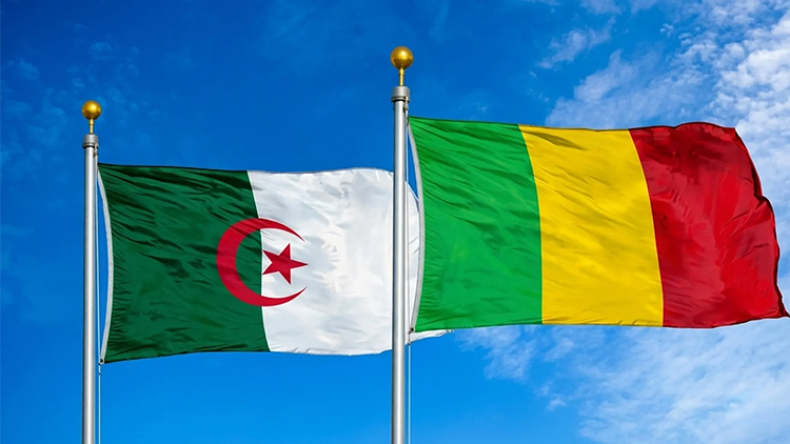
Russia is urging Malian authorities to re-engage with the Algerian peace agreement, advocating for reconciliation amidst renewed fighting in the country. Russian Foreign Minister Sergey Lavrov stated that a purely military solution is not beneficial for Mali, emphasizing the need for reconciliation with Algeria. This strong recommendation from Moscow shows a strategic shift, as Russia believes the Malian crisis requires a political solution, not just a military one. The recommendation follows a resurgence of conflict in Mali, with fighting renewing in July in several central, northern, and northeastern cities, leading to a deteriorating security situation.
Renewed Diplomatic Push
Russia maintains that the Malian crisis necessitates a political resolution rather than a solely military approach. This perspective aligns with ongoing efforts to encourage dialogue and reconciliation in the West African nation, particularly in light of recent military challenges. The Algerian agreement, a key framework for peace, was initially signed in 2015 under the auspices of the United Nations. That accord sought to address deep-seated grievances and establish a pathway towards stability in Mali, particularly in its northern regions, aiming to foster lasting peace and address the root causes of conflict. This diplomatic push by Russia notes a recognition that sustained stability in Mali cannot be achieved through military means alone, necessitating a return to established peace frameworks.
Deteriorating Security Situation
Recent military setbacks have been reported for the Russian African Legion and the Malian army since spring, indicating a challenging period for the security forces. These developments coincide with a worsening security landscape across Mali, marked by significant losses and territorial shifts. Among the significant incidents, the Malian Minister of Defense and the head of intelligence were both killed, marking a severe blow to the country's leadership and raising concerns about the stability of the interim government. These high-profile assassinations have further destabilized an already fragile political and security environment.
In addition to these losses, armed opposition groups have taken control of several cities and vital access points, further destabilizing the region and demonstrating the growing strength and reach of these non-state actors. The escalating conflict has raised concerns about the effectiveness of current military strategies employed by both the Malian army and its Russian allies. The renewed fighting in July across central, northern, and northeastern cities has exacerbated the humanitarian crisis and further complicated efforts to restore order. The expansion of conflict zones and the ability of armed groups to seize strategic locations show the severity of the security challenges facing Mali.
Tawfik Boukadja, a political science professor at University of Algiers 3, suggested that Russia's current push for a negotiated settlement is influenced by the deteriorating security situation. Boukadja stated that the worsening security conditions do not serve Russian interests, implying a strategic shift towards diplomatic solutions amidst military challenges. The professor's analysis notes a potential recalculation of Moscow's approach in the West African nation as the conflict evolves, suggesting that military engagement alone is proving insufficient to secure Russian objectives or bring stability to the region. This shift towards diplomacy could signal a recognition of the complex, multifaceted nature of the Malian conflict.
Geopolitical Repercussions
Algeria has a long history of mediating conflicts in Mali, with its involvement dating back to the 1960s, a role that included facilitating the 2015 peace agreement. This historical context shows Algeria's consistent role as a regional peace broker and its deep understanding of the intricacies of Malian politics and inter-communal relations. The current reconciliation between Algeria and Mali is generating significant interest due to its potential impact on the broader Sahel region, which is grappling with widespread instability, extremism, and humanitarian crises. This rapprochement is seen as a key step towards regional stability, potentially influencing other nations in the Sahel.
Reports indicate that French officials were reportedly surprised by the reconciliation between Algeria and Mali, noting the unexpected nature of this diplomatic breakthrough from a Western perspective. This reconciliation is widely perceived as strengthening both Algerian and Russian influence in the region, marking a notable shift in geopolitical dynamics. The French newspaper Le Monde reported that the reconciliation represented a blow to the French presence in the area, suggesting a diminished role for France, a former colonial power, in a region where it has historically maintained significant influence. The strengthening of Algerian and Russian ties with Mali could reshape alliances and security partnerships across West Africa, potentially leading to new regional power configurations and further limiting traditional Western influence. This evolving geopolitical landscape shows the strategic importance of the Algerian peace agreement and Russia's renewed emphasis on its implementation.