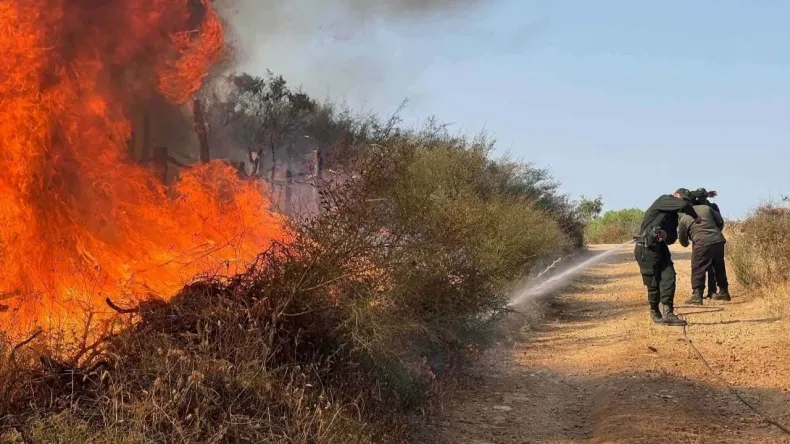
Forest fires have impacted 17 wilayas (provinces) across the country, prompting a significant mobilization of resources to strengthen firefighting efforts. Authorities have deployed 3,245 contract workers, also known as seasonal workers, to reinforce national firefighting teams. These personnel are aiding in the response to the widespread blazes affecting multiple regions.
Personnel on the Front Lines
A total of 5,683 officials and personnel from the forestry sector are actively engaged in front-line intervention operations. These individuals are part of the broader national effort to control and extinguish the widespread forest fires affecting 17 wilayas. Their involvement supplements the deployment of 3,245 contract workers, who are also assisting national firefighting teams. The combined force of forestry officials, personnel, and seasonal workers represents a substantial mobilization of human resources dedicated to the ongoing crisis. Their primary role involves direct engagement with the fires, working to contain their spread and protect affected areas. The deployment notes the extensive scale of the response required to manage the numerous blazes across the country.
Climate Challenges Fueling Fires
Difficult climate conditions, marked by very high temperatures and strong winds, are significantly contributing to the rapid spread of the forest fires. These environmental factors exacerbate the challenges faced by firefighting teams across the 17 wilayas. The combination of intense heat and powerful air currents creates an environment where blazes can quickly expand and become more difficult to contain. Such conditions often lead to unpredictable fire behavior, making suppression efforts more hazardous for personnel on the ground. The sustained high temperatures dry out vegetation, providing ample fuel for fires, while strong winds can carry embers over long distances, igniting new outbreaks far from the initial fire line. This natural acceleration of fire propagation places increased pressure on the mobilized resources.
Protecting National Assets
The extensive mobilization of personnel and resources forms a key part of broader efforts to safeguard national assets. Authorities stated that the objective includes protecting the country's national forest wealth, vital agricultural lands, and private properties from the destructive impact of the widespread blazes. This protective strategy shows the full nature of the response, extending beyond immediate fire suppression to encompass the preservation of ecological, economic, and residential areas affected by the fires across the 17 wilayas. The focus on these national assets notes the significant stakes involved in controlling the ongoing conflagrations and mitigating their long-term consequences.
Intervention and Cooling Efforts
Forest rangers are actively engaged in critical tasks to manage the widespread forest fires across the 17 wilayas. Their responsibilities encompass initial intervention, which involves rapidly responding to new outbreaks to prevent their escalation. Rangers are also tasked with extinguishing active fires, employing various techniques to suppress flames and contain their spread. A significant part of their work includes cooling down burning spots, a key measure taken after initial extinguishment to prevent reignition. This cooling process helps ensure that areas are fully secured and reduces the risk of new blazes emerging from lingering embers, thereby supporting the broader national effort to control the ongoing conflagrations.