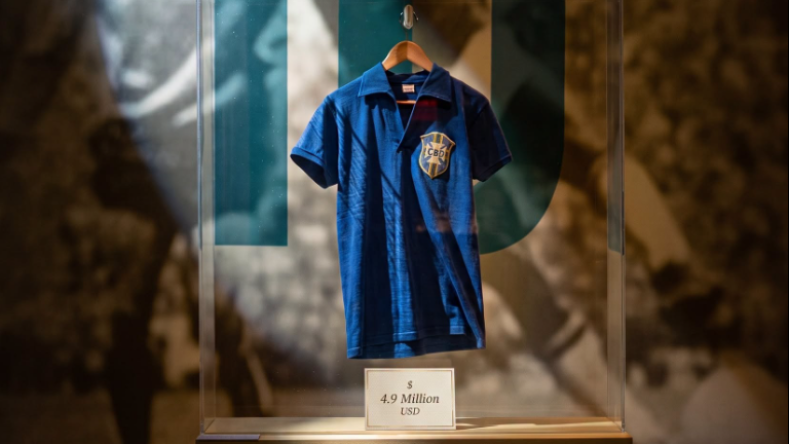
The jersey worn by Brazilian legend Pelé during the 1958 FIFA World Cup final has been sold for $4.9 million at an auction in New York City. The number 10 jersey was part of the football icon's collection and fetched a significant price, marking a notable sale in sports memorabilia. This particular garment, emblazoned with the number 10, is a tangible piece of history from a key moment in both Pelé's career and the annals of international football. Its sale shows the immense value placed on artifacts connected to the sport's greatest figures and most iconic matches.
Historic Match Details
Pelé, then 17 years old, wore the jersey during Brazil's 5-2 victory over Sweden in the 1958 World Cup final. During that match, he became the youngest player to score in a World Cup final, a record that remains unbroken. His performance was instrumental in securing Brazil's first-ever World Cup title. The historic game saw Pelé contribute significantly to Brazil's win, solidifying his status as a football prodigy. His presence on the field, even at such a young age, was electrifying, captivating audiences worldwide and setting the stage for his legendary career. The final, held in Sweden, was a showcase of attacking football, with Pelé's two goals being key to the outcome. The tournament itself was a landmark event, and Pelé's contributions were central to its narrative. The jersey serves as a tangible link to that significant event in football history, representing a key moment in Pelé's career and the sport itself. It encapsulates the excitement and triumph of that memorable day, when a young star announced his arrival on the global stage.
Auction Records and Comparisons
Sotheby's announced that Pelé's 1958 World Cup final jersey became the second most expensive football jersey ever sold. This sale places it among the highest-valued sports memorabilia items, noting the enduring appeal and market strength of artifacts from legendary athletes. The record for the most expensive football jersey sold is held by Diego Maradona's 1986 World Cup jersey. That jersey, worn during Argentina's quarter-final match against England, fetched $9.3 million when it was sold in 2022. Maradona's jersey surpassed previous records for game-worn sports apparel at auction, setting a new benchmark in the market for historic sports artifacts. The strong prices achieved for these iconic jerseys reflect a global appreciation for football history and the profound impact these players had on the sport. Both sales show the growing investment potential and cultural significance attributed to such unique items.
Legacy and Significance
Pelé's jersey from the 1958 FIFA World Cup final, a match where he scored two goals and Brazil secured its first World Cup title, was sold at auction for $4.88 million. This figure, rounded to $4.9 million in initial reports, reflects the item's extraordinary historical and cultural value. The sale notes the enduring global significance of Pelé's early career and the historical weight of Brazil's inaugural World Cup victory. The 1958 tournament marked a key moment for both the player and his nation, establishing Pelé as a prodigious talent on the international stage. His performance in the final against Sweden, at just 17 years old, cemented his status as a footballing legend and laid the foundation for his unparalleled career. The jersey's market value reflects its connection to this defining event, representing a tangible piece of football history and the genesis of a sporting icon's legacy. The artifact serves as a powerful reminder of the period when Pelé first announced his arrival, contributing significantly to Brazil's ascent as a dominant force in international football. The garment symbolizes the start of an era, connecting fans and collectors to a moment that reshaped the sport's narrative and global appeal, forever linking it to the dawn of Brazil's footballing dominance.