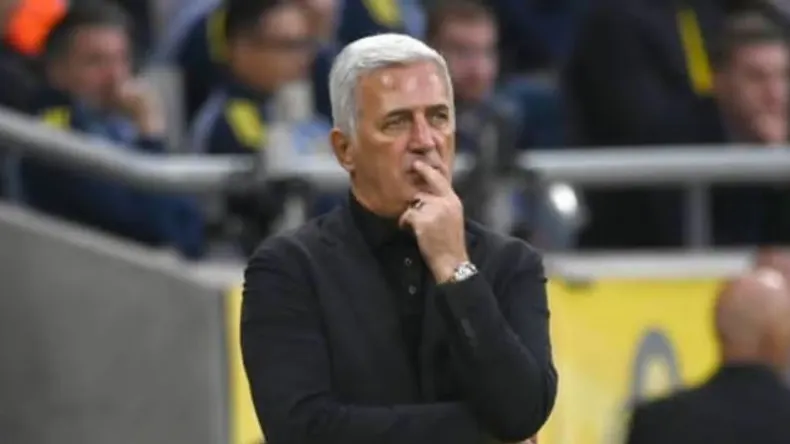
National coach Vladimir Petkovic has demonstrated a consistently cold temperament during matches involving the 'Greens', drawing comparisons to the Swiss winter environment, according to Ali Bahlouli. Bahlouli noted that Petkovic's disposition remains unchanged with each game played, a characteristic Bahlouli linked to the coach's residence in Bern, Switzerland, where he lives with his family. This unwavering, cool demeanor is said to persist with every match the 'Greens' play, irrespective of the game's stakes or outcome. This observation comes amidst broader scrutiny regarding Petkovic's impact on team morale, with some observers questioning whether his stoic nature adequately serves the emotional needs of a high-performance football squad. The consistent portrayal of a cold temperament has become a defining characteristic of his sideline presence, sparking discussion among fans and commentators alike.
Petkovic's Coaching Style
Vladimir Petkovic is presumed to belong to the "Yugoslavian school" of coaching, a style often associated with the country of his birth. This classification suggests a particular approach to football management, rooted in the traditions of Yugoslavian football. Petkovic's background in the region is noted as a potential influence on his coaching philosophy and methods. His birthplace in the former Yugoslavia provides context for understanding the foundational elements of his tactical and team management style. The "Yugoslavian school" is generally characterized by specific tactical principles and a rigorous approach to player development, emphasizing discipline and strategic acumen. This presumption links Petkovic's current coaching practices to a distinct footballing heritage, suggesting that his methodical and perhaps less outwardly emotional style could be a product of this particular coaching lineage. This school of thought often prioritizes technical proficiency and strategic execution, potentially explaining the coach's focus on these aspects over overt emotional displays.
Contrast with Former Coaches
Technicians Vahid Halilhodžić and Djamel Belmadi were known for exhibiting traits of passion and abundant enthusiasm. These characteristics were often associated with their ability to boost team morale and motivate players. Their coaching styles reportedly fostered an environment where players felt inspired and driven, contributing to a positive team dynamic. The trait of passion and abundant enthusiasm was a hallmark of their tenures, proving highly capable of boosting morale and motivating players to achieve peak performance. Halilhodžić and Belmadi's visible fervor on the sidelines and during training sessions was a distinguishing feature of their tenures, often manifesting as animated gestures and vocal encouragement. This approach is understood to have played a significant role in their strategies for team management and in developing player engagement, creating a palpable sense of energy and commitment within the squad. The enthusiasm displayed by these former coaches was considered a key element in their leadership, influencing the overall spirit and performance of the squads they managed by fostering a strong emotional connection with their players.
Impact on Team Resolve
A calm demeanor and the avoidance of recklessness are essential attributes in high-level sports competitions, where composure under pressure is critical. However, a perceived deficit in enthusiasm regarding aspects such as shooting technique, player motivation, and issuing warnings can lead to emotional hardening within a team. While calmness and avoiding recklessness are indeed required in the demanding environment of high-level sports competitions, a lack of enthusiasm in areas critical to performance, such as refining shooting technique, actively motivating players, and providing clear warnings, can calcify emotions and dampen resolve. Such a lack of visible passion or intensity risks solidifying negative emotions among players, potentially dampening their collective resolve and leading to a sense of detachment. This emotional calcification could hinder a team's ability to respond effectively under pressure or maintain high spirits during challenging phases of a competition, ultimately affecting their resilience and fighting spirit. The absence of an outwardly enthusiastic or demonstrative approach from leadership might contribute to a subdued atmosphere, impacting overall team spirit and determination, and potentially eroding the vital emotional bonds that drive collective success.