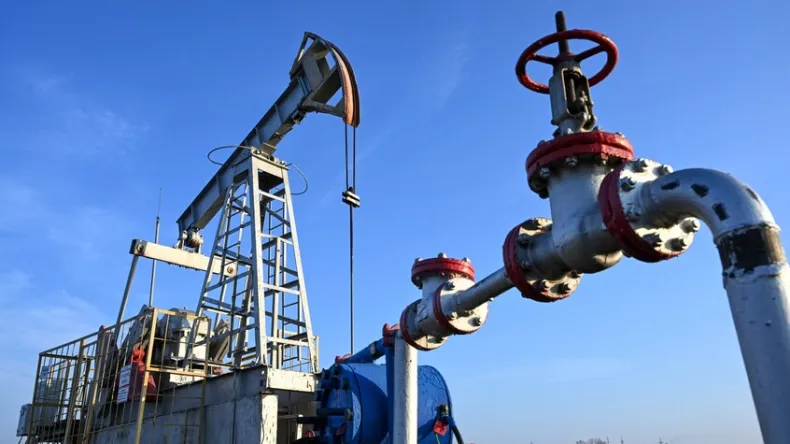
Oil prices continued their ascent on Wednesday, driven by escalating tensions between the United States and Iran alongside threats from Yemen's Houthi movement. The global energy markets reacted sharply to these geopolitical developments, pushing crude benchmarks higher. US West Texas Intermediate (WTI) crude, a key indicator for North American oil prices, saw a notable increase, rising by $1.91, or 2.26 percent, to settle at $86.25 a barrel. This upward trajectory shows the sensitivity of oil prices to instability in critical oil-producing and transit regions.
Market Price Movements
Brent crude futures, the international benchmark, also registered a significant gain, reflecting the widespread market anxiety. Brent crude increased by $2.31, or 2.54 percent, to reach $93.32 a barrel. This marked Brent crude's highest level in approximately six weeks, signaling a substantial shift in market sentiment and a renewed risk premium. The rapid increase in both benchmarks notes the immediate impact of geopolitical events on the global supply outlook. The upward movement reflects broader market anxieties stemming from geopolitical developments, as traders assess the potential for supply disruptions. The price data for both US West Texas Intermediate (WTI) crude and Brent crude futures was sourced from Reuters, providing a reliable snapshot of the day's trading activity. Market participants are closely monitoring these price fluctuations as they navigate an increasingly complex geopolitical landscape.
Geopolitical Triggers
The United States and Iran are engaged in an escalating conflict, contributing significantly to the recent surge in global oil prices. This increase reflects heightened concerns among market participants regarding potential disruptions to oil supplies in the Middle East, a region vital for global energy security. Tensions between Washington and Tehran have been a recurring factor in energy markets, with any perceived escalation often leading to an immediate impact on crude benchmarks. The current environment has seen both nations involved in actions and rhetoric that analysts view as contributing to an unstable regional dynamic. The Strait of Hormuz, a narrow waterway between the Persian Gulf and the Gulf of Oman, remains a critical choke point for global oil shipments, and any threat to its stability can send shockwaves through the market. Market analysts closely monitor statements and actions from both the United States and Iran for indications of future developments that could affect oil production or transit routes. The ongoing friction between these major players adds a substantial risk premium to oil prices, as traders factor in the possibility of supply disruptions, whether accidental or intentional. This geopolitical uncertainty directly influences investment decisions and future supply forecasts.
Broader Implications
Further exacerbating concerns over maritime security in key shipping lanes, the Yemeni Houthi group has issued threats to target ships. This development adds another layer of geopolitical risk, particularly for vessels transiting vital waterways in the region, such as the Red Sea and the Bab al-Mandab Strait. The Houthi group's declarations contribute to an environment of uncertainty for international shipping operations, potentially impacting the safe passage of crude oil and other commodities through these strategic maritime corridors. Such threats are closely monitored by global energy markets, as any disruption to shipping in the Middle East could lead to significant supply chain issues and increased transportation costs for oil and other goods. The prospect of Houthi actions against commercial shipping routes now factors into the broader risk assessment for oil traders, pushing prices higher as the cost of insuring and rerouting vessels increases. The cumulative effect of these tensions from both state and non-state actors shows the fragile nature of global oil supply chains.