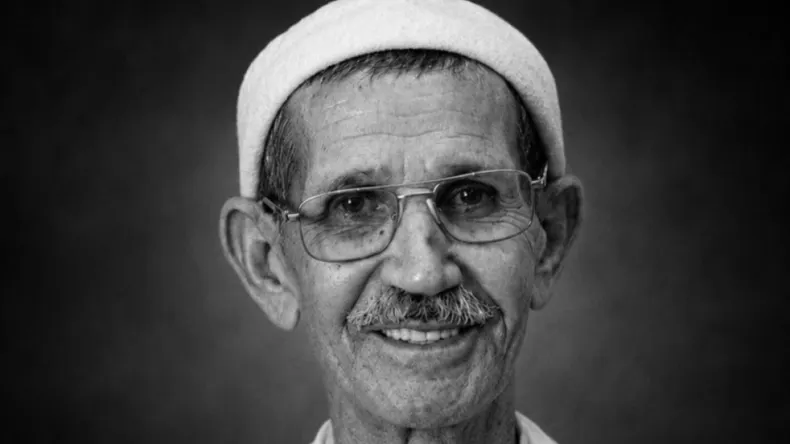
Si Hadj Mohand Tayeb, a revered figure known for his profound religious scholarship and unwavering dedication to his homeland, passed away on Saturday, May 31, 2026. This significant loss was reported in an article published on June 7, 2026, which detailed his life and contributions. His funeral was held the following day, Sunday, June 1, 2026, a solemn occasion for those mourning his departure. The passing of Si Hadj Mohand Tayeb marks a significant event for those who knew and respected him, leaving behind a legacy that spans religious, cultural, and national spheres. The news of his demise resonated deeply within the communities he served and influenced throughout his remarkable life.
A Life of Devotion and Struggle
Born in 1934, Si Hadj Mohand Tayeb dedicated a significant portion of his early life to the cause of Algerian independence. His formative years were marked by a fervent commitment to national aspirations. He actively participated in the struggle for liberation from the French, a period that profoundly shaped his commitment to his country and its people. This involvement showed his deep-seated patriotism and his readiness to contribute to the nation's freedom. Details of his specific contributions to the liberation movement, though not extensively documented in the initial report, are understood to have been an integral part of his early adult life, reflecting his courage and conviction during a key era for Algeria. The article detailing his life and passing, published on June 7, 2026, totaled 186 words, providing an initial overview of his impactful journey. This concise account reflects on his journey and the impact he had on those around him, noting his foundational role in the liberation struggle as a key aspect of his public and personal identity. His early commitment to Algerian independence set the stage for a life characterized by service and intellectual pursuit.
Translating the Divine Word
Si Hadj Mohand Tayeb's intellectual and spiritual journey began formally with his studies at the Institute of Imam Al-Murtada Abdelhamid Ibn Badis in 1953. Here, he engaged deeply in religious studies, laying a strong foundation for his future theological work. This academic pursuit equipped him with the necessary linguistic and interpretive skills for his most ambitious undertaking. His most significant achievement, one that would cement his place in religious scholarship, was translating the meanings of the Holy Quran into the Amazigh language. This monumental endeavor aimed to make the sacred text accessible to Amazigh-speaking communities, thereby fostering a deeper understanding and connection to their faith. This translation was not merely a linguistic exercise but a profound act of cultural preservation and religious dissemination, marking a substantial contribution to both Islamic scholarship and Amazigh cultural heritage. The careful nature of his work ensured that the spiritual essence and theological nuances of the Quran were faithfully conveyed in Amazigh, bridging a key linguistic gap for millions.
The King Fahd Complex in Medina subsequently adopted Si Hadj Mohand Tayeb's translation of the Quran into Amazigh. This adoption by the prominent complex signifies an official recognition of the translation's accuracy, scholarly merit, and its importance for the global Muslim community. The King Fahd Complex, known for its extensive efforts in printing and distributing the Quran worldwide, acknowledged the critical value of making the divine word available in Amazigh. The decision by the King Fahd Complex further amplified the reach and impact of Si Hadj Mohand Tayeb's work, ensuring its widespread dissemination among Amazigh Muslim populations globally. This institutional endorsement provided his translation with unparalleled authority and distribution, allowing it to reach countless individuals who previously lacked access to the Quran in their mother tongue. This accomplishment is often cited as a cornerstone of his intellectual legacy, showing his profound impact on religious education and cultural identity.
Personal Reflections and Legacy
The author, Mohamed El Hadi El Hassani (محمد الهادي الحسني), had the privilege of encountering Si Hadj Mohand Tayeb (سي حاج محند طيب) in 1987. This meeting provided a personal connection to the scholar whose work would later be recognized globally for its immense significance. El Hassani's reflections offer a contemporary perspective on Si Hadj Mohand Tayeb's character and influence beyond his academic achievements. The encounter notes the extent of Si Hadj Mohand Tayeb's network and his impact on individuals within the intellectual and religious circles of the time, demonstrating his ability to inspire and connect with others on a personal level. El Hassani's direct experience with Si Hadj Mohand Tayeb contributes to understanding the personal dimensions of his legacy, complementing the public recognition of his scholarly contributions, particularly his pioneering Quran translation. His passing marks the end of a life dedicated to faith, knowledge, and the service of his community and nation.