Accusations have emerged regarding Morocco's system, claiming it distorts culture through corrupt practices and political actions, according to unnamed critics. These critics assert that culture is fundamentally a system encompassing upbringing, ethics, and behavior, manifesting in inherited perceptions, practices, and social representations. They emphasize that culture itself is a foundational system, encompassing upbringing, ethics, and behavior, which are visibly expressed through inherited perceptions, behaviors, practices, and social representations. They further state that culture and art are inseparable from society, political practices, and other systems, emphasizing their interconnectedness within cultural frameworks, as they are all integral parts of cultural systems. The critics specifically link these cultural practices to internal and external political actions, alleging the involvement of "dirty money" from the drug trade to buy consciences, asserting that these practices are inseparable from such political maneuvers.
Cultural Practices and Political Ties
Critics contend that art is fundamentally rooted in taste and sensibility, which are themselves derived from societal perceptions, ideas, and feelings. They argue that art originates intrinsically from taste and sensibility, directly shaped by societal perceptions, prevalent ideas, and collective feelings. They allege that Morocco's system, utilizing its various tools and apparatuses, engages in practices within the art and culture sectors that are deemed futile. The critics claim that the system in Morocco, through its various tools and apparatuses, actively engages in practices within the art and culture sectors that are ultimately futile.
Further accusations claim that the system and its affiliated media outlets actively distort facts, engage in extortion, and inundate the market with crude and vulgar content. These actions, according to the critics, violate established ethics and good taste. The system and its arms in the media are accused of distorting facts, extorting, and flooding the market with crude and vile tricks that violate ethics and good taste. The critics assert that if behavior, art, and literature are translated into a lack of ethics, rudeness, and poor taste, then the underlying origins must be blackmail and vulgarity. They posit that if behavior translates culture, art, and literature into a lack of ethics, rudeness, and poor taste, then blackmail and vulgarity are the true origins of such expressions.
Distortion and Appropriation Tactics
The system is accused of attempting to distort facts through deception, theft, plunder, lies, fabrication, false attribution, and evasion of responsibility. These actions reportedly include distorting history, geography, culture, and its symbols, allegedly to polish a tarnished image. Critics emphasize that culture represents a heritage passed down from local to global levels. They highlight that attributing a child to someone other than its father is considered fraudulent and criminal behavior. The critics show that culture is a heritage passed down from local to global levels, and they draw a parallel by stating that attributing a child to someone other than its father constitutes fraudulent and criminal behavior.
Individuals associated with the system are said to deny such actions, rejecting the appropriation of cultural elements like the caftan, couscous, and burnous. These individuals deny such actions and reject the appropriation of cultural elements like the caftan, couscous, and burnous. However, the propaganda machine is alleged to promote these elements as its own invention, claiming they predate Adam. A prevailing sentiment reflecting this situation is captured by the phrase, "The fool throws at the other what he has." The phrase, 'The fool throws at the other what he has,' is noted to reflect this situation directly.
Broader Societal and International Context
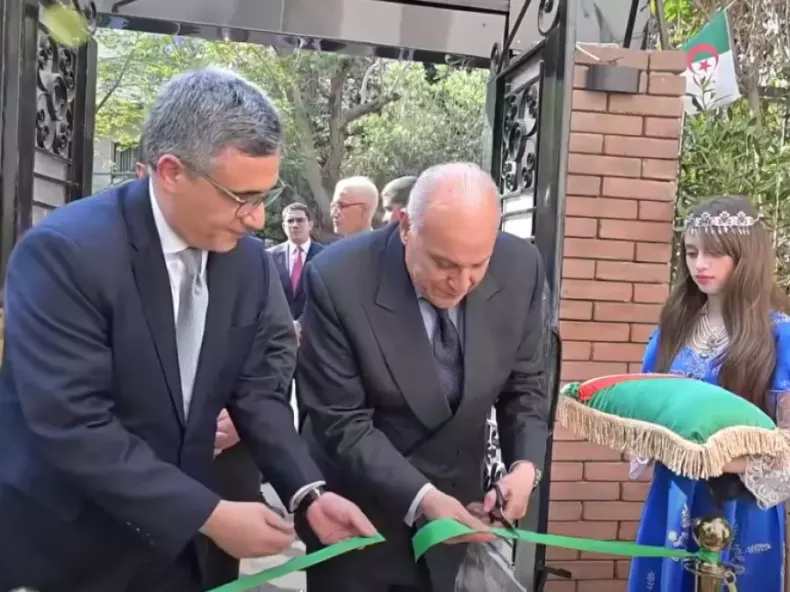
The Moroccan system's actions in the Paris exhibition, specifically concerning Algeria's pavilion, are cited as an example within this broader context of alleged cultural distortion. What happened at the Paris exhibition concerning Algeria's pavilion is presented as falling within this very context. Critics further extend their condemnation to the Moroccan system's conduct in sports, particularly in African football. The Moroccan system's behavior in sports is also criticized, particularly in African football. This behavior reportedly escalates to include insults, as well as verbal and physical assault, especially during sporting or cultural events. This behavior escalates with insults, verbal, and physical assault, particularly during sporting or cultural events. Such actions are described as transforming into a pathological practice by conscious individuals who are aware of their deeds. This behavior, according to critics, transforms into a pathological practice by conscious individuals who know their actions. Despite these criticisms, the article expresses sentiments of brotherhood and affection for the neighboring country and its people, noting the existence of friendships and relatives there. The article expresses brotherhood and affection for the neighboring country and its people, noting that friendships and relatives exist there.