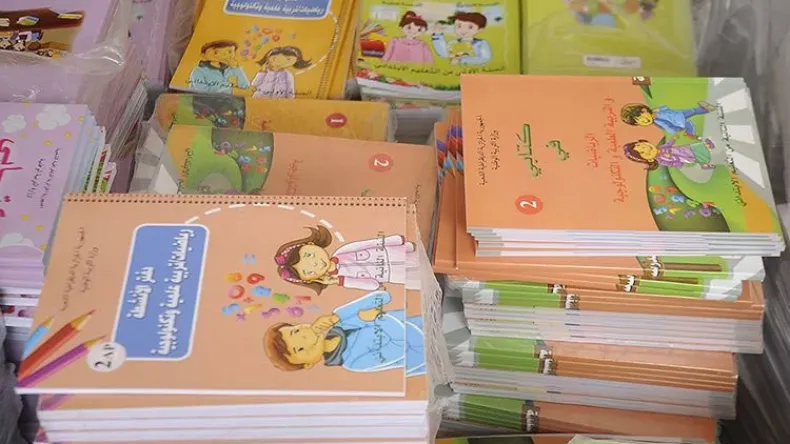
The Ministry of National Education has released its full arrangements and detailed procedures for the sale, retrieval, and distribution of textbooks for the 2026/2027 academic year. These newly established guidelines specify that the distribution of "free textbooks" to eligible recipients will commence on July 1st. The Ministry stated that all educational institutions are actively involved in selling textbooks, further noting that sales operations can be strategically extended to other suitable spaces to facilitate broader access for students and their parents. The procedures are designed to streamline the entire process, ensuring efficiency and equity for the upcoming academic period. This detailed framework shows the Ministry's commitment to organizing textbook logistics well in advance of the new school year.
Distribution and Sales Timeline
The marketing process for textbooks officially commenced on June 14th and is rigorously scheduled to run until October 4th, covering an extensive five-month period. This prolonged timeline is intended to provide ample opportunity for all stakeholders to complete their respective tasks. The distribution of free textbooks, specifically for beneficiaries of the special grant, which is valued at 5000 dinars, is slated to begin precisely on July 1st. To ensure a smooth start to this critical phase, educational directorates are explicitly required to submit numerical data detailing these beneficiaries by June 30th. This deadline is key for accurate planning and allocation. These full procedures follow a circular dated June 2nd, bearing number 351, which was meticulously issued by the Directorate General of Foresight, Planning, and Finance within the Ministry of National Education. This circular serves as the foundational document for the entire operation, outlining the legal and administrative basis for the new arrangements.
The sale of textbooks is meticulously organized within individual educational institutions, adhering strictly to a specific schedule prepared by the institution's director. This carefully constructed sales schedule must be widely published through all available means, including school notice boards, official websites, and parent communication channels, to ensure broad awareness among the student body and their families. In primary schools, the primary school principal bears the direct responsibility for overseeing the sale of textbooks, ensuring that the process is managed efficiently and fairly for younger students. For middle and high schools, the institution's director is ultimately responsible for textbook sales, receiving essential assistance from the financial manager to facilitate the monetary aspects and logistical coordination of the process. This division of responsibility aims to optimize the sales workflow based on the specific administrative structures of each educational level.
Financial and Oversight Mechanisms
Financial accounting for free textbooks must be completed and reported by October 4th, according to the Ministry of National Education's new procedures. This deadline is critical for ensuring fiscal transparency and accountability. A specialized department within the Directorate of Education will conduct a thorough audit of these financial reports, cross-referencing them meticulously against the official lists of free textbook beneficiaries. This cross-referencing process is designed to prevent discrepancies and ensure that textbooks are distributed to the rightful recipients. The final audit report concerning free textbooks is required to be submitted by October 15th, providing a full overview of the free distribution program's financial integrity.
A full summary of all textbook sales must also be prepared and sent to the provincial distribution center for endorsement no later than October 16th. This step ensures that all sales data is consolidated and verified at a regional level. The National Office for School Publications (ONPS) is explicitly responsible for covering the fees associated with transferring textbook sales amounts to the provincial distribution center's current account. This financial arrangement simplifies the process for educational institutions by centralizing the transfer of funds.
The Ministry has stipulated a fixed allowance for individuals directly involved in textbook sales, recognizing the effort and time invested in this critical task. This allowance is set at 6% of the total textbook sales, calculated excluding any applicable taxes. Of this fixed allowance, 60% is allocated to the sales manager, acknowledging their primary role in overseeing the operation. The remaining 40% goes to the assistant sales manager, reflecting their supportive yet key contributions to the sales process. The National Office for School Publications is specifically tasked with making these fixed allowance payments, with a firm deadline of November 12th, ensuring that those involved are compensated in a timely manner for their work.
Implementation and Monitoring
Directorates of Education are mandated to establish a dedicated follow-up committee to oversee the careful implementation of these new textbook procedures, according to the Ministry of National Education. This committee will be instrumental in monitoring the various stages of the textbook process, encompassing everything from initial sales and distribution to the intricate financial reconciliation of free textbooks. Its formation is a key component of the Ministry's overarching strategy to ensure that all guidelines regarding the 2026/2027 academic year’s textbooks are rigorously followed and adhered to. The committee's oversight role is specifically designed to proactively address any issues or challenges that may arise during the extensive five-month marketing period, which extends from June 14th to October 4th. This structured approach aims to maintain the highest levels of transparency and efficiency throughout the entire operation, ultimately ensuring that essential textbooks reach students effectively and without undue delay. The Ministry's directive emphasizes the critical importance of consistent and diligent monitoring to uphold the integrity and successful execution of the entire distribution and sales framework. This continuous vigilance is expected to guarantee a smooth and equitable textbook provision for all students across the nation.