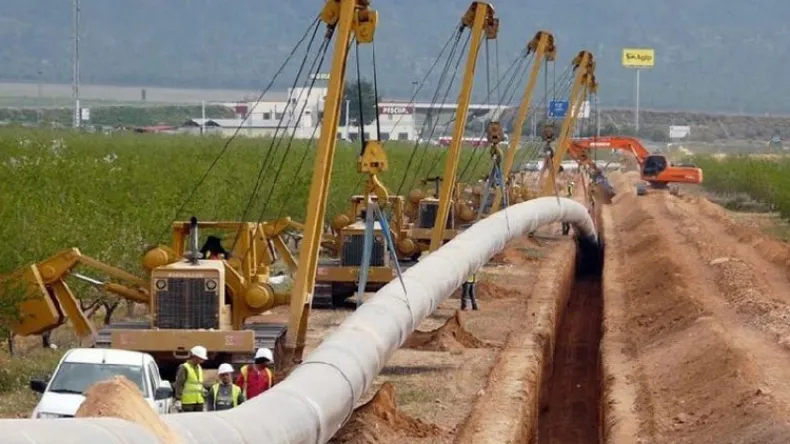
Moroccan Foreign Minister Nasser Bourita visited Nouakchott on 6 November 2026 to meet with President Mohamed Ould Cheikh El Ghazouani regarding the Atlantic Gas Pipeline. This diplomatic engagement follows an announcement in Abu Dhabi on 5 November 2026 by Bashir Bawa Ojulari, Director General of the Nigerian National Petroleum Corporation, stating that all necessary project agreements are now concluded. The Director General of the Nigerian National Petroleum Corporation, Bashir Bawa Ojulari, confirmed that the project has reached a stage where all necessary agreements have been finalized, marking a significant milestone for the international initiative.
Hamdi Yahdih, an expert on Maghreb affairs, stated: "I learned that among Mauritania's consultations with Morocco, it wants it to agree to open a new crossing starting from Amgala towards Bir Moghrein in Mauritania, and that Nouakchott does not mind and only stipulates that it be protected by the Moroccan army just as it protects Guerguerat, and that Morocco says it will pass from the point where the sand berm touches the Mauritanian border."
Regional Pipeline Project Progress
ECOWAS member states formalized their commitment to the Atlantic Gas Pipeline project on 19 July 2026 by signing an intergovernmental agreement in Freetown, Sierra Leone. This treaty serves as the foundational framework for the transnational infrastructure initiative, which aims to transport gas resources across the region. The ECOWAS member states signed this intergovernmental agreement in Freetown, Sierra Leone, on July 19, 2026, to solidify the collaborative effort required to manage the complex logistics of such a large-scale energy venture.
Technical planning for the pipeline specifies a maritime route extending approximately 1110 kilometers along the coast of Western Sahara. The Atlantic Gas Pipeline project involves a maritime route that passes near the coast of Western Sahara for approximately 1110 kilometers. This alignment remains a central element of the project design, although the route sits within a complex legal environment regarding the territory's status and resource management.
International legal considerations regarding the project were addressed by the Court of Justice of the European Union on 4 October 2024. The Court of Justice of the European Union issued rulings on October 4, 2024, emphasizing the need for the consent of the Sahrawi people regarding agreements affecting their territory and resources. The court issued rulings that emphasized the necessity of obtaining the consent of the Sahrawi people for any agreements that involve or affect their territory and natural resources. These judicial findings continue to influence discussions between regional stakeholders, including those currently evaluating the pipeline's path through coastal waters adjacent to Western Sahara. Mauritania and Morocco remain in consultation as they align their respective national interests with these broader regional frameworks and international legal requirements.