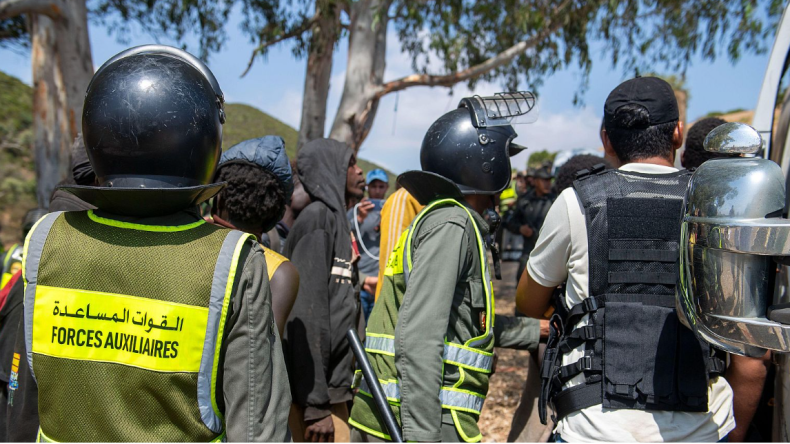
Spanish National Police investigators are examining allegations that Moroccan security forces facilitated unauthorized border crossings into Ceuta on 30 July and 31 July. The National Center for Immigration and Borders documented these incidents, reporting that Moroccan security forces provided active guidance to crowds toward specific crossing points. These findings form the basis of the ongoing investigation into the events that occurred across the two-day period. Authorities in Spain continue to review evidence regarding the conduct of security personnel during the transit attempts. The Spanish National Police's National Center for Immigration and Borders specifically reported that Moroccan security forces provided active guidance to crowds toward crossing points during the events in question, which occurred on July 30 and 31.
Evidence of Official Involvement
Spanish investigators identified Mohamed El Oualidi, the Security Wali of Tetouan, and Abdelfattah Sayed Radi, the General Supervisor of Security in M'diq-Fnideq, as having issued specific instructions at the border during the unauthorized crossings. These two high-ranking Moroccan officials reportedly coordinated movements while present at the site. Spanish investigators identified these two high-ranking Moroccan officials, Mohamed El Oualidi (Security Wali of Tetouan) and Abdelfattah Sayed Radi (General Supervisor of Security in M'diq-Fnideq), as having issued instructions at the border.
Investigating judge Maria Tardon stated that the two Moroccan security officials appeared in video recordings giving instructions near the Bab Ceuta crossing in the Fnideq area. These recordings serve as primary evidence in the judicial review currently underway. Maria Tardon continues to analyze the footage to determine the extent of the involvement of Mohamed El Oualidi and Abdelfattah Sayed Radi in the events of 30 July and 31 July. The investigation remains focused on the conduct of these security personnel as authorities examine the sequence of events at the border.
Analysis of Video Footage
Spanish investigators collected 73 video recordings documenting the events at the border. Analysts conducted an in-depth examination of five of these recordings to identify the movements of individuals and security personnel present during the transit attempts on 30 July and 31 July. These specific files are currently being scrutinized by judicial authorities to confirm the actions taken by officials at the crossing points. Spanish investigators collected 73 video recordings of the events and conducted an in-depth analysis of five of them to assist in the verification of the actions taken by officials.
Judge Santiago Pedraz ordered a hearing for four protected witnesses to provide testimony regarding the incidents. The Spanish National Court scheduled this session for 10 November. These witnesses are expected to offer accounts of the border activity to assist the ongoing judicial review. The Spanish National Court has scheduled a hearing for four protected witnesses on the upcoming Tuesday, ordered by Judge Santiago Pedraz. This testimony is expected to provide further clarity regarding the activities observed at the border during the late July incidents.