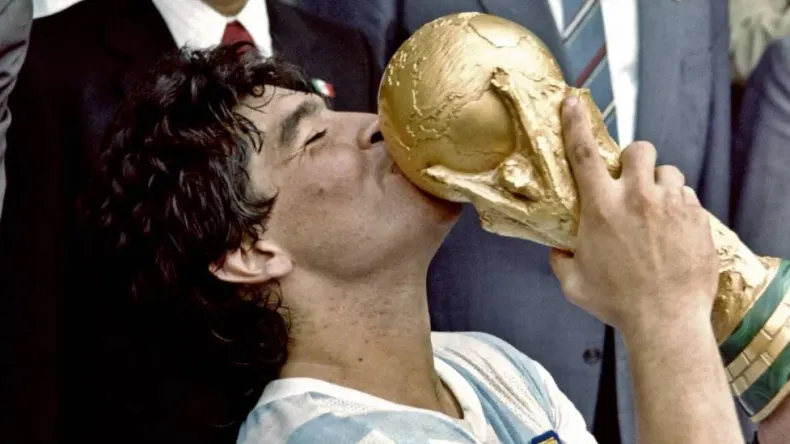
The 1986 FIFA World Cup took place in Mexico after Colombia withdrew as host due to economic problems. Argentina ultimately secured the championship, defeating Germany 3-2 in the final match. During the group stage, Argentina played Italy, with the game ending in a 1-1 draw. Diego Maradona scored for Argentina, equalizing after Altobelli had opened the scoring for Italy.
The Stage is Set
Mexico had experienced a severe earthquake eight months prior to hosting the 1986 FIFA World Cup. The natural disaster caused significant challenges for the host nation as preparations for the international tournament continued. Despite the widespread damage and recovery efforts underway, the country proceeded with its commitment to stage the event. The tournament marked a moment for Mexico to showcase its resilience on a global stage, drawing attention to its recovery as teams from around the world gathered for the competition. The earthquake's impact lingered, but the World Cup provided a focal point for national and international interest.
Group Stage Surprises and Struggles
Argentina, Italy, and Bulgaria advanced from their group, leaving South Korea behind in the standings. In another group, Mexico, Paraguay, and Belgium secured qualification, while Iraq was eliminated after losing all three of its matches and scoring only one goal, netted by Ahmed Rami. The Soviet Union and France progressed to the next round, outpacing Hungary and Canada.
Algeria and Northern Ireland were eliminated from their group, having earned just one point from their draw against each other. Brazil dominated its group, with Spain also qualifying for the next stage. Denmark emerged as a surprise in the first round, defeating all its opponents, including a 2-0 victory over Germany and a 6-0 win against Uruguay. Morocco topped its group, qualifying alongside England and Poland. Algeria would have qualified for the second round with only two draws if they had managed to draw their final match against Spain, but they ultimately lost that game 3-0. Algeria also played a strong match against Brazil in front of 48,000 spectators, though Careca exploited a defensive lapse at the end of the match to secure a victory for Brazil.
Knockout Rounds and Maradona's Ascent
The second round saw all tournament favorites qualify, with Spain achieving the strongest result, a 5-1 victory against Denmark, where Butragueño scored four goals. Morocco exited honorably after Matthaus scored a goal in the 87th minute. In the quarter-finals, France defeated Brazil on penalties following a 1-1 draw in regular time. Zico had missed a penalty for Brazil to win the match in the second half, and later in the shootout, Platini missed a penalty for France, while Socrates and Julio Cesar missed for Brazil.
Argentina advanced past England, with Maradona scoring one goal with his hand and another with genius, contributing to the team's progress. Argentina, propelled by Maradona's genius, achieved the same 2-0 result against Belgium in the semi-finals. Gary Lineker scored his sixth goal of the tournament, becoming the top scorer. Germany defeated Mexico on penalties after a draw, and Belgium defeated Spain on penalties. Germany then won their semi-final match 2-0 against Mexico.
The Final and Lasting Legacy
Mexico prepared nine stadiums for the tournament, with the Azteca stadium in Mexico City having the largest capacity at 114,000 spectators. France secured third place in the competition by defeating Belgium with a final score of 4-2. Throughout the 1986 World Cup, Diego Maradona scored five goals and provided six assists, a performance that defined Argentina's championship run. His contributions were central to the team's success in the tournament. Maradona's individual skill and leadership were consistently noted as Argentina progressed through the knockout stages to ultimately claim the title. His impact on the tournament statistics marked him as a dominant figure.