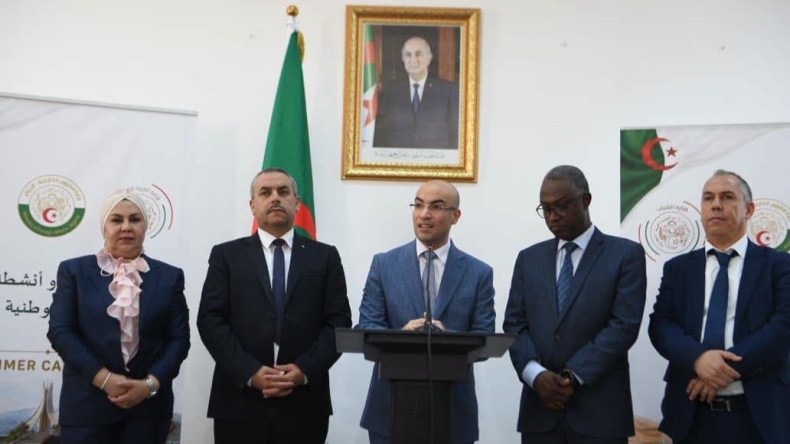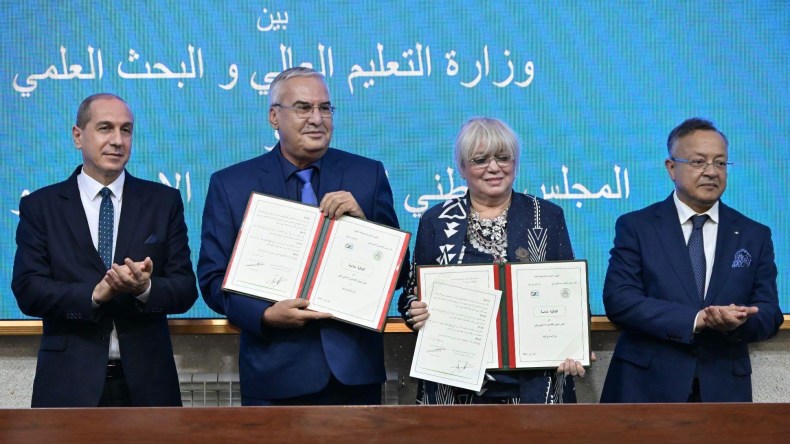
Minister of Higher Education and Scientific Research, Kamal Baddari (كمال بداري), and President of the National Economic, Social and Environmental Council, Mohamed Boukhari (محمد بوخاري), oversaw the signing ceremony of a framework agreement for cooperation in studies and scientific research. The agreement was formally signed on Monday, July 20, 2026, at the headquarters of the Ministry of Higher Education and Scientific Research. This new accord aims to boost scientific research and development efforts across various sectors, signaling a concerted push towards leveraging academic and intellectual resources for national progress. The signing event marked a significant step in formalizing and strengthening the collaborative ties between these two key national institutions.
Agreement's Core Objectives
The framework agreement seeks to enhance cooperation between the Ministry of Higher Education and Scientific Research and the National Economic, Social and Environmental Council. Its primary objective is to develop joint research projects. These projects are specifically designed to serve national development priorities, ensuring that scientific endeavors are directly aligned with the country's strategic goals. The accord is founded on the principle of fostering a strong partnership between the two parties, aiming to create a synergistic environment where knowledge generation and application can thrive. This enhanced partnership is expected to lead to more impactful and relevant research outcomes, directly benefiting the nation's socio-economic landscape. The agreement establishes a clear mandate for collaborative work, emphasizing the importance of shared intellectual resources and expertise in addressing pressing national challenges.
Key Areas of Collaboration
The framework agreement outlines cooperation in conducting studies related to the design, modification, integration, and modernization of knowledge systems and methods. This aspect of the accord aims to refine and update the foundational structures through which scientific research and development are pursued. By focusing on these critical areas, the agreement intends to ensure that the methodologies and systems used in research are advanced and efficient, thereby maximizing the potential for innovation. The collaborative studies will delve into how knowledge is acquired, processed, and applied, seeking to implement best practices and introduce innovative approaches. This commitment to continuous improvement in knowledge systems is central to the agreement's long-term vision for scientific advancement.
The agreement further specifies the organization of quality training programs directly linked to joint projects and research initiatives. These programs encompass qualification and specialization courses, offering targeted educational opportunities designed to upskill and reskill professionals involved in the collaborative efforts. Additionally, the accord provides for short and medium-term internships, intended to give practical experience and hands-on exposure to real-world research challenges. These internships are key for developing practical competencies among participants, bridging the gap between theoretical knowledge and applied research. The agreement also includes provisions for contributing to the supervision of students and staff involved in these collaborative efforts, ensuring mentorship and guidance throughout their engagement. This full approach to training and development is designed to cultivate a highly skilled workforce capable of driving scientific and technological progress.
Strategic Importance for Development
The framework agreement establishes an organizational structure for collaborative efforts in studies, research, and development. This structure is intended to streamline the execution of joint projects and initiatives between the Ministry of Higher Education and Scientific Research and the National Economic, Social and Environmental Council. The accord aims to ensure that these collaborative endeavors are systematically managed and aligned with national development objectives. By providing a clear framework, the agreement seeks to enhance efficiency and coordination in scientific undertakings. It also serves to consolidate resources and expertise from both entities towards common goals, thereby strengthening the foundation for future research and development efforts critical for national progress. This organizational framework is designed to facilitate smooth interaction and resource sharing, ensuring that all joint work is conducted efficiently and effectively. The structured approach shows the commitment of both institutions to a coordinated and impactful contribution to the nation's development agenda.