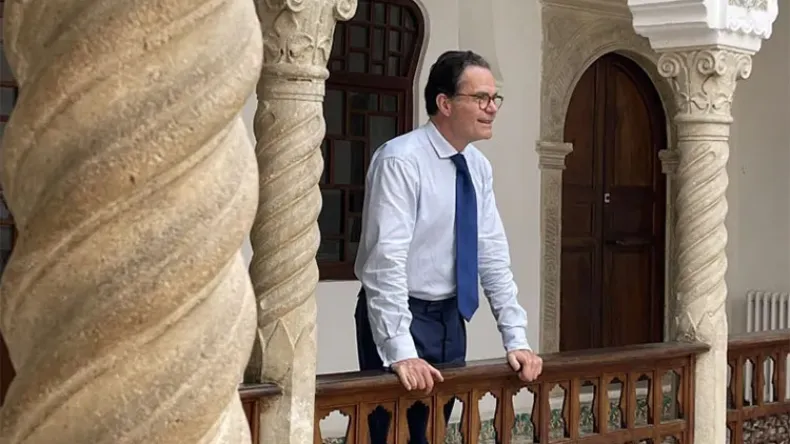
France's President Emmanuel Macron has clarified the country's stance on visa issuance, signaling ongoing strain in relations with Algeria, according to reports published on July 22, 2026. This clarification comes amidst heightened diplomatic exchanges and varying statements from French officials regarding the future of visa policy towards Algerian citizens. Stéphane Romatet, the French Ambassador to Algeria, stated he returned to Algeria with a direct mandate from the French President to "put relations between the two countries back on the right track." This mandate shows the strategic importance Paris places on its relationship with Algiers, even as points of friction persist. This development follows comments from French MP Maud Bregeon, who quoted President Macron as saying France shows "no leniency" on the visa issue, indicating a firm and unwavering approach from the highest levels of the French government.
Ambassador's Remarks and Official Disavowal
Earlier, Stéphane Romatet, the French Ambassador to Algeria, had expressed hope that the number of visas issued to Algerian citizens would return to pre-crisis levels, specifically 250,000 visas annually. This statement, made during his return to Algiers, was seen by some as a conciliatory gesture aimed at de-escalating tensions between the two nations. However, this hopeful outlook was quickly countered by other French officials. French Minister Delegate for Europe, Benjamin Haddad, and Minister of Overseas Territories, Naima Moutchou, subsequently stated that the French Ambassador's remarks were not on the government's agenda. This official disavowal noted a potential disconnect or a deliberate strategic ambiguity within the French administration regarding its public stance on visa policy. The conflicting messages added a layer of complexity to the diplomatic narrative, prompting further questions about the coherence of France's approach.
Paris Reasserts Control Over Visa Policy
French President Emmanuel Macron directly addressed the issue on Wednesday, July 22, during a cabinet meeting, stating unequivocally that France has not set any "numerical target" for visas granted to Algerians. This declaration served as a direct counterpoint to the earlier comments made by French Ambassador to Algeria Stéphane Romatet, who had expressed hope for a return to pre-crisis levels of 250,000 visas annually. Macron's statement clarifies the French government's official position, differentiating it from the ambassador's earlier remarks and firmly establishing the executive's control over such sensitive matters. The President's assertion shows that visa policy decisions are made at the highest levels of the French government, establishing a firm stance on the matter. The clarification indicates that the administration maintains direct oversight regarding immigration and border control measures, emphasizing that any policy shifts would originate from Paris, not from diplomatic missions abroad. This move reinforces the centralized nature of French foreign policy and its handling of migratory issues.
Expert Analysis on Visa as Leverage
French government spokesperson Maud Bregeon confirmed the Élysée Palace's stance, stating the issue extends beyond mere administrative procedures for visas and signals a potential difficult turn in Algerian-French relations. This perspective suggests that visa policy is intertwined with broader diplomatic and political considerations. Moustapha Zeghal, a former official at the Ministry of Foreign Affairs, offered an insightful analysis, indicating that Paris views visas as "التأشيرة وسيلة ضغط" (a tool of pressure) on Algeria. This interpretation suggests that visa issuance is not solely a matter of immigration control but also a strategic instrument in bilateral relations. Zeghal questioned whether the ambassador would make such statements without consulting his superiors, asking, "هل يتجرأ السفير على الإدلاء بتصريح من هذا القبيل من دون العودة إلى مسؤوليه؟" He suggested that Ambassador Romatet might have aimed to demonstrate flexibility to facilitate his mission and reduce tension between the two nations. Zeghal stated, "ربما أراد السفير إبداء نوع من المرونة لتسهيل مهمته، وكذا خفض التوتر بين البلدين." This perspective suggests a strategic dimension to visa policy, extending beyond mere administrative procedure to encompass broader diplomatic objectives and the complex interplay of power dynamics between the two countries. The expert analysis notes that the differing statements might be part of a coordinated, albeit nuanced, diplomatic strategy rather than a simple miscommunication.