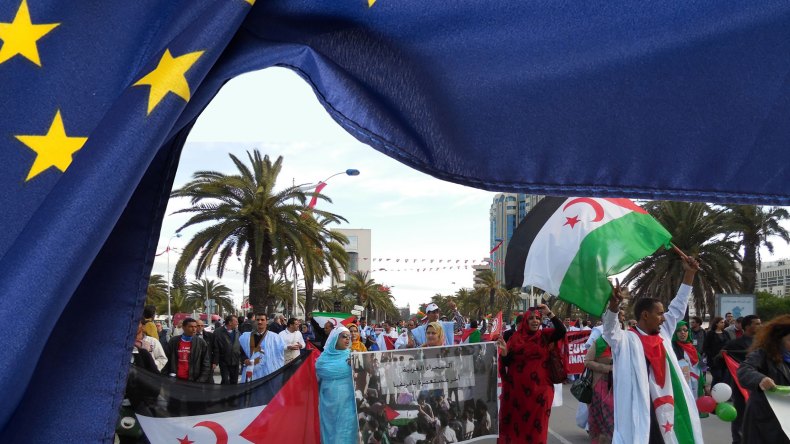
The European Court of Justice issued rulings in October 2024 confirming that Western Sahara is a separate and distinct territory from Morocco. These legal determinations established the status of the region in relation to aviation agreements involving the territory. Judges at the court clarified the territorial distinction as part of a broader review of international accords. The confirmation impacts how international entities manage transit and transport agreements affecting Western Sahara. These findings serve as the foundation for ongoing legal challenges regarding regional aviation policy. Legal representatives in Madrid continue to evaluate the implications of these findings for future operational agreements in the area. The court mandate remains a primary point of reference for all parties involved in the current dispute over aerial access.
Report Challenges Tourism Practices
The Sahrawi Working Group on Natural Resources and Legal Issues prepared a report titled 'Tourism in the Context of Occupation: Dakhla from Military Base to Pearl of the Sahara'. This document examines the impact of tourism development on the status of the territory. The publication notes specific concerns regarding how infrastructure projects in the region align with international legal standards. By documenting the transformation of Dakhla, the report provides a detailed analysis of how aviation and tourism activities intersect with the broader legal status of Western Sahara.
Case number T-275/18 and European Commission statements from December 2024 clarify the scope of the Euro-Mediterranean aviation agreement between the EU and Morocco. These records specify that the agreement does not include Western Sahara or its airspace. This exclusion is central to the arguments presented by various legal stakeholders who monitor the application of international treaties in the region.
Legal proceedings were initiated by the Polisario Front before the Spanish judiciary to cancel the license granted to Ryanair for flights between Madrid, Lanzarote, and Dakhla. The Polisario Front has initiated legal proceedings before the Spanish judiciary to cancel the license granted to Ryanair for flights between Madrid, Lanzarote, and Dakhla. This action represents a formal attempt to challenge the authorization of commercial aviation routes that traverse the territory. The legal filings emphasize that the regulatory approval of these specific flights requires a re-examination of the underlying agreements that govern airspace usage.
Abi Bouchraya Bachir, Special Advisor to the Sahrawi President for Natural Resources and Legal Issues, stated: "The judicial move aims to push the Spanish government to withdraw the license granted to the company, considering that allowing flights to Dakhla contradicts the requirements of international legitimacy, which does not recognize Morocco's sovereignty over Western Sahara, nor does it authorize the disposal of its airspace and resources without respecting the will of the Sahrawi people, represented by the Polisario Front."
These proceedings show the growing tension between existing commercial flight operations and the legal interpretations established by the European Court of Justice. The Spanish judiciary is currently reviewing the arguments presented by the Polisario Front, which focus on the legal standing of the flight paths connecting Madrid and Lanzarote to Dakhla. As the case progresses, the documentation provided by the Sahrawi Working Group on Natural Resources and Legal Issues serves as a supporting element for the claims regarding the status of the territory. The outcome of this litigation is expected to clarify the extent to which international aviation licenses can be issued for routes involving Western Sahara under current European and international law.