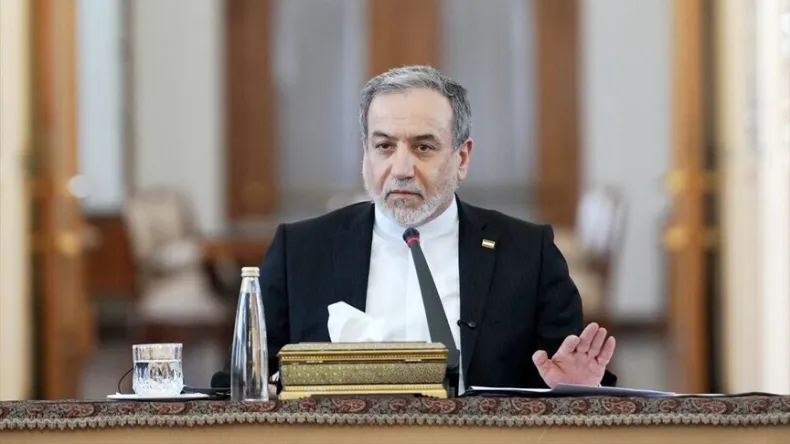
Iranian Minister of Foreign Affairs, Abbas Araghchi, stated on Tuesday that the cessation of Israeli attacks in Lebanon is a "prerequisite" for ending the conflict between Iran, the United States, and Israel, following the declaration of the war's end on Monday morning Iranian time. The cessation of hostilities in Lebanon was declared on Monday morning, Iranian time, marking a significant development in the broader regional landscape. Araghchi emphasized that the memorandum of understanding will officially come into effect on Friday. He noted that "les fronts du Liban et de l’Iran sont « d’une certaine manière liés et interdépendants »," adding, "dès le premier jour, la République islamique d’Iran a considéré la fin de la guerre au Liban comme une condition préalable à la fin de la guerre avec l’Iran." This stance shows a consistent diplomatic position held by Tehran. Araghchi further asserted, "Maintenant que nous sommes parvenus à une fin de la guerre, celle-ci prendra également fin au Liban," describing the two fronts as "inséparable." He explicitly stated that now that a ceasefire has been reached, the war will also conclude in Lebanon, reinforcing the interconnectedness of the conflicts.
Linked Fronts, Inseparable Deal
Abbas Araghchi, Iran's Minister of Foreign Affairs, informed representatives of international missions in Tehran that the fronts in Lebanon and Iran are "in a way linked and interdependent." This statement, made to a diplomatic audience, provided key insight into Iran's strategic thinking. He characterized the ceasefire in Lebanon as an "inseparable" component of the recently announced agreement with the United States, noting its foundational role in any broader resolution. Araghchi affirmed that with a ceasefire now achieved, the conflict in Lebanon will also conclude, directly linking the cessation of hostilities in one arena to the resolution in another. He emphasized the direct connection between the regional situation and broader diplomatic agreements, illustrating how events in Lebanon are viewed as integral to the larger geopolitical dynamics involving Iran and the United States. This perspective underlines the full nature of the diplomatic efforts underway.
Iran's Long-Standing Stance
The Islamic Republic of Iran has consistently viewed the cessation of hostilities in Lebanon as a fundamental condition for ending its own conflict with external parties. From the outset, Tehran maintained that a resolution to the Lebanese conflict was a prerequisite for any broader disengagement concerning Iran. The Islamic Republic of Iran, from the very first day, considered the end of the war in Lebanon a prerequisite for the end of the war with Iran. This position has been a cornerstone of their diplomatic stance, linking regional stability directly to their international relations and any potential agreement with global powers. This consistent and unwavering position has shaped their approach to negotiations and regional security. The Iranian government has repeatedly communicated this linkage, making it clear that a lasting peace in the region requires addressing all interconnected conflicts.
Upcoming Diplomatic Roadmap
Upcoming discussions between the United States and Iran, scheduled for Friday in Switzerland, will be divided into two phases, according to the semi-official Tasnim agency. These talks are expected to lay out a detailed framework for future relations and conflict resolution. The first phase of these talks will focus on the Strait of Hormuz, addressing critical maritime restrictions, and the reconstruction of Iranian infrastructure following the recent conflict. This initial stage aims to tackle immediate practical issues and rebuild trust. Following this, the second phase will be dedicated to resolving more complex nuclear issues and the lifting of sanctions within the framework of a final agreement. This structured approach suggests a methodical progression towards a full resolution, starting with more tangible, immediate concerns before moving to long-standing strategic challenges. The detailed agenda reflects the intricate nature of the relationship between the two nations and the multi-faceted aspects that require diplomatic attention.
Broader Geopolitical Implications
The discussions between the United States and Iran are poised to address broader regional issues beyond the immediate conflict, according to official statements. The resolution of the situation in Lebanon is seen as integral to achieving a wider de-escalation between the involved parties. Iran's consistent stance has linked the stability of its western border to any potential agreement with Washington, showing the strategic importance of Lebanon in its foreign policy calculations. This perspective shows the interconnectedness of various regional flashpoints in the ongoing diplomatic efforts. The upcoming talks in Switzerland are expected to reflect this broader geopolitical understanding, with initial phases focusing on reconstruction and maritime safety before moving to nuclear and sanctions-related matters. The full nature of the agenda notes the ambition to address not just the symptoms but also the underlying causes of regional tensions, aiming for a more stable and cooperative future. The outcomes of these talks could significantly reshape the geopolitical landscape of the Middle East.