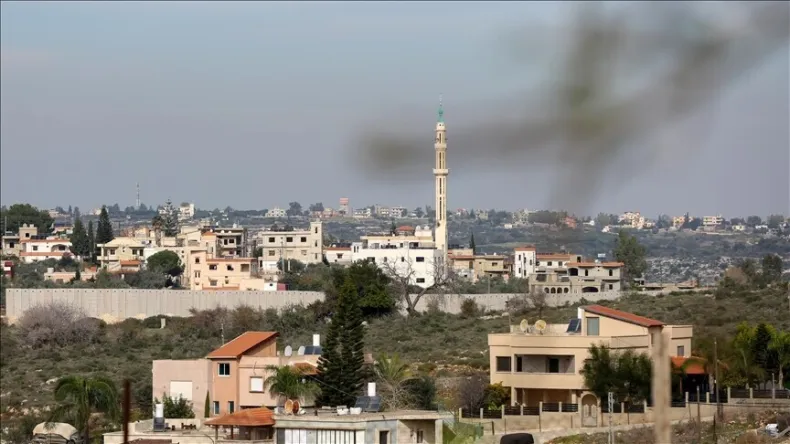
On Friday, the Israeli military issued evacuation warnings for nine villages in southern Lebanon, including Arnaya, Anqoun, and Kfar Fila. The warning called for residents to leave their homes immediately and move at least 1,000 meters away from the concerned localities towards cleared areas. These warnings preceded Israeli warplane strikes on villages, including Anqoun, nearly three hours later. On Friday, Israeli warplanes struck villages, including Anqoun, nearly three hours after evacuation warnings were issued for the nine villages. Reports indicated the current fragile ceasefire, which has been in effect since April 17, has been extended by Washington until early July. Washington extended the ceasefire until the beginning of July, aiming to preserve the delicate truce.
Escalation Amidst Truce
Reports indicated that six people were killed following the recent Israeli actions. According to Lebanon's state news agency, six people were killed. Hundreds of families were forced to flee the village of Anqoun, which had been sheltering thousands previously displaced by the three-month conflict, including approximately 2,500 individuals. An airstrike in the southern city of Tyre on Thursday night reportedly resulted in three deaths and seven injuries, among them three children and two women. According to reports, more than 3,500 people have died in Lebanon since the war began. The fighting has also killed at least 29 Israeli soldiers and three civilians.
Diplomatic and Military Standoff
Diplomatic efforts are underway to preserve the fragile truce and prevent its collapse, even as military actions continue. Diplomatic efforts are ongoing to preserve the truce and prevent its collapse. These strikes occurred a day after the Hezbollah militant group rejected the latest ceasefire agreement between Israel and the Lebanese government. The strikes occurred a day after the Hezbollah militant group rejected the latest ceasefire agreement between Israel and the Lebanese government, demanding a complete Israeli withdrawal from Lebanon. Hezbollah demanded a complete Israeli withdrawal from Lebanon as a condition for acceptance. Lebanon’s Parliament Speaker Nabih Berri stated he accepts Hezbollah’s withdrawal from areas south of the Litani River if it coincides with Israeli troop withdrawal. Berri specified that "he accepts Hezbollah’s withdrawal from the areas south of the Litani River as long as it coincides with the withdrawal of Israeli troops from southern Lebanon." He added that such a withdrawal must be "complete and full without any restrictions or conditions on land, at sea and in the air, and without bulldozing and demolishing everything that exists."
The Litani River is situated approximately 30 kilometers (20 miles) north of the border with Israel. The Litani River is located about 30 kilometers (20 miles) north of the border with Israel. It also forms the boundary of a buffer zone established by the United Nations in 2006, within which Hezbollah is banned. The Litani River forms the boundary of a 2006 U.N.-established buffer zone where Hezbollah is banned. Currently, Israeli troops have pushed significantly past the Litani River into southern Lebanon, seizing around a fifth of the country. Israeli troops have pushed far past the Litani River into southern Lebanon, and have seized around a fifth of Lebanon.
Ground Reality and Withdrawal
Following the withdrawal of Israeli forces, United Nations peacekeepers and Lebanese troops were observed in the village of Dibbine. U.N. Peacekeepers and Lebanese troops were seen in the village of Dibbine after Israeli forces withdrew. Dibbine is situated near the town of Marjayoun. Dibbine is near the town of Marjayoun. This marked the first instance of Israeli troops pulling out from an area in southern Lebanon since the conflict began three months ago. This was the first time Israeli troops pulled out from an area in southern Lebanon since the war began three months ago. Dozens of homes in Dibbine sustained destruction as a consequence of clashes and airstrikes. Dozens of homes in Dibbine were seen destroyed as a result of clashes and airstrikes, noting the profound impact of the ongoing conflict on civilian infrastructure and livelihoods.