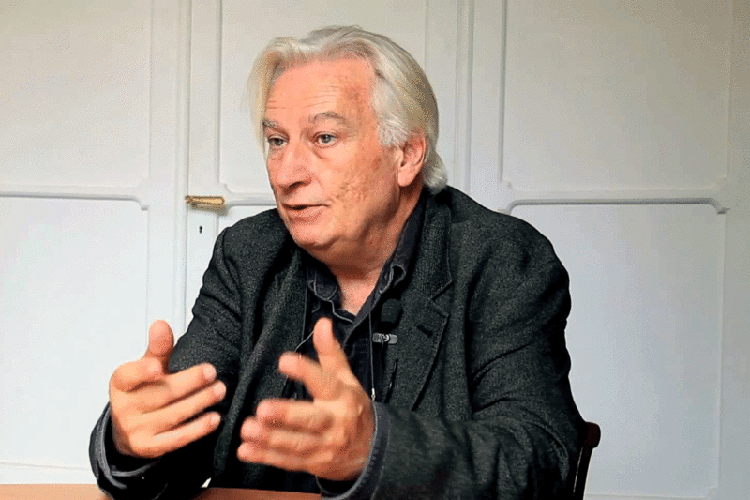
French historian Gilles Manceron has urged the French Ministry of Armed Forces to review its policy concerning the management of its archives, following the publication of his study in the blog of the French newspaper “Mediapart” at the end of the week. Manceron stated that the French Ministry of Armed Forces should review its policy regarding the management of its archives, asserting that the current policy contradicts the most basic fundamentals of human rights and the values upon which French democracy was built. Manceron argued that the current policy contradicts fundamental human rights and the values underpinning French democracy. The historian stated that the closure of certain military archives, specifically those related to the Algerian War, was initiated by specific sectors of the army and the state, including the General Secretariat for Defense and National Security. This closure, he explained, was particularly driven by the General Secretariat for Defense and National Security.
The closure policy mandates prior declassification for all military archives requested by researchers concerning the Algerian War, affecting documents that often bear a "secret" stamp. This requirement for prior declassification applies specifically to military archives pertaining to the Algerian War that are sought by researchers. According to Manceron, "freedom of access to public archives is a fragile principle, and citizens must ensure its effective application." He emphasized the importance of transparency and accessibility to historical records, noting that the effective application of this principle is key for democratic societies.
Democratic Rights and Archives
French historian Gilles Manceron, in a study published in the blog of the French newspaper “Mediapart,” showed the foundational democratic principle of archive access. Manceron stated that "the right of citizens to freely access public archives is a fundamental right of democracy, based on numerous texts indicating this, foremost among them the Declaration of the Rights of Man and of the Citizen of 1789." This principle is enshrined in Article 15 of the Declaration of Human Rights of 1789, which stipulated that "society has the right to demand from every public official an account of his administration." This foundational text establishes accountability as a cornerstone of public service. Further solidifying this right, Article 37 of the law of June 24, 1794, stated that "every citizen may request, in all archives, on specified days and times, to view the documents contained therein." This early legislation provided a concrete framework for citizen engagement with public records.
The Archives Law was adopted in 1979 in France, establishing a framework for public access. This law aimed to standardize the management and accessibility of national archives. A new law enacted in 2008 further stipulated a "full right to communicate" with archives older than fifty years. This 2008 legislation sought to enhance transparency by reducing the waiting period for access to historical documents. However, historians objected to the 2008 law because it monopolized a category of archives described as "permanently incommunicable," on the grounds that they fell under "defense secrecy." This specific provision created a significant hurdle for researchers seeking access to sensitive historical materials.
Christophe Lafaye, who worked in the French Defense Historical Service (SHD) and as a researcher at the Institute for Strategic Research of the Military School (IRSEM) during 2019-2020, observed that historical records management varies across institutions. Lafaye's experience provided insight into the diverse practices within the French administrative system. The archives of the Ministry of War, the Council of State, the Ministry of Foreign Affairs, and the Paris Police Prefecture have remained in the possession of these institutions, rather than being transferred to the National Archives. This decentralized approach can complicate full historical research. In contrast, the archives of the Ministry of Colonies were transferred to the National Archives as part of the National Archives of Overseas (ANOM) in Aix-en-Provence, centralizing these specific colonial records. The French Defense Historical Service (SHD) has remained a special case where the Archives Law is not always applied, according to observers. This unique status of the SHD has been a point of contention for historians advocating for greater transparency.
Legal Precedents and Challenges
Gilles Manceron based his interpretation of archive access rights on judicial decisions, including courts’ condemnation of the French state for prosecuting an officer who researched chemical weapons in Algeria. This legal precedent noted instances where the state's actions regarding classified information were challenged and found to be excessive. Manceron also cited the French state's refusal to grant access to archives for the son of a soldier killed in Thiaroye, Senegal, in 1944. This case showed the personal impact of restricted archive access on individuals seeking historical truth about their families. Commander Romain Choron, a history professor at the “Saint-Cyr Coëtquidan” military academy, faced prosecution on charges of “disclosing national defense secrets.” Officer Choron had completed his doctoral thesis in 2023, focusing on the war of resistance in Algeria from 1954 to 1962, a sensitive period in French history. His prosecution, despite his academic work, drew significant attention to the challenges faced by historians.
The French Council of State issued a ruling in July 2021, which annulled an illegal administrative procedure concerning archive access. This ruling addressed concerns about the process required to access documents, particularly those bearing a “secret” stamp, providing a legal victory for advocates of transparency. French President Emmanuel Macron has also addressed historical issues related to colonialism. In February 2017, he made statements describing colonialism as a crime against humanity. This declaration marked a significant shift in official discourse regarding France's colonial past. President Macron further acknowledged state responsibility in September 2018 when he visited Josette Audin, recognizing her husband’s death at the hands of French soldiers and the systemic actions implemented by the French colonial army. These acknowledgments by the President provided a degree of official recognition for historical injustices.
Broader Context and Implications
Gilles Manceron has estimated that the continuation of the current archive closure situation is no longer justified from all political and legal aspects. He believes that the current restrictions are untenable given modern democratic principles and legal frameworks. Manceron supported his reading of archive access rights with the efforts of French historian Christophe Lafaye. Lafaye, who previously worked at the French Defense Historical Service (SHD) and the Institute for Strategic Research of the Military School (IRSEM) during 2019-2020, has extensively researched these issues. Lafaye published a study titled “The Return of Forbidden Archives… Defense Secrecy and Military Archives” in the journal “Histoire Politique,” which examined the complexities surrounding military historical records. His work provided an in-depth analysis of the mechanisms and consequences of defense secrecy on archive accessibility.
Sonia Combe, author of the book “Forbidden Archives. French Fears in the Face of Contemporary History” and the article “Archives, the Legislator, and the Effects of Censorship,” also commented on the issue. Combe's work explores the broader societal implications of restricted access to historical documents. Combe accused archivists of being "complicit in concealing state secrets." Her work notes broader concerns about the transparency and accessibility of historical documents, particularly those marked with a "secret" stamp, which are often deemed "permanently incommunicable" on the grounds of "defense secrecy." This accusation points to systemic issues within the archival system that, according to Combe, facilitate the suppression of historical truths.
A phase of archive closure began shortly after Emmanuel Macron’s election as president, according to observers. This policy has drawn criticism from historians like Manceron, who stated that "freedom of access to public archives is a fragile principle, and citizens must ensure its effective application." The closure policy mandates prior declassification for all military archives requested by researchers concerning the Algerian War, affecting documents that often bear a "secret" stamp. This requirement for prior declassification has significantly impeded historical research into one of France's most contentious conflicts. The ongoing debate shows the tension between national security concerns and the public's right to historical transparency and accountability.