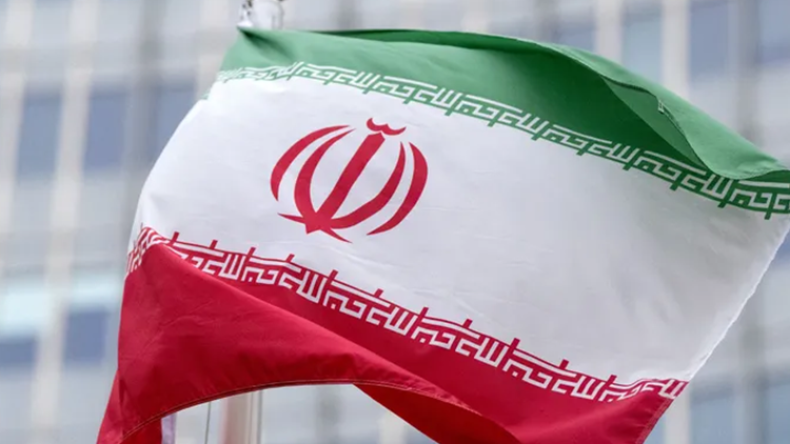
Iran has embraced a full "smart warfare" strategy, applying the 'inverse problem' from applied mathematics to its military doctrine. In applied mathematics, the 'inverse problem' serves as a vital bridge between observed data and underlying causes; in modern Iranian military doctrine, it has been transformed into a full 'smart warfare' strategy. This approach contrasts sharply with Western and Zionist technology, which relies on "direct problems" utilizing heavy firepower and immense computational power, according to Iranian military analysis. In response, Iran has chosen to "invert the mathematical logic" of these systems, investing heavily in this alternative paradigm. The conflict in the Arabian Gulf or against the Zionist entity is now characterized by Iranian strategists as a war of mathematical operators, with Iran deploying cruise missiles and suicide drones designed to make enemy identification, targeting, and interception "impossible or unstable." Iran's technical leadership asserts that mathematical logic, unlike physical assets such as iron and steel, cannot be intercepted by missiles, offering a unique advantage.
Mathematical Warfare Tactics
Iran's military strategy, as outlined by its proponents, extends the application of the inverse problem beyond mere reverse engineering. This sophisticated approach reportedly includes the design of what are termed "poorly formulated" missile salvos, specifically intended to overwhelm enemy defense computers by generating unstable solutions. Iran's focus is said to be on "mathematics that brings down the F-35," incorporating elements such as cyber intelligence and advanced encryption algorithms. This strategy aims to master inverse problems to disable Western radar systems, according to military analyses, by exploiting the inherent mathematical vulnerabilities of these advanced defense systems.
Iranian universities are noted for their strong emphasis on "non-linear dynamical systems." These complex mathematical principles are applied militarily to develop smart missiles that utilize "chaotic algorithms" to evade sophisticated defense systems, such as the Patriot missile defense. Iranian engineers are described as studying signals not merely as sound or waves, but as massive matrices. They employ advanced techniques like "sparse representation" to develop systems such as the "Shahed" drones, which integrate simple processors with intelligent algorithms to achieve their operational goals, demonstrating a profound understanding of mathematical optimization in resource-constrained environments.
Roots in Education and Innovation
Iran's advanced application of the inverse problem and complex mathematical techniques in its military arsenal stems from a long-term strategic investment in education, spanning from primary schools to universities, with a particular focus on mathematics, physics, and informatics. Education in Iran, especially in scientific disciplines, is widely regarded as the primary path to achieving prestigious social status, fostering a highly competitive academic environment. This national emphasis on academic excellence is reflected in Iran's consistent ranking among the top ten globally in the International Mathematical Olympiad. In a notable achievement in 2025, the Iranian team secured second place globally in the International Mathematical Olympiad, held in Australia, showing the nation's deep talent pool in mathematical sciences.
The 'Konkur' exam serves as Iran's highly competitive national examination, with hundreds of thousands of students vying for limited seats in engineering and science faculties at major public universities each year. Specific institutions such as Sharif University of Technology, sometimes referred to as the 'Middle East MIT', Amirkabir University of Technology, and Tehran University, are considered key 'brain factories' for the nation's defense and nuclear programs, channeling top talent into strategic sectors. These universities are instrumental in fostering the intellectual capital necessary for Iran's military advancements, particularly in areas requiring highly specialized mathematical and computational skills.
International sanctions and blockades have compelled Iran to prioritize software and mathematical solutions to compensate for limitations in advanced hardware. This necessity has led Iran to direct scientific research within its universities towards applied mathematics and the specific needs of the national defense sector. The country employs a strategy of 'civil-military integration,' rapidly adapting algorithms initially developed for civilian applications such as medical imaging or geological exploration for military applications such, as 'infiltration detection' radars or smart missile guidance. Iran possesses a highly developed school in 'number theory,' which forms the foundational basis for cryptography, enabling it to protect its communications from Western technological penetration with locally developed encryption protocols, thereby ensuring secure command and control. This expertise allows Iran to safeguard its military communications and data, a critical component of its "smart warfare" strategy.
Strategic Adaptation and Future Focus
In 2025, Iran allocated a substantial budget of approximately $115 million specifically for artificial intelligence research. This significant financial commitment aims to integrate AI capabilities directly into the nation's missile and drone guidance systems. The move shows Iran's strategy to enhance its military technology through advanced mathematical and computational methods, reflecting a broader adaptation to modern warfare challenges. This investment is consistent with Iran's established approach of leveraging scientific and academic strengths, particularly in mathematics and informatics, to bolster its defense capabilities. The allocation targets the development of sophisticated algorithms and AI models that can improve the precision, evasion, and operational effectiveness of its unmanned aerial vehicles and missile arsenal. This focus on AI research is part of a deliberate effort to counteract technological asymmetries and further develop what Iran describes as its "smart warfare" doctrine, ensuring its military remains at the cutting edge of mathematical and computational defense. The emphasis on AI is expected to further refine the application of inverse problems, allowing for even more sophisticated and adaptive military technologies.